

5,615
likes
212
comments
daily view 0
monthly view 0
Live Analytics
Comments 0
What Actually Exists Above And Below Our Solar System? Analytics Table
Income Estimates for What Actually Exists Above And Below Our Solar System?
Based on this YouTube video's total view count of 322K views and industry-standard rates, the estimated total earning is $226 - $644 through ad revenue. Historical data is not yet available to calculate daily, weekly, or monthly averages.
About What Actually Exists Above And Below Our Solar System?
Explore What Actually Exists Above And Below Our Solar System? with 322,207 views, 5,615 likes, and 212 comments. Experience the impact of this video content that has captured audience attention.
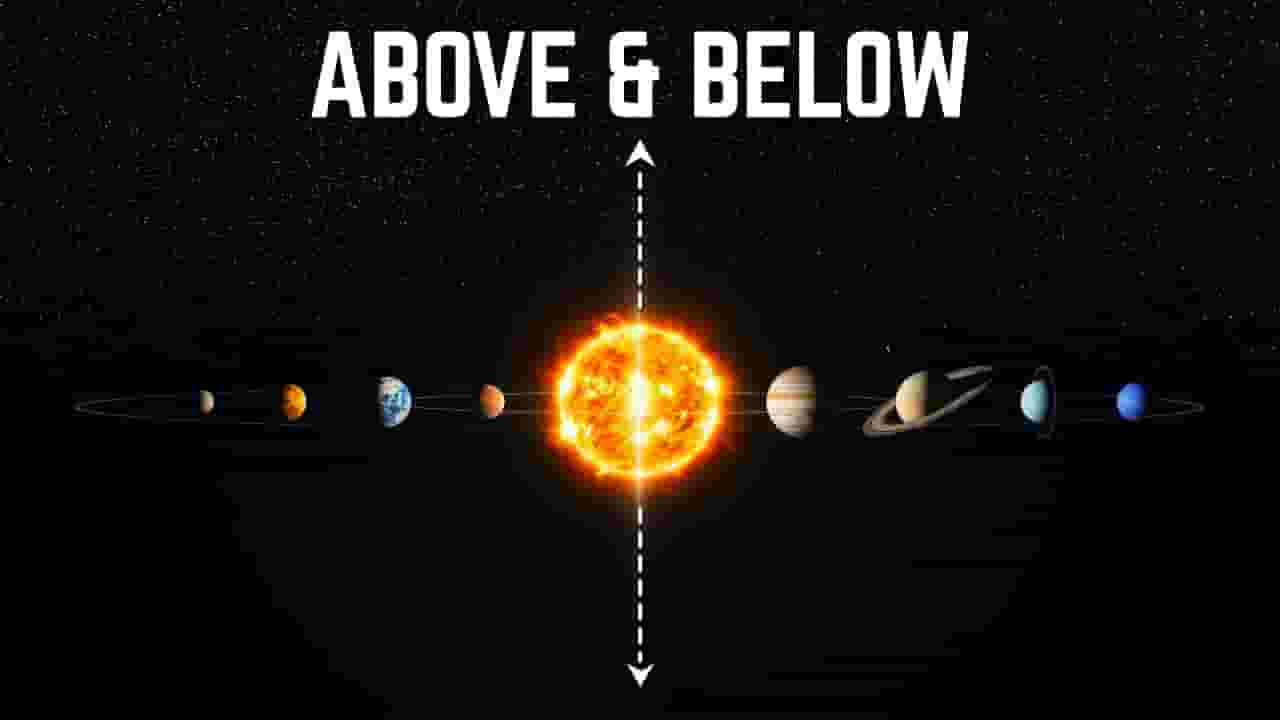
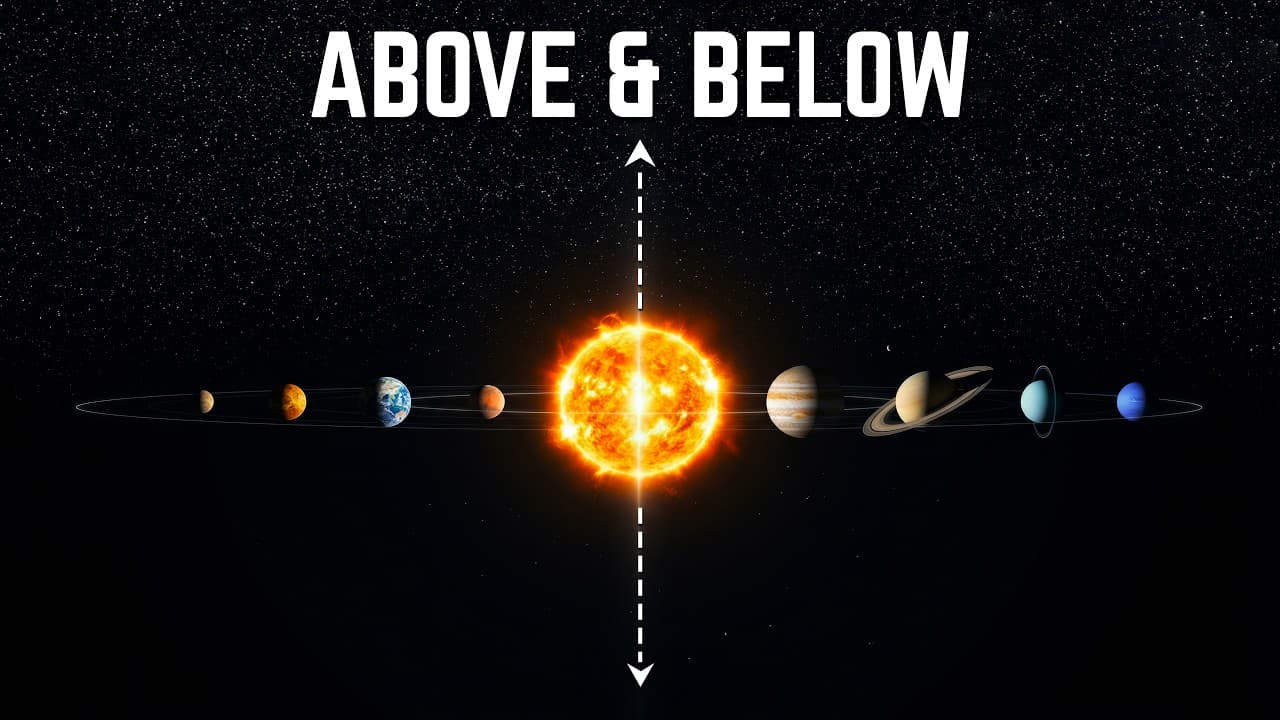
Every diagram you've ever seen of the Solar System is hiding something enormous. That familiar flat picture with the planets neatly lined up on a single plane? It shows less than one percent of what the Solar System actually is. In this calming long-form space documentary, we ask a deceptively simple question: what actually lies above and below the Solar System? The answer takes us from the tilted orbits of the inner planets, past the wildly inclined objects of the Kuiper Belt and scattered disk, out to the Oort Cloud - a vast spherical shell of trillions of icy bodies stretching more than a light year in every direction. Then we zoom out further, placing the entire Solar System inside the Milky Way galaxy, tilted sixty degrees to the galactic plane, bobbing up and down through the disk of stars over tens of millions of years. What we discover along the way is something profound: in space, there is no up. There is no down. "Above" and "below" only exist when you choose a reference plane - and the universe has no preferred direction at all. From the ecliptic to the Oort Cloud to intergalactic space, this is the true three-dimensional story of where we live. Sources: Morbidelli, A. & Levison, H. F. (2004). "Scenarios for the Origin of the Orbits of the Trans-Neptunian Objects 2000 CR105 and 2003 VB12 (Sedna)." The Astronomical Journal, 128(5), 2564–2576. https://doi.org/10.1086/424617 Oort, J. H. (1950). "The Structure of the Cloud of Comets Surrounding the Solar System and a Hypothesis Concerning Its Origin." Bulletin of the Astronomical Institutes of the Netherlands, 11, 91–110. https://ui.adsabs.harvard.edu/abs/1950BAN....11...91O Batygin, K. & Brown, M. E. (2016). "Evidence for a Distant Giant Planet in the Solar System." The Astronomical Journal, 151(2), 22. https://doi.org/10.3847/0004-6256/151/2/22 Bland-Hawthorn, J. & Gerhard, O. (2016). "The Galaxy in Context: Structural, Kinematic, and Integrated Properties." Annual Review of Astronomy and Astrophysics, 54, 529–596. https://doi.org/10.1146/annurev-astro-081915-023441 Dones, L., Weissman, P. R., Levison, H. F. & Duncan, M. J. (2004). "Oort Cloud Formation and Dynamics." In M. C. Festou, H. U. Keller & H. A. Weaver (Eds.), Comets II. University of Arizona Press, pp. 153–174. https://ui.adsabs.harvard.edu/abs/2004come.book..153D #SolarSystem #OortCloud #SpaceDocumentary #Astronomy #KuiperBelt #MilkyWay #CosmicScale
About YouTube Real-Time View Count
With SocialCounts.org’s view counter, track your YouTube video’s live view count and YouTube likes count in real time with fast, reliable updates.
Watch every YouTube video live view count rise with our real-time YouTube views tracker—built for accuracy and minimal delay.
Follow YouTube real time views as they happen, using our dedicated view counter for YouTube videos.
Get up-to-date live view count on YouTube and see real-time growth with SocialCounts.org’s smart tracking tools.
Embed Widget
Parameters:
fullscreen=true- Fullscreen countergraph=true- Live graph chartcounter=0/1/2- Select counter (0=likes, 1=views, 2=comments)
URL
Click to copy the embed URL to your clipboard