

1,000
likes
54
comments
daily view 0
monthly view 0
Live Analytics
Comments 0
The Real Reason Food Sticks to Cast Iron (It's Not the Seasoning) Analytics Table
Income Estimates for The Real Reason Food Sticks to Cast Iron (It's Not the Seasoning)
Based on this YouTube video's total view count of 27.0K views and industry-standard rates, the estimated total earning is $19 - $54 through ad revenue. Historical data is not yet available to calculate daily, weekly, or monthly averages.
About The Real Reason Food Sticks to Cast Iron (It's Not the Seasoning)
Explore The Real Reason Food Sticks to Cast Iron (It's Not the Seasoning) with 27,029 views, 1,000 likes, and 54 comments. Experience the impact of this video content that has captured audience attention.
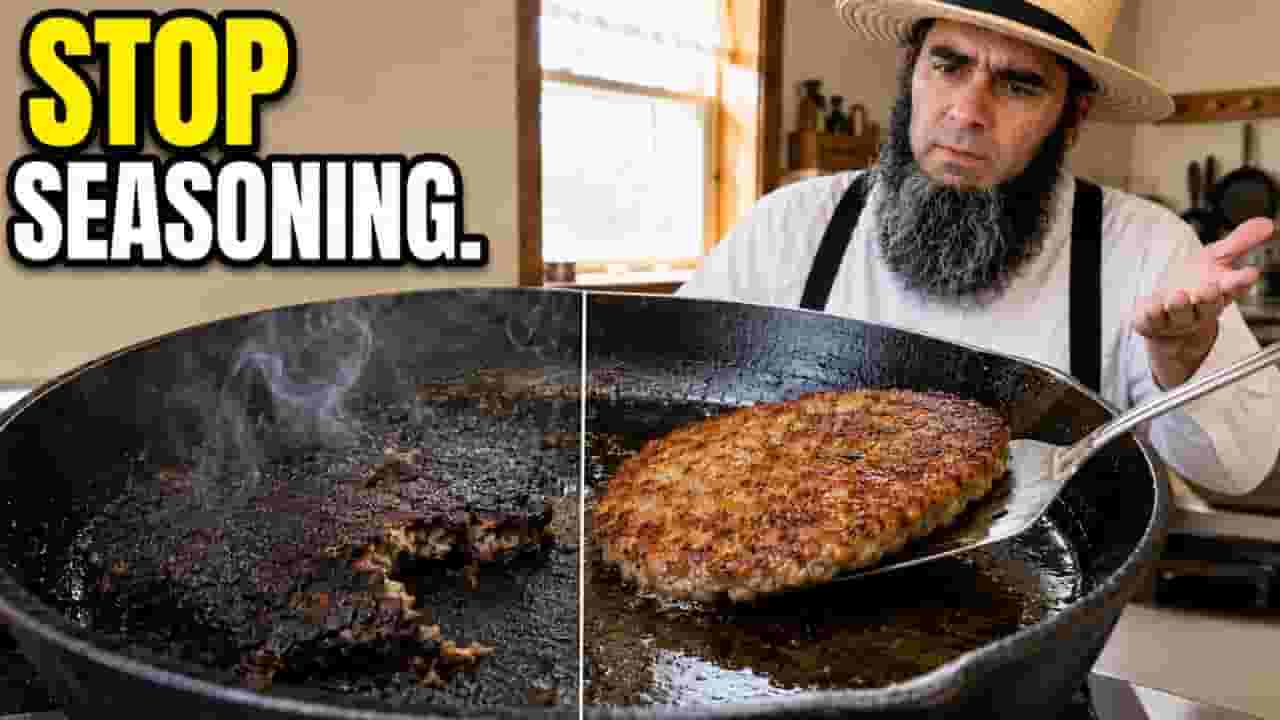
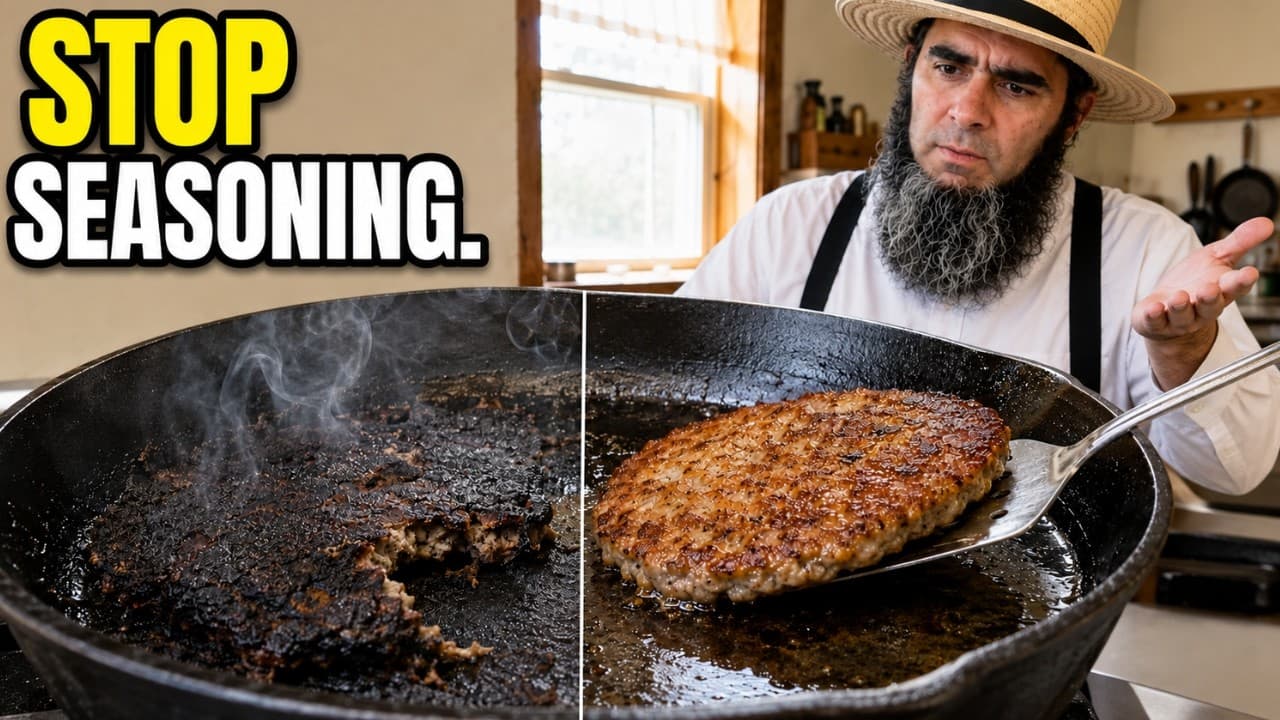
🔗 Save $6,000 A Year with My Complete Amish Home-Saving Method I teach: https://eliasyoder.com You turned the burner up high because that is what everybody says to do. Get it hot. Get it screaming hot. You laid the sausage in and you heard it, and that sound was not a sear. That was the sound of meat welding itself to iron. Forty seconds later half the patty stays behind, there is black crust glued to the bottom of the pan, and you are standing there thinking the same thing everybody thinks. I need to season this pan again. So you do. And the next time it sticks exactly the same way. I am Elias Yoder. I farm in Lancaster County, Pennsylvania, and the skillets in my kitchen have been in this family longer than I have. In this video I want to tell you what is actually happening in that pan, because it is not the seasoning. It has almost never been the seasoning. It is the heat. And the fix does not cost you a cent. When iron gets very hot, the meat grabs hold of the metal before a single drop of fat has melted out. It fastens itself down, and the fat that finally renders is sitting on top of a weld instead of underneath the meat where it belongs. Turn that same burner down to the middle and the fat has a minute to come out and spread, and now there is a thin layer of hot rendered fat between the food and the iron. That is your nonstick. Not something you bought. Fat that came out of your own breakfast. My grandmother cooked on a wood cookstove her whole life, and a wood cookstove has no dial on it. You do not adjust the fire, you adjust the pan, sliding it toward the middle for more heat and out to the corner for less. She had to read heat with her hand because she had nothing else to read it with. What she said about it took me years to understand. The stove is not in a hurry. You are. Here is what you will learn in this video: - Why a screaming hot pan is the reason food sticks - The three things people wrongly blame, and why all three cost money - Where seasoning actually fits in, and why another coat will never fix a fire that is too high - How to preheat cast iron, and why slow beats fast - The hand test and the water drop test for reading heat - Why the dancing water bead means your pan is ready for the wrong thing - The one rule that matters most once the food goes in - How a properly cooked piece of meat tells you itself when it is ready to turn - Why a thin metal turner beats a thick plastic one - Eggs and pancakes, and why eggs are the strictest version of this same lesson - When high heat is right, and which fats belong at those temperatures - The truth about dish soap, and where that old warning came from - The full cleanup method, start to finish, in about one minute - Why wiping the oil back off matters more than putting it on - The last check before you put a skillet away - How to store cast iron so it never rusts on you - What a coated pan really costs you over a lifetime compared to one good skillet Two plain safety notes. That handle is exactly as hot as the pan, every time, so keep a dry cloth by the stove and never a damp one. And never put a hot skillet under cold water, or you can warp a good pan or crack it outright. Nobody sat in a room and decided to keep this from you. The money simply runs the other way. There is no product anybody can sell you for turning the flame down and waiting four extra minutes, so nobody has a reason to say it, and a thing nobody has a reason to say gets forgotten inside of a single generation. The fix was free, so it went quiet. Try it once. Tomorrow morning, cook one thing on medium instead of high. Give the pan five slow minutes. Then keep your hands off it until it turns loose on its own. Then tell me in the comments how it went. What county are you in, how old is your house, and did the skillet you cooked in come down to you from somebody in your family or did you buy it yourself? I read them all. I am always curious how far these old pans travel and whose hands they pass through. Next time I am taking you out to the shed, because somebody always asks about the skillet left in a damp barn or found rusted orange on a table at a sale. Most folks walk right past those. You should not. A rusted skillet is not ruined, not even close, and I will show you exactly how we bring one back in a single afternoon. The people who built this country with their hands knew things we are only just starting to remember. HASHTAGS #CastIron #CastIronCooking #AmishWisdom #OldWays #KitchenTips #Homesteading #EliasYoder
About YouTube Real-Time View Count
With SocialCounts.org’s view counter, track your YouTube video’s live view count and YouTube likes count in real time with fast, reliable updates.
Watch every YouTube video live view count rise with our real-time YouTube views tracker—built for accuracy and minimal delay.
Follow YouTube real time views as they happen, using our dedicated view counter for YouTube videos.
Get up-to-date live view count on YouTube and see real-time growth with SocialCounts.org’s smart tracking tools.
Embed Widget
Parameters:
fullscreen=true- Fullscreen countergraph=true- Live graph chartcounter=0/1/2- Select counter (0=likes, 1=views, 2=comments)
URL
Click to copy the embed URL to your clipboard