

7,093
likes
254
comments
daily view 0
monthly view 0
Live Analytics
Comments 0
Ceramic vs Porcelain Tiles | Everything you need to know! Analytics Table
Income Estimates for Ceramic vs Porcelain Tiles | Everything you need to know!
Based on this YouTube video's total view count of 278K views and industry-standard rates, the estimated total earning is $195 - $557 through ad revenue. Historical data is not yet available to calculate daily, weekly, or monthly averages.
About Ceramic vs Porcelain Tiles | Everything you need to know!
Explore Ceramic vs Porcelain Tiles | Everything you need to know! with 278,546 views, 7,093 likes, and 254 comments. Experience the impact of this video content that has captured audience attention.
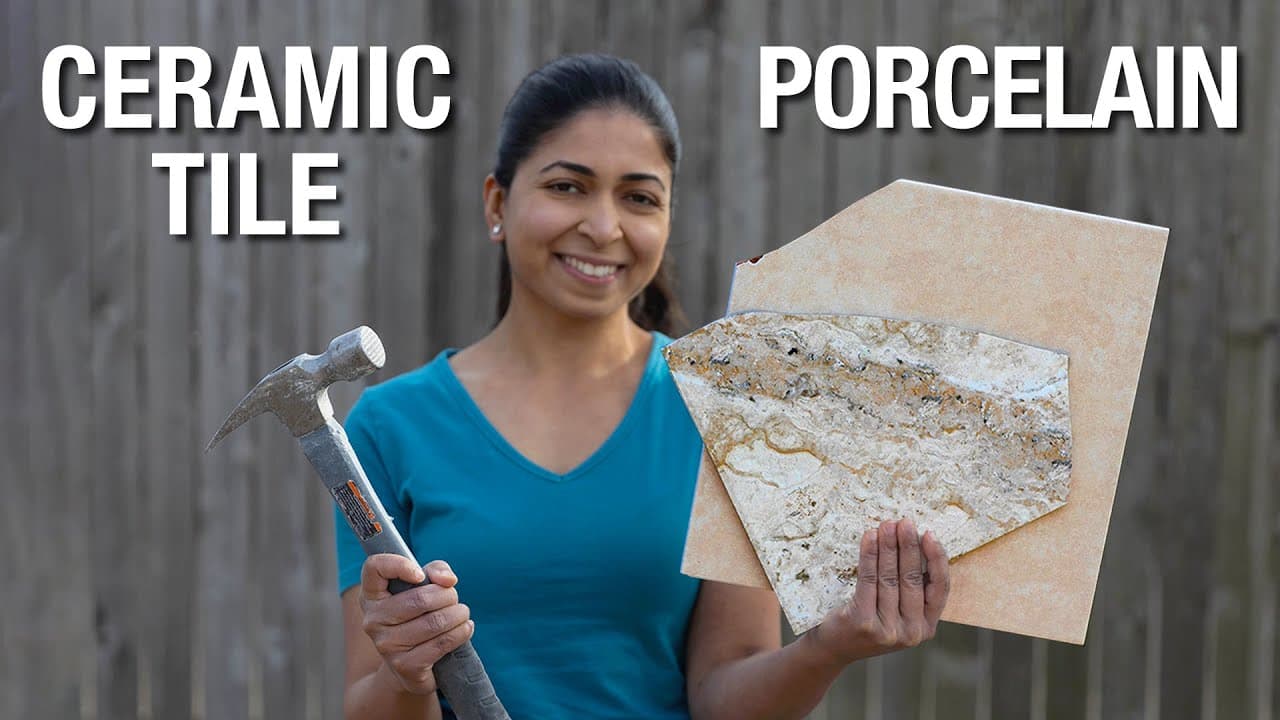
Ceramic and porcelain tiles are the two most popular floor and wall tiles for residential and commercial construction. In this video, we’re going to clear up the issue by discussing their composition, quality, price and performance. Link to my Patreon page: https://www.patreon.com/Belinda_Carr Chapters 0:00 Introduction 0:35 Ingredients 1:42 How it's made 2:46 Properties 3:53 Sponsorship 4:32 Appearance 6:11 Cost 6:49 Conclusion The first and most important is clay which is formed by the weathering of igneous rock. Clay minerals have layered crystalline structures. They develop plasticity when wet, but become hard, brittle and non-plastic when dried or heated. This property of clay allows tiles to be formed into different shapes. One type of clay mineral used for tiles is kaolinite. Rocks rich in kaolinite are called kaolin or white clay or china clay. Red kaolinite contains iron oxides. Ball clay is used to improve elasticity and strength. Another type of clay used is talc. The next ingredient is a filler like quartz, alumina or zirconia. These give tiles mechanical strength and shape. The third ingredient is feldspars. These are called aluminosilicates which contain aluminum, silicon and oxygen in addition to sodium, potassium or calcium. Some examples of feldspars are Albite, Orthoclase and Anorthite. Feldspars act as fluxing agents to reduce the melting temperature and fuse all the materials together. The raw ingredients are ground into a fine powder and then mixed in specific proportions by weight. They mixed with water to form a slurry. This is fed into an atomizer that dries the slurry and forms a fine powder. The powder is poured into a mold and pressed into tiles. It is then dried to reduce the moisture content. Designs and colors are printed on top of the tile and then liquid glass or glaze is sprayed on it. Finally, the tiles are fired in a kiln Porcelain tile is made of a finer clay and has a higher percentage of kaolinite which makes it stronger. Porcelain tile is also pressed up to 100,000 lbs per sq in, much higher than ceramic tile. In the kiln, water evaporates and the clay particles get hot enough to stick together. This process called sintering. Firing the tiles also changes silica into glass which flows into the gaps between the clay particles, sealing them up. This process is called vitrification. Porcelain tile is heated to 2400F or 1300C. Ceramic tile is heated to 2000F or 1100C. The Porcelain Enamel Institute or PEI rating determines the hardness of the top glaze and traffic level that a tile flooring can endure. Ceramic tiles have a rating between 0 and 3. Porcelain tiles have a rating between 3 and 5. T Now let’s look at the cross section of these tiles. This Traffic Master ceramic tile that I bought from Home Depot is lighter and less dense. It is made of a red clay with a picture printed on the top surface. When chipped, it reveals the red color underneath. This Marazzi porcelain tile is denser and a little heavier. It is made of a greyish white clay with a picture printed on the top surface. One of the clearest differences between ceramic and porcelain is its water absorption rate. Ceramic tiles have a rate of 2% to 20%, while porcelain is almost impervious to water with a low rate of 0.5%. This Traffic Master tile is 82 cents per sqft while this Marazzi Tile is $1.89 per sq ft. But, that doesn’t mean that ceramic tile is always inferior. As manufacturing processes continue to improve, it is getting very difficult to tell the difference between ceramic and porcelain tile. Also, installation is very, very important. If you don’t use a cleavage membrane like a Schluter system, even expensive porcelain tiles can crack. I made a video on that a while back if you want to check it out later. If installed properly, tiles can last you a very long time. They are inert, non-toxic products that don’t contain any harmful chemicals and don’t off-gas. -------------------- SOURCES https://www.youtube.com/watch?v=dfo-Ndib_fg AVmake https://www.youtube.com/watch?v=tFCfqUCd_9I kanalReise https://www.youtube.com/watch?v=8hw4SrG0Zuc gayafores https://www.youtube.com/watch?v=-6UHfRXLwGI Ceratec Surfaces https://www.youtube.com/watch?v=bk24Y83LBrY Ceramic Industries -------------------- Fluffy by Smith The Mister https://smiththemister.bandcamp.com Smith The Mister https://bit.ly/Smith-The-Mister-YT Free Download / Stream: https://bit.ly/stm-fluffy Music promoted by Audio Library https://youtu.be/OM9G3nyLT_w --------------------- Disclaimer: This video was created for educational/informational purposes and qualifies as Fair Use. If you are the creator or own the footage featured in this video and have reservations please notify me via Youtube comments or email and I will accommodate you #ceramic #porcelain #tile #differences
About YouTube Real-Time View Count
With SocialCounts.org’s view counter, track your YouTube video’s live view count and YouTube likes count in real time with fast, reliable updates.
Watch every YouTube video live view count rise with our real-time YouTube views tracker—built for accuracy and minimal delay.
Follow YouTube real time views as they happen, using our dedicated view counter for YouTube videos.
Get up-to-date live view count on YouTube and see real-time growth with SocialCounts.org’s smart tracking tools.
Embed Widget
Parameters:
fullscreen=true- Fullscreen countergraph=true- Live graph chartcounter=0/1/2- Select counter (0=likes, 1=views, 2=comments)
URL
Click to copy the embed URL to your clipboard