

3
likes
1
comments
daily view 0
monthly view 0
Live Analytics
Comments 0
Why It Costs More to Be Poor | The Radical Truth About Food Deserts Analytics Table
Income Estimates for Why It Costs More to Be Poor | The Radical Truth About Food Deserts
Based on this YouTube video's total view count of 1.14K views and industry-standard rates, the estimated total earning is $1 - $2 through ad revenue. Historical data is not yet available to calculate daily, weekly, or monthly averages.
About Why It Costs More to Be Poor | The Radical Truth About Food Deserts
Explore Why It Costs More to Be Poor | The Radical Truth About Food Deserts with 1,144 views, 3 likes, and 1 comments. Experience the impact of this video content that has captured audience attention.
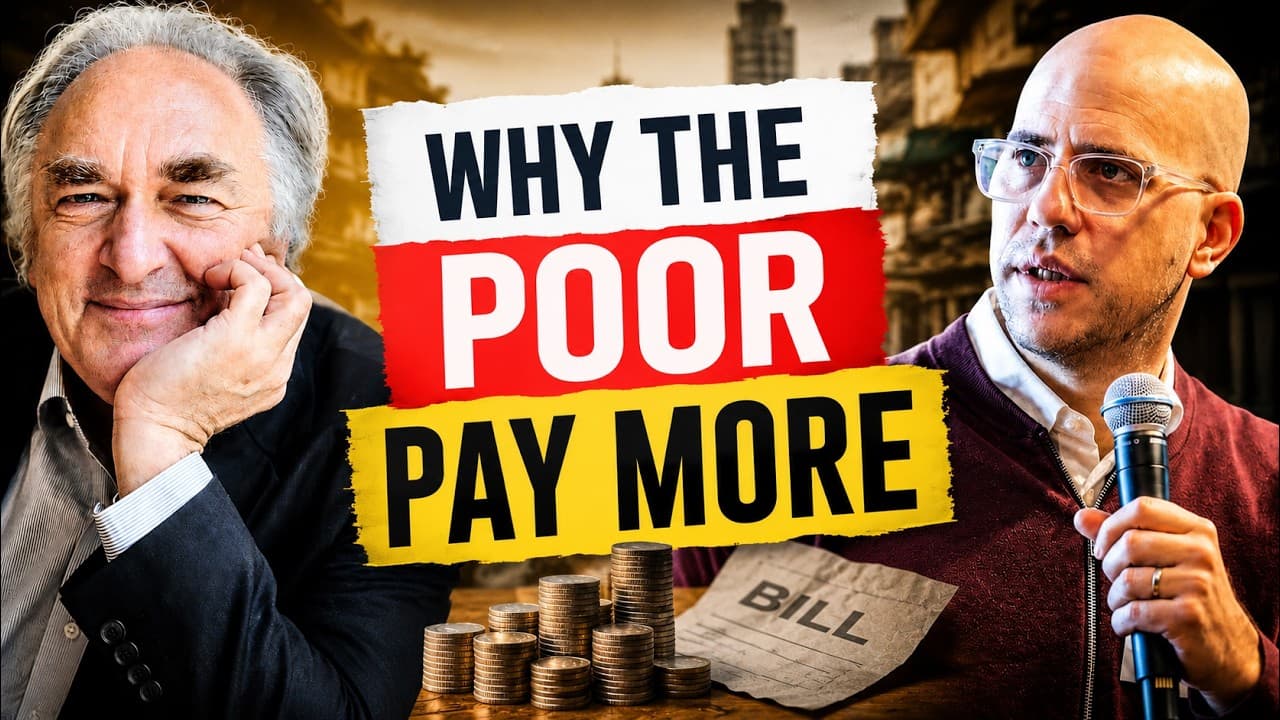
"If you have less money, you actually pay higher prices for basic necessities like food, water, and credit. This is known as the 'poverty penalty'—a broken structural reality that keeps billions trapped in financial precarity. Today on TBLI Radical Truth, we sit down with Ady Beitler, founder of Nilus, to explore how technology and supply chain innovation can finally dismantle this unjust system." Food poverty has a price tag. Ady Beitler of Nilus says two billion people overpay for groceries because they are poor, and the poverty penalty exists for one reason: no supermarket will serve where they live. This is TBLI Radical Truth with Robert Rubinstein. Beitler noticed it in Haiti, where he spent three years after the 2010 earthquake and found groceries cost more than in Cambridge, Massachusetts, in a country where people earn around $800 a year. The mechanism turns out to be mundane and brutal. No title to land, so no supermarket can even sign a lease. Higher security costs. Unpaved roads that suppliers charge extra to reach, streets with no names, addresses that are not on any map. Everything that can go wrong does, and the bill lands on the people least able to pay it. Nilus crowdsources grocery buying so that convenience stores and households in one community can access the volume discounts a supermarket would get. Customers save 20 to 25%. Community leaders, mostly women, take a commission. Nilus is a member of the UN World Food Programme's Innovation Accelerator and now serves around 25,000 families a week across Mexico City and Buenos Aires. WHAT'S COVERED - Why groceries cost more in the fifth poorest country in the world than in a Boston suburb - No land title, no lease, no supermarket, and the chain of consequences that follows - Why they started as a nonprofit and why it could not work in Latin America - Crowdsourced buying: the same idea Swiss villagers used, with an app on top - Community leaders on commission, paid in cash, settling three or four days later - Turning down term sheets while the company was close to collapse - Why he would refuse a $25 million cheque at the start, and what near-death did for the team - Renting offices inside the communities because they could not afford anything else - The numbers: 3,000 families in January, 25,000 by mid-year, and what profitability requires - Getting a delivery wrong less than 1% of the time in places with no street names - What he learned watching billions go into ten-minute delivery apps that no longer exist - Why the exit question is the wrong first question to ask a founder Low-income communities routinely face higher costs for essential goods, inefficient supply chains, and predatory financial models—a phenomenon known as the "poverty penalty." In this episode of TBLI Radical Truth, we speak with Ady Beitler, CEO & Co-founder of Nilus, about how smart supply chain architecture and impact-driven technology can dismantle systemic inefficiencies and lower the cost of living for vulnerable populations. TIMESTAMPS: 00:00 - The Reality of the "Poverty Penalty" 03:15 - Why Food and Essentials Cost More in Low-Income Areas 07:40 - The Logistics Breakdown: How Supply Chains Fail the Poor 13:10 - The Nilus Model: Tech-Driven Affordability & Food Rescue 18:45 - Community Buying Power vs. Corporate Price Gouging 24:30 - The Role of Impact Capital in Scaling Basic Needs Infrastructure 30:15 - Rewriting Economic Systems for Equitable Access 📌 Subscribe to TBLI Radical Truth for unfiltered, deep-dive discussions with sustainable finance thought leaders challenging the conventional narratives around impact and the future of finance. https://www.youtube.com/channel/UCDBhRVM93uUnAAtqOMIz_yg?sub_confirmation=1 EXTRACTION How business takes your money, your work, your resources, your data and your future, while presenting itself as something else entirely. Robert Rubinstein's next book, from 30 years inside the system. If this conversation makes you question where your money is actually going, Extraction takes that investigation much further. Follow its progress in the free Radical Truth Discussion Network: https://tblicircle.com/share/Lnu4hDm8ayILGevs?utm_source=manual MORE ON NILUS - Nilus: https://www.nilus.co - Ady Beitler on LinkedIn: https://www.linkedin.com/in/adybeitler/ TBLI GROUP - https://www.tbligroup.com - Robert Rubinstein on LinkedIn: https://www.linkedin.com/in/robertrubinstein/ #PovertyPenalty #FoodSecurity #ImpactInvesting #SocialEnterprise #Nilus #FoodDeserts #LatinAmerica #SocialEntrepreneurship #FoodPrices #ImpactStartups #AdyBeitler #TBLIRadicalTruth Recorded in 2025.
About YouTube Real-Time View Count
With SocialCounts.org’s view counter, track your YouTube video’s live view count and YouTube likes count in real time with fast, reliable updates.
Watch every YouTube video live view count rise with our real-time YouTube views tracker—built for accuracy and minimal delay.
Follow YouTube real time views as they happen, using our dedicated view counter for YouTube videos.
Get up-to-date live view count on YouTube and see real-time growth with SocialCounts.org’s smart tracking tools.
Embed Widget
Parameters:
fullscreen=true- Fullscreen countergraph=true- Live graph chartcounter=0/1/2- Select counter (0=likes, 1=views, 2=comments)
URL
Click to copy the embed URL to your clipboard