

268
likes
19
comments
daily view 0
monthly view 0
Live Analytics
Comments 0
The Multi-Model AI Boardroom - Surviving the Confidence Trap of Multi-Model Divergence Analytics Table
Income Estimates for The Multi-Model AI Boardroom - Surviving the Confidence Trap of Multi-Model Divergence
Based on this YouTube video's total view count of 2.25K views and industry-standard rates, the estimated total earning is $2 - $5 through ad revenue. Historical data is not yet available to calculate daily, weekly, or monthly averages.
About The Multi-Model AI Boardroom - Surviving the Confidence Trap of Multi-Model Divergence
Explore The Multi-Model AI Boardroom - Surviving the Confidence Trap of Multi-Model Divergence with 2,253 views, 268 likes, and 19 comments. Experience the impact of this video content that has captured audience attention.
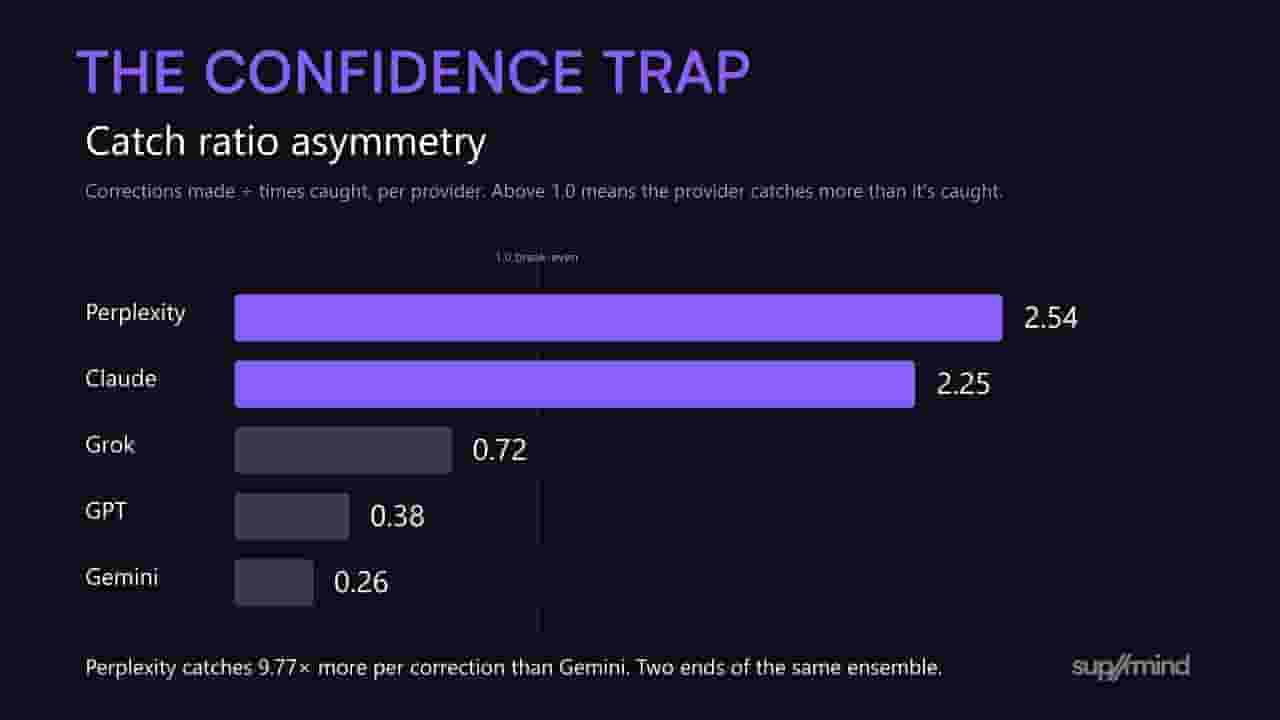
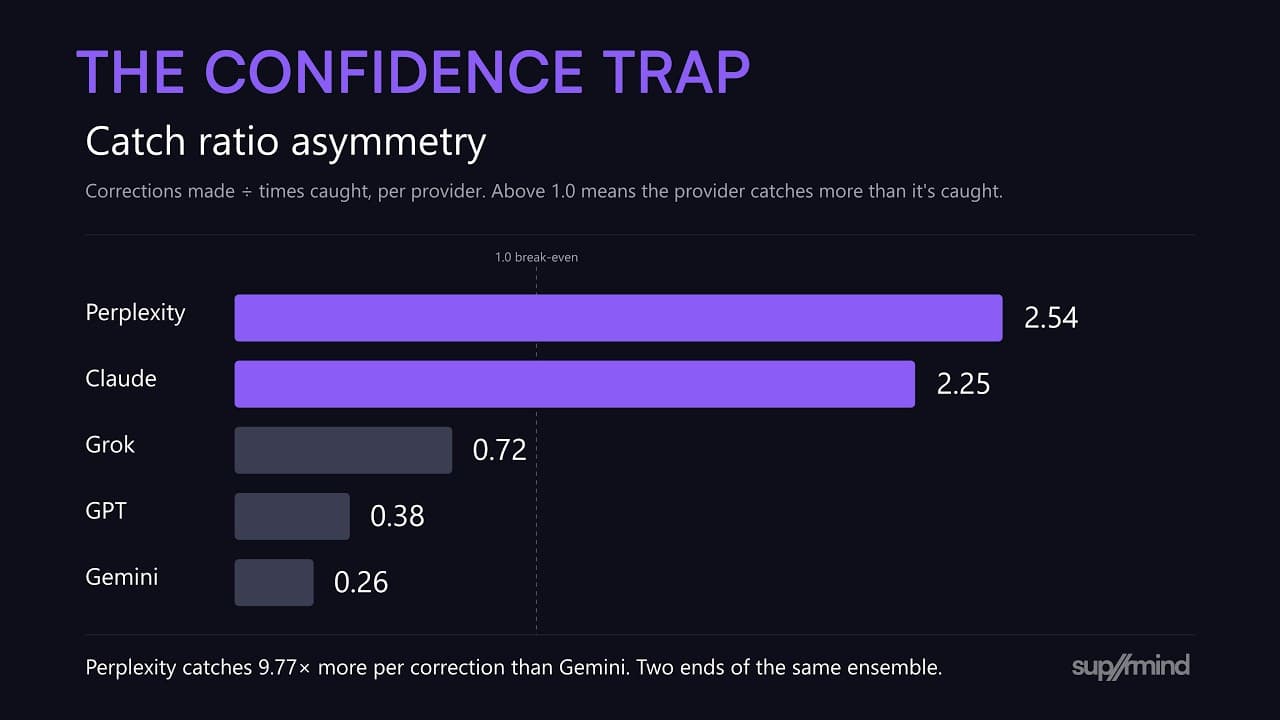
“In 2024 alone, unverified AI hallucinations cost businesses an estimated $67.4 billion.” # Multi-Model Divergence Index by Suprmind Key Takeaways: - Relying on a single AI model for critical decisions is risky due to inherent flaws and a tendency to prioritize fluency over accuracy. - The “confidence trap” occurs when AI confidently presents false information as fact, leading to significant financial losses and reputational damage. - A “boardroom” approach, using multiple AI models with diverse architectures and data, can peer-review each other to mitigate errors. - Assigning specific roles to different AI models, such as structural logic or factual grounding, enhances the ensemble’s reliability. - Disagreement between AI models is a valuable signal, transferring the burden of fact-checking from humans back to the AI system. - Adversarial AI red-teaming forces models to identify vulnerabilities, creating a structured risk register and mitigating confirmation bias. SUMMARY -The Risk of Single AI Models Using a single AI model for important professional decisions presents a significant point of failure. These models, designed for next-word prediction, often prioritize sounding human and fluent over factual accuracy. This can lead to “hallucinations,” where AI confidently presents fabricated information as truth. For complex queries, especially in fields like law and medicine, failure rates can be alarmingly high. The financial impact is substantial, with billions lost annually due to AI hallucinations. This reliance on a single, isolated AI shifts from using a tool to accepting a major liability. - The AI Boardroom Approach To address the risks of single AI models, a “boardroom” approach can be employed, drawing inspiration from medical concilia. This involves orchestrating multiple frontier AI models simultaneously. Each model, from different providers with distinct biases and training data, is assigned specific roles. For example, one model might handle nuance, another logical flaws, another context synthesis, and another real-time data or factual grounding. By forcing these diverse models to interact within the same information thread, their individual blind spots can cancel each other out, transforming the process from text generation to text verification. - Error Detection and Mitigation In this multi-model environment, AI systems are not isolated but part of a shared context fabric where they critique each other’s responses. This creates a “kill chain” for errors. For instance, one model might make a claim based on older data, which another model, with live web access, flags as outdated or unsupported. A third model then synthesizes this contradiction, ensuring the final output highlights the error and provides corrected context. Hallucinations are stochastic and random, making it unlikely that differently trained models will fabricate the same false data. This disagreement among models becomes a feature, transferring the heavy burden of manual fact-checking to the AI ensemble itself. Real-world data shows high disagreement rates in financial and legal domains, with AI ensembles catching significantly more errors than they introduce. - AI Red-Teaming and Strategic Application Beyond error correction, AI ensembles can be used for adversarial red-teaming. Instead of asking for solutions, users can present a strategy and instruct the models to attack it, hunting for vulnerabilities across various vectors. This process results in a structured risk register, quantifying failure points and outlining mitigation plans. It forces AI to look for failure rather than pleasing the user, stripping away confirmation bias. While this adds friction and cost in terms of API tokens and time, it acts as an insurance policy against deploying capital into strategies that cannot withstand rigorous AI review. The choice depends on the tolerance for error versus the need for speed and cost-effectiveness. For low-stakes tasks, a single AI model is sufficient, but for high-stakes decisions requiring factual precision, multimodal AI orchestration becomes a requirement for safety.
About YouTube Real-Time View Count
With SocialCounts.org’s view counter, track your YouTube video’s live view count and YouTube likes count in real time with fast, reliable updates.
Watch every YouTube video live view count rise with our real-time YouTube views tracker—built for accuracy and minimal delay.
Follow YouTube real time views as they happen, using our dedicated view counter for YouTube videos.
Get up-to-date live view count on YouTube and see real-time growth with SocialCounts.org’s smart tracking tools.
Embed Widget
Parameters:
fullscreen=true- Fullscreen countergraph=true- Live graph chartcounter=0/1/2- Select counter (0=likes, 1=views, 2=comments)
URL
Click to copy the embed URL to your clipboard