

29
likes
1
comments
daily view 0
monthly view 0
Live Analytics
Comments 0
GGUF vs AWQ vs GPTQ: LLM Quantization Methods Explained Analytics Table
Income Estimates for GGUF vs AWQ vs GPTQ: LLM Quantization Methods Explained
Based on this YouTube video's total view count of 719 views and industry-standard rates, the estimated total earning is $1 - $1 through ad revenue. Historical data is not yet available to calculate daily, weekly, or monthly averages.
About GGUF vs AWQ vs GPTQ: LLM Quantization Methods Explained
Explore GGUF vs AWQ vs GPTQ: LLM Quantization Methods Explained with 719 views, 29 likes, and 1 comments. Experience the impact of this video content that has captured audience attention.
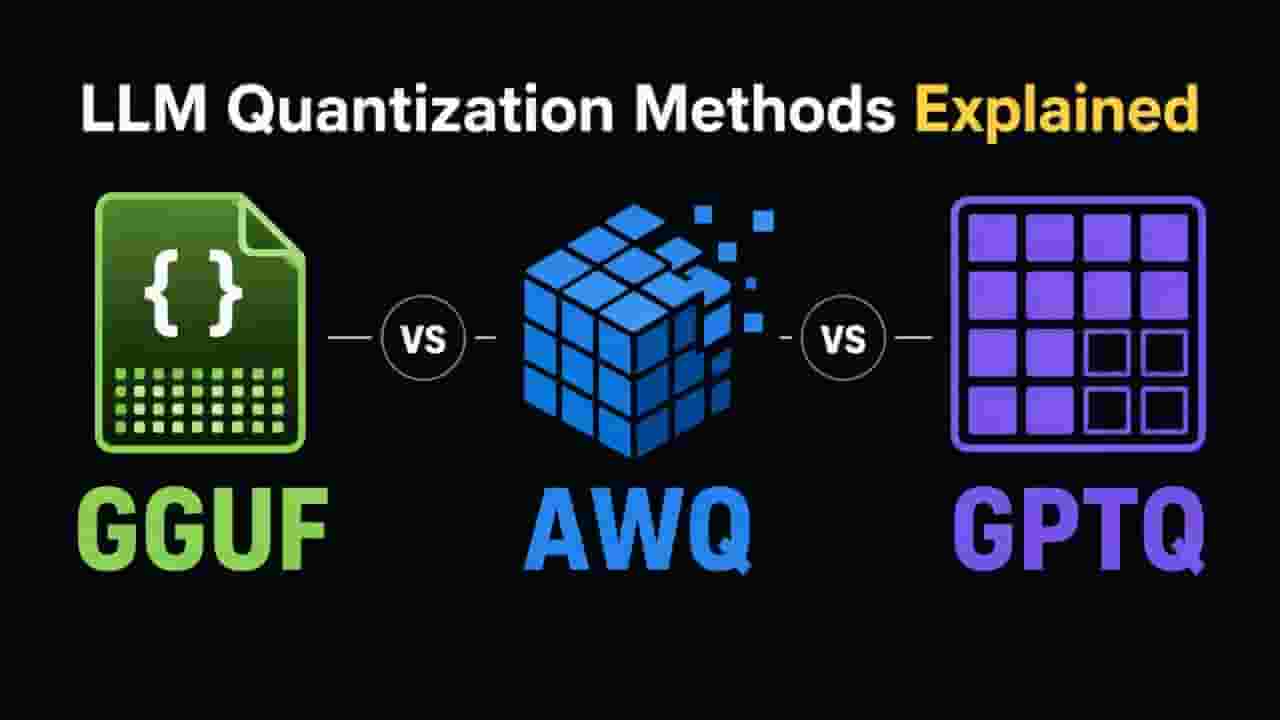
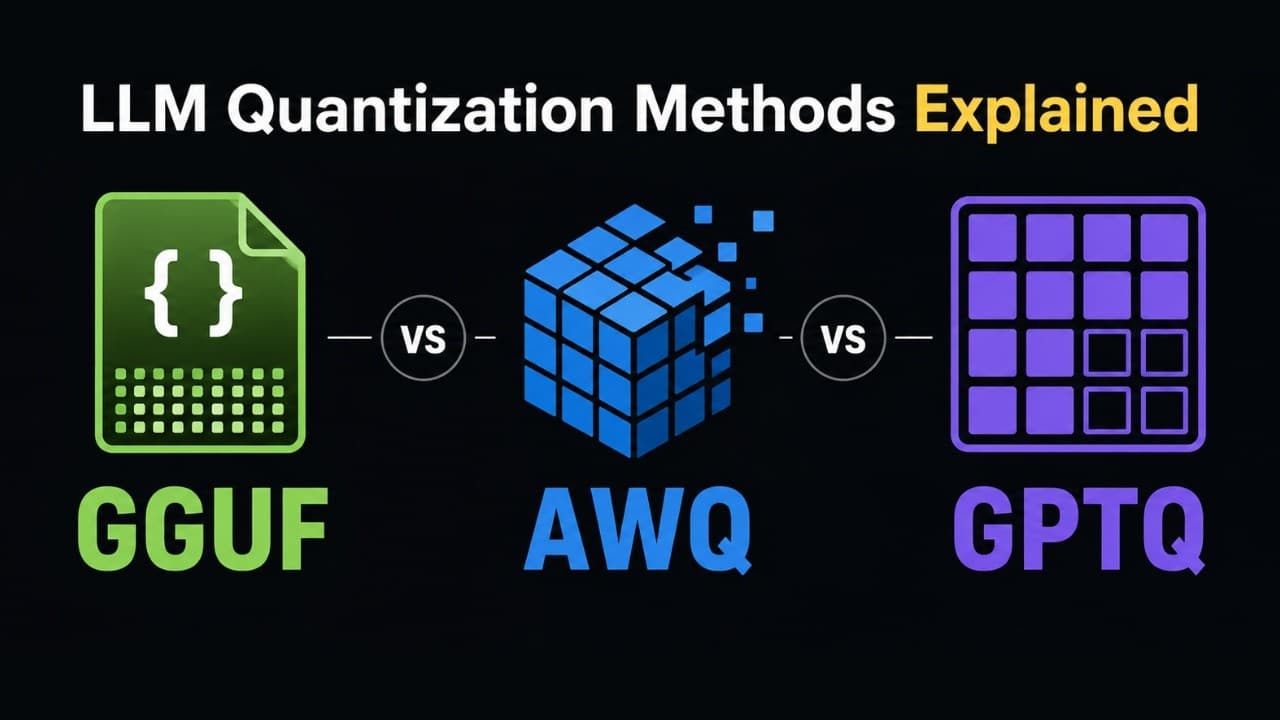
Quantization is often sold as "smaller = cheaper = better." But the three things people conflate—VRAM savings, inference speed, and model accuracy—do not move together. In this video, we go under the hood of GGUF, AWQ, and GPTQ to find the true quantization sweet spot. We unpack why the 4-bit tier (like GGUF Q4_K_M) successfully balances size, speed, and intelligence, while pointing out the silent trade-offs of 8-bit (zero speedup) and 2-bit formats (the edge of model collapse). Whether you are hosting open-source LLMs on a local GPU or trying to optimize server inference at scale, we break down the mathematical mechanics—from GPTQ's Hessian matrix approach to AWQ's activation-aware scaling tricks. 📌 Timestamps: 0:00 - Why Quantize? The VRAM & Accuracy Paradox 1:10 - PTQ vs QAT: Post-Training vs Quantization-Aware Training 2:00 - Round to Nearest (RTN): The Simplest Quantization Baseline 2:20 - GPTQ Deep Dive: The Hessian Matrix Method 3:30 - The 3-Bit Catch: When Sophisticated Math Fails 4:00 - AWQ: Activation-Aware Weight Quantization (Salient Weights) 5:20 - GGUF & K-Quants: The Format That Saved Local AI 6:25 - Ternary Frontier: BitNet b1.58 (1.58-Bit Weights) 7:10 - The Cliff: Why Models Collapse Below 4-Bits 7:40 - The 8-Bit Fallacy: Half Memory, Zero Speedup 8:15 - The Verdict: The 4-Bit Pareto Sweet Spot 🔗 Resources & Papers Cited: - Frantar et al. (2022) - "GPTQ: Accurate Post-Training Quantization" - Lin et al. (2023) - "AWQ: Activation-aware Weight Quantization" - Georgi Gerganov (2023) - llama.cpp / GGUF Specifications - Ma et al. (2024) - "The Era of 1-bit LLMs: BitNet b1.58" If this technical breakdown helped clarify your deployment strategy, subscribe to Cloud Codes. We take apart one system architecture or deployment paradigm like this every week. Build, solve, deploy. 👇 SUBSCRIBE & WATCH NEXT Subscribe for a new systems deep-dive every week: https://www.youtube.com/channel/UC0DZj1PNa_Fp0MU6uPSKv5w?sub_confirmation=1 📱 CONNECT WITH US Twitter/X: x.com/cloud_codes Join our developer community: discord.gg/HVnH9SY48 User Queries: gguf vs awq vs gptq llm quantization explained what is the difference between awq and gptq how does gguf quantization work q4_k_m vs q8_0 does 4 bit quantization lose accuracy bitnet 1.58 bit explained llm.int8 zero speedup how to fit a 70b model on one gpu
About YouTube Real-Time View Count
With SocialCounts.org’s view counter, track your YouTube video’s live view count and YouTube likes count in real time with fast, reliable updates.
Watch every YouTube video live view count rise with our real-time YouTube views tracker—built for accuracy and minimal delay.
Follow YouTube real time views as they happen, using our dedicated view counter for YouTube videos.
Get up-to-date live view count on YouTube and see real-time growth with SocialCounts.org’s smart tracking tools.
Embed Widget
Parameters:
fullscreen=true- Fullscreen countergraph=true- Live graph chartcounter=0/1/2- Select counter (0=likes, 1=views, 2=comments)
URL
Click to copy the embed URL to your clipboard