

Live Analytics
Comments 0
The Native Bigfoot Analytics Table
Income Estimates for The Native Bigfoot
Based on this YouTube video's total view count of 1.25M views and industry-standard rates, the estimated total earning is $879 - $2.51K through ad revenue. Historical data is not yet available to calculate daily, weekly, or monthly averages.
About The Native Bigfoot
Explore The Native Bigfoot with 1,255,500 views, 42,767 likes, and 4,562 comments. Experience the impact of this video content that has captured audience attention.
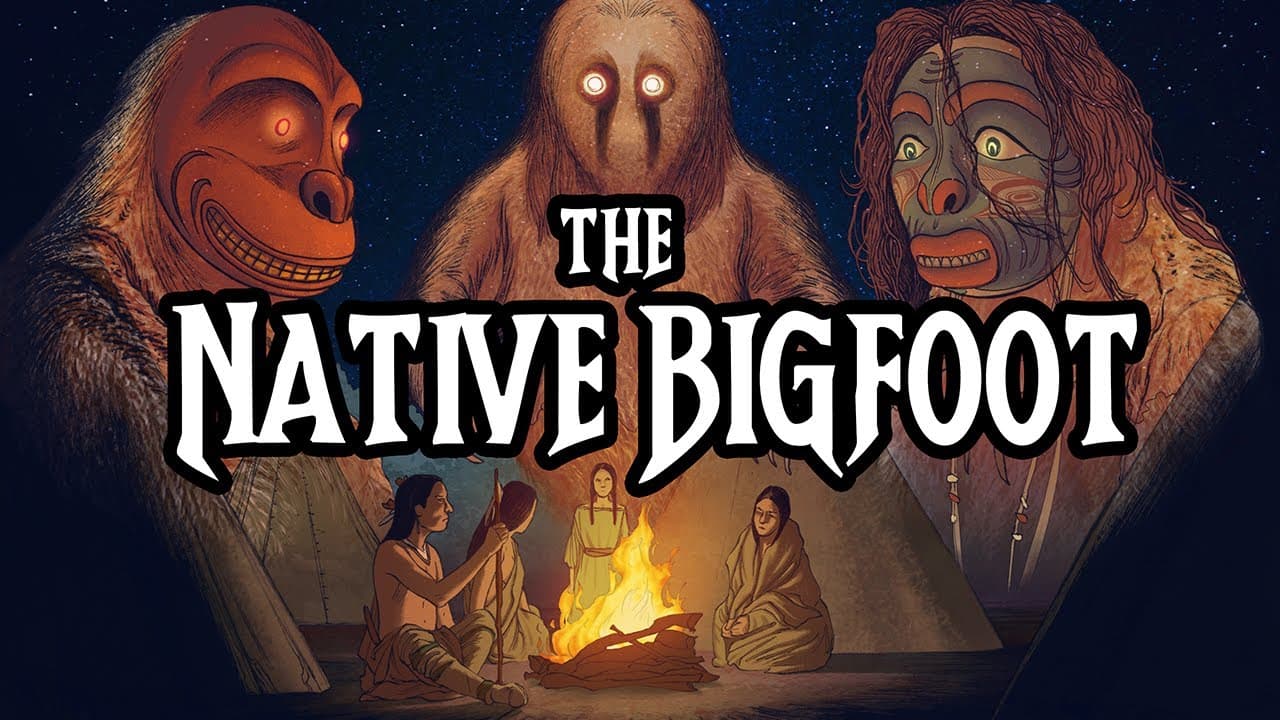
Thumbnail art by Ettore Mazza Original music by Ryan Probert (https://www.youtube.com/@ProbeComposer) and featuring Naomi Sullivan on Saxophone I want to apologize for some of the mispronunciations in my video. Spreadsheet Link: https://docs.google.com/spreadsheets/d/1Zn5XwY2fwEacKxJpH_Dz3UgT0lc1iiI4/edit?usp=sharing&ouid=115919598192553705708&rtpof=true&sd=true Original 1929 Magazine Sasquatch Article (pg. 6): https://archive.org/details/Macleans-Magazine-1929-04-01/mode/2up I do want to clarify that the beliefs held by the Yokuts that I present in this video are little simplified. After several conversations with the representative, they further explained to me that the Yokuts believe that the Hairy Man is a tribe of people, a tribe of spiritual people that can walk in both worlds: in the spirit and in flesh-and-blood. They are endowed with the abilities to transform, speak, and heal. The Yokuts explicitly do NOT believe them to be ape-like/Sasquatch-like creatures. The interpretation of the Hairy Man held by Bigfooters is simply incorrect and does not reflect the actual beliefs of the Yokuts. Chapters: 0:00:00 Introduction 0:08:49 Assembling a List 0:14:13 THE SPREADSHEET 0:16:47 My Findings 0:21:16 the Other 89% 0:22:11 Chimeras 0:24:48 Spirits 0:26:50 Giants 0:30:15 Dwarves 0:31:31 "Wild Indians" 0:40:00 The Origins of Sasquatch 0:47:08 Basket Women 0:51:43 Summary of the 89% 0:55:21 The Hairy Man 1:03:05 Well, Actually... 1:12:59 Conclusion Correction: 0:48:17 take note of her skirt/dress Citations: Archer, J. (2000). Texas indian myths and legends. Republic of Texas Press. Bartram, W. (1806). Travels, and other writings. Library of America. Brode, N. (2020, May 11). Bigfoot is real (for 11% of U.S. adults). CivicScience. https://civicscience.com/bigfoot-is-real-for-11-of-u-s-adults/ Burns, J.W. (1929). Introducing B.C.’s Hairy Giants. MacLean’s Magazine. Coleman, L. (2003). Bigfoot: The true story of apes in america. Paraview Pocket Books. Davenport, H. M. (2020, July). The changing face of folkloric transmission: Bigfoot and the American Pysche. https://scholarworks.montana.edu/xmlui/bitstream/handle/1/15974/davenport-changing-face-2020.pdf Dorsey, G. A. (1905). Traditions of the Caddo. Carnegie Instit. Erdros, R., & Ortiz, A. (1984). American indian myths and legends: Selected and edited by. Pantheon Books, div of Random House. Feder, K. L. (2019). Archaeological oddities: A field guide to forty claims of Lost Civilizations, ancient visitors, and other strange sites in North America. Rowman & Littlefield Publishers. Green, J. (1968). On the Track of the Sasquatch, 2nd ed. Agassiz, British Columbia: Cheam Publishing. Gwynne, S. C. (2010). Empire of the Summer Moon: Quanah Parker and the Rise and Fall of the Comanches, the Most Powerful Indian Tribe in American History. United Kingdom: Scribner. Hara, H. S. (1980). The hare Indians and their world. National Museums of Canada. James, G. W. (1909). Indian Basketry: And How to Make Indian and Other Baskets. United States: Malkan. Johnstone, E. B. (2008). Bigfoot and Other Stories. Tulare County Board of Education, Vasalia, California. Lachler, J. (2010). Dictionary of Alaskan Haida. Sealaska Heritage Institute. Lapseritis, J., Murphy, C. L., Trippett, L., & D’Angelo, J. (2011). The sasquatch people and their interdimensional connection. Comanche Spirit Pub. Latta, F. F. (1949). Handbook of Yokuts Indians. Bear State Books. Oildale, California. Loxton, D., & Prothero, D. R. (2015). Abominable science!: Origins of the Yeti, Nessie, and other famous cryptids. Columbia University Press. McClure, N. (2018, October 19). Examining Native American basketry in the studio collections of three artists - points west online. Buffalo Bill Center of the West. https://centerofthewest.org/2018/10/19/points-west-examining-native-american-basketry/ Murphy, C. L., Green, J., & Steenburg, T. N. (2004). Meet the sasquatch. Hancock House. Shiel, L. A. (2013). Forbidden Bigfoot. Jacobsville Books. Strain, K. M. (2008). Giants, Cannibals & Monsters - Bigfoot in Native Culture. Hancock House Ltd. Strain, K. M. (2003). Mayak datat: An Archaeological Viewpoint of the Hairy man Pictographs. Bigfoot information project: Mayak datat - an archaeological viewpoint of the Hairy man pictographs. http://bigfootproject.org/articles/mayak_datat.html Strain, K. M. (2012). Mayak Datat: The Hairy man pictographs. https://www.isu.edu/media/libraries/rhi/research-papers/Mayak-Datat-Hairy-Man-Pictographs-1.pdf Suttles, W. (1972). On the Cultural Track of the Sasquatch. Portland State University. Zitkala-Sa. (1985). Old indian legends. Univ. of Nebraska Pr. Zitkala-Sa. (2004). Iktomi and the ducks and other Sioux Stories. University of Nebraska Press. Special thanks to: Miles Greb Ryan Probert Ettore Mazza American Museum of Natural History And the kind people of the Tule River Tribe
About YouTube Real-Time View Count
With SocialCounts.org’s view counter, track your YouTube video’s live view count and YouTube likes count in real time with fast, reliable updates.
Watch every YouTube video live view count rise with our real-time YouTube views tracker—built for accuracy and minimal delay.
Follow YouTube real time views as they happen, using our dedicated view counter for YouTube videos.
Get up-to-date live view count on YouTube and see real-time growth with SocialCounts.org’s smart tracking tools.
Embed Widget
Parameters:
fullscreen=true- Fullscreen countergraph=true- Live graph chartcounter=0/1/2- Select counter (0=likes, 1=views, 2=comments)
URL
Click to copy the embed URL to your clipboard