

139
likes
26
comments
daily view 0
monthly view 0
Live Analytics
Comments 0
From China’s Oil City Toward the Tianshan Mountains — Xinjiang G217 Drive | 4K Analytics Table
Income Estimates for From China’s Oil City Toward the Tianshan Mountains — Xinjiang G217 Drive | 4K
Based on this YouTube video's total view count of 3.53K views and industry-standard rates, the estimated total earning is $2 - $7 through ad revenue. Historical data is not yet available to calculate daily, weekly, or monthly averages.
About From China’s Oil City Toward the Tianshan Mountains — Xinjiang G217 Drive | 4K
Explore From China’s Oil City Toward the Tianshan Mountains — Xinjiang G217 Drive | 4K with 3,532 views, 139 likes, and 26 comments. Experience the impact of this video content that has captured audience attention.
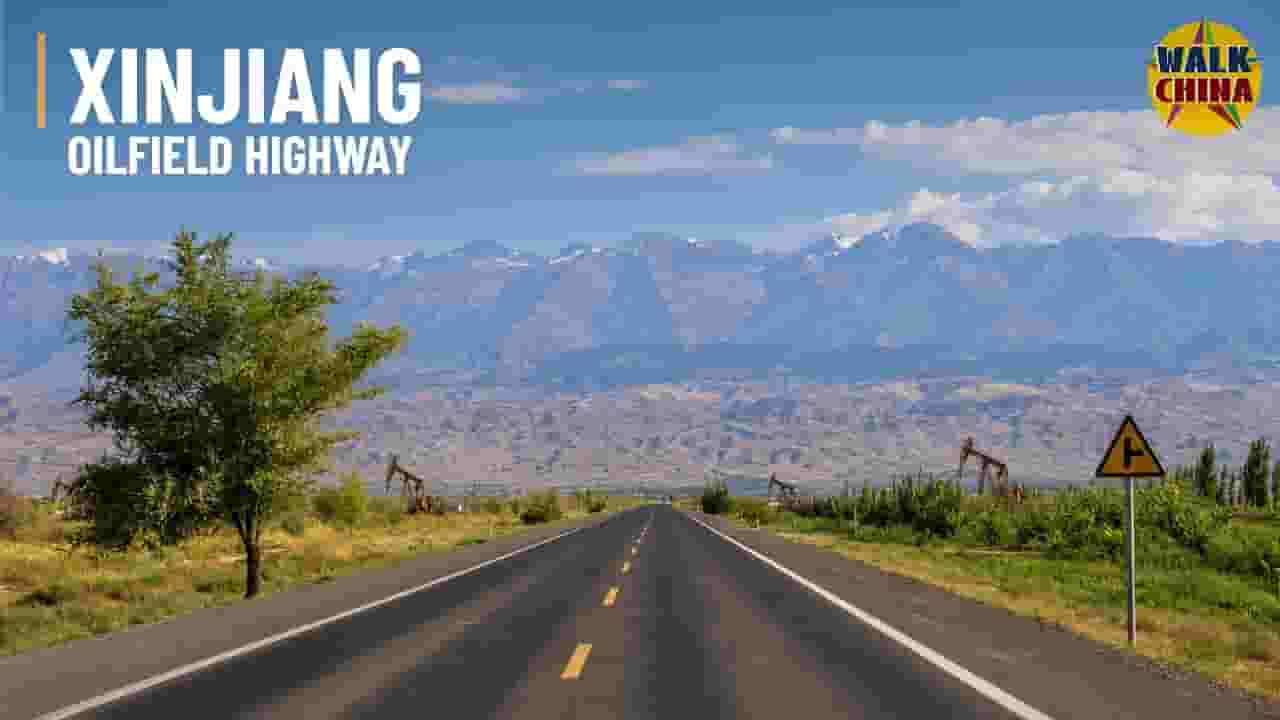
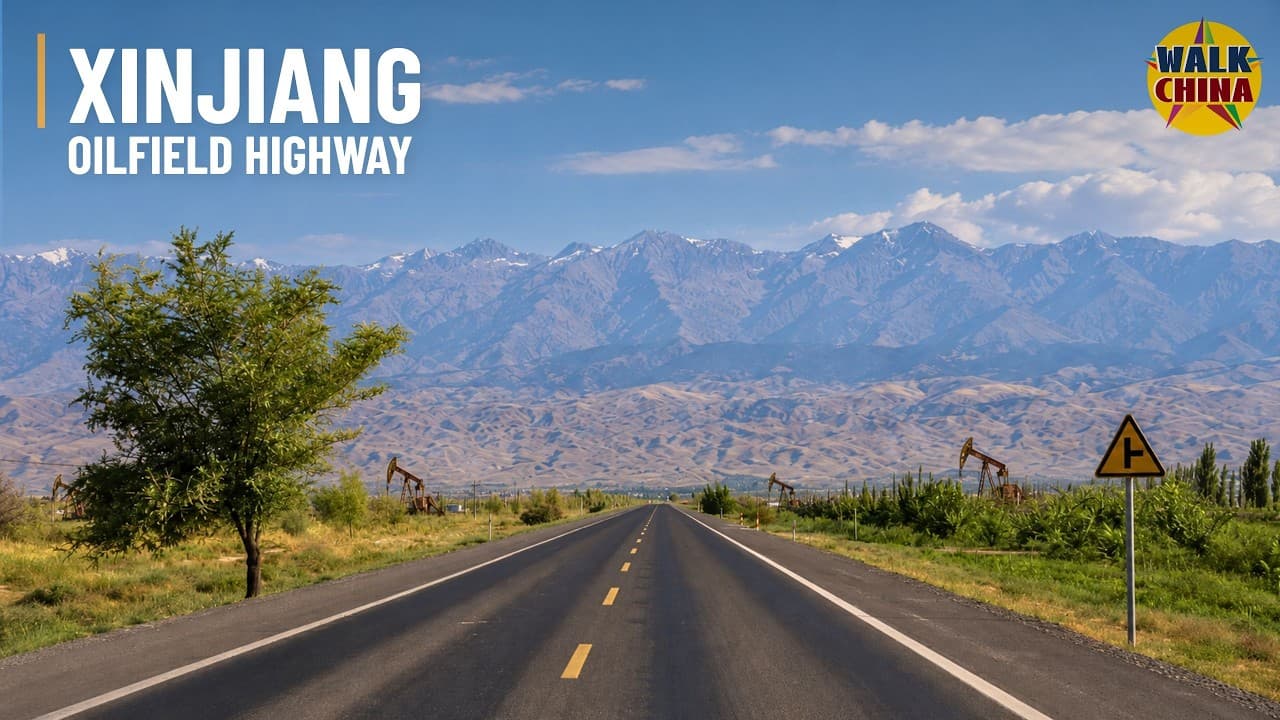
Welcome to northern Xinjiang, China. This immersive 4K drive begins on Yingbin Avenue in Karamay, follows G217, the G3014 Kui–A Expressway and G335 southward, and finally enters Kuytun on Tianxi Road near the northern foothills of the Tianshan Mountains. The 144-kilometer journey starts in one of China’s most distinctive oil cities. Karamay stands on the northwestern edge of the Junggar Basin, and its name means “black oil” in the Uyghur language. On October 29, 1955, Karamay Well No. 1 produced an industrial flow of oil, marking the birth of the first major oilfield developed after the founding of the People’s Republic of China. Drilling sites, pumping facilities, refineries, pipelines and generations of oil workers gradually transformed a remote Gobi landscape into a modern energy city. As the drive leaves Yingbin Avenue, landscaped urban streets, industrial facilities and open desert begin to alternate. At 07:33, the vehicle enters National Highway G217 and the view opens fully into the dry interior of the Junggar Basin. Rainfall is scarce and evaporation is intense. Broad Gobi plains, saline ground and an almost unobstructed horizon create the immense sense of scale associated with northern Xinjiang. Oilfield service roads, pumping equipment, storage facilities and long pipeline corridors appear beside the highway. The petroleum infrastructure does not completely hide the desert; instead, machinery, straight roads and empty terrain combine to form a landscape found in very few other regions. This is the central visual story behind the journey from China’s oil city toward the Tianshan Mountains. At 28:43, the drive enters the G3014 Kui–A Expressway toward Kuytun. G3014 is an important high-speed corridor linking Kuytun and Karamay with areas farther north in Xinjiang. At 31:34, the route leaves the expressway, follows G335 and then returns to G217, showing the contrast between modern expressways, traditional national highways and regional roads. Farther south, the desert gradually begins to change. Agricultural areas and settlements associated with the Seventh Division of the Xinjiang Production and Construction Corps are distributed around this transport corridor. Shelterbelts, irrigation channels, cotton fields, cornfields and man-made oases show how water projects have supported farming, towns and protection from wind-blown sand in an extremely dry basin. Near Kuytun, the elevation gradually rises from about 260 to almost 480 meters. The drive is leaving the interior of the Junggar Basin and approaching the alluvial plain below the northern Tianshan Mountains. Farmland, trees, industrial parks and urban buildings become increasingly dense. At 1:57:56, the vehicle enters Kuytun on Tianxi Road. Kuytun lies on the southwestern edge of the Junggar Basin, approximately 50 kilometers north of the Tianshan Mountains. Together with Dushanzi and Wusu, it forms the important Kuytun–Dushanzi–Wusu “Golden Triangle.” G217, G312, several expressways, northern Xinjiang railway lines and international energy pipelines converge in the surrounding area. This has made Kuytun a major transportation, logistics, commercial and industrial hub of northern Xinjiang. The name Kuytun comes from the Kuytun River and is associated with the Mongolian word for “cold.” The area was historically used by pastoral communities and later served as a military relay and postal route. Modern Kuytun grew rapidly through agricultural settlement, railway construction, petrochemical development and regional trade. In the wider region, Karamay Well No. 1, Black Oil Mountain and the World Ghost City tell the stories of petroleum history and desert erosion. South of Kuytun, Dushanzi is the northern gateway to the legendary Duku Highway and is also close to Dushanzi Grand Canyon. This drive ends in Kuytun and does not enter the mountainous Duku Highway section south of Dushanzi. No talking and no music—only authentic vehicle sounds, road ambience and the vast summer landscapes of Xinjiang. Enjoy the transition between oilfield desert, irrigated oasis, transportation infrastructure and the urban edge of the Tianshan foothills. Route Information: 📍 Start: Yingbin Avenue, Karamay City, Xinjiang 🏁 End: Tianxi Road, Kuytun City, Xinjiang 📏 Distance: 144 km 🕒 Duration: 2 hours 8 minutes 📅 Filming Date: July 29 ⛰️ Elevation: 260–480 m ☀️ Weather: Sunny Chapters: 00:00 Preview 01:25 Departing from Yingbin Avenue, Karamay 07:33 Entering National Highway G217 28:43 Entering G3014 Kui–A Expressway toward Kuytun 31:34 Leaving the expressway, taking G335 and returning to G217 1:57:56 Entering Kuytun via Tianxi Road Like, comment and subscribe for more immersive 4K drives through China’s highways, cities, mountain roads and remote landscapes. #Xinjiang #ChinaDrive #DrivingTour #G217 #Karamay #Kuytun
About YouTube Real-Time View Count
With SocialCounts.org’s view counter, track your YouTube video’s live view count and YouTube likes count in real time with fast, reliable updates.
Watch every YouTube video live view count rise with our real-time YouTube views tracker—built for accuracy and minimal delay.
Follow YouTube real time views as they happen, using our dedicated view counter for YouTube videos.
Get up-to-date live view count on YouTube and see real-time growth with SocialCounts.org’s smart tracking tools.
Embed Widget
Parameters:
fullscreen=true- Fullscreen countergraph=true- Live graph chartcounter=0/1/2- Select counter (0=likes, 1=views, 2=comments)
URL
Click to copy the embed URL to your clipboard