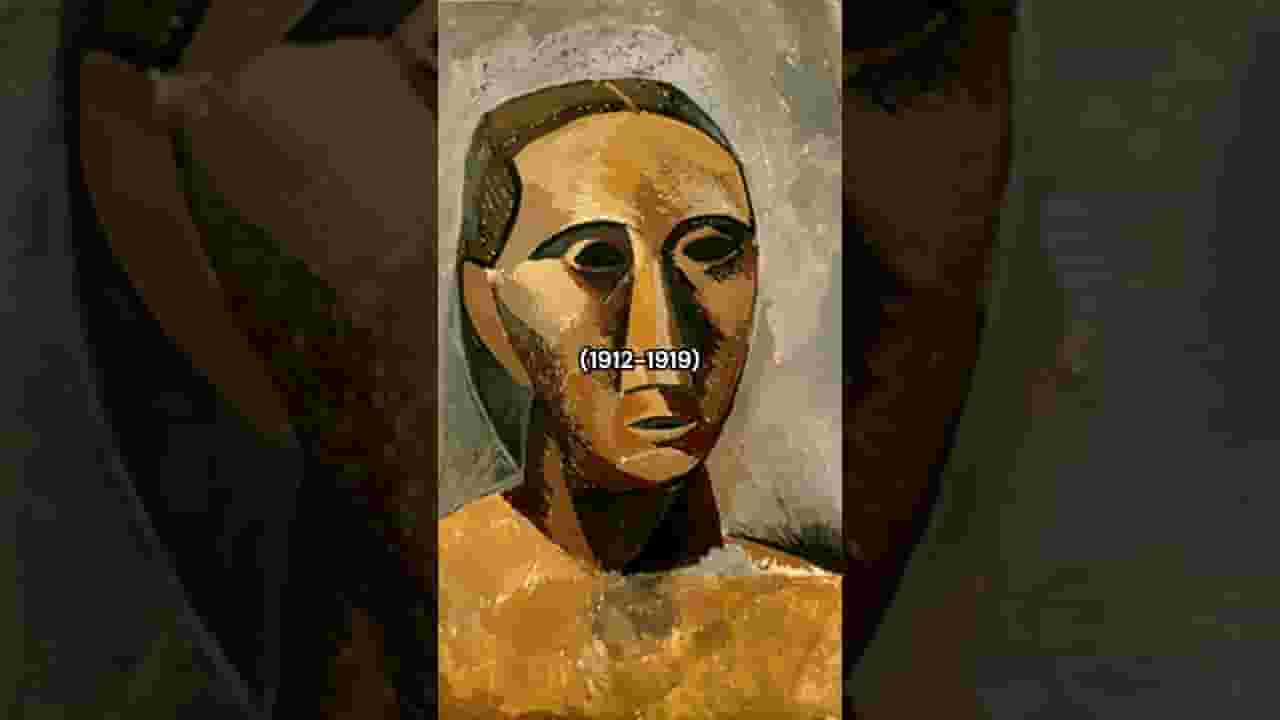
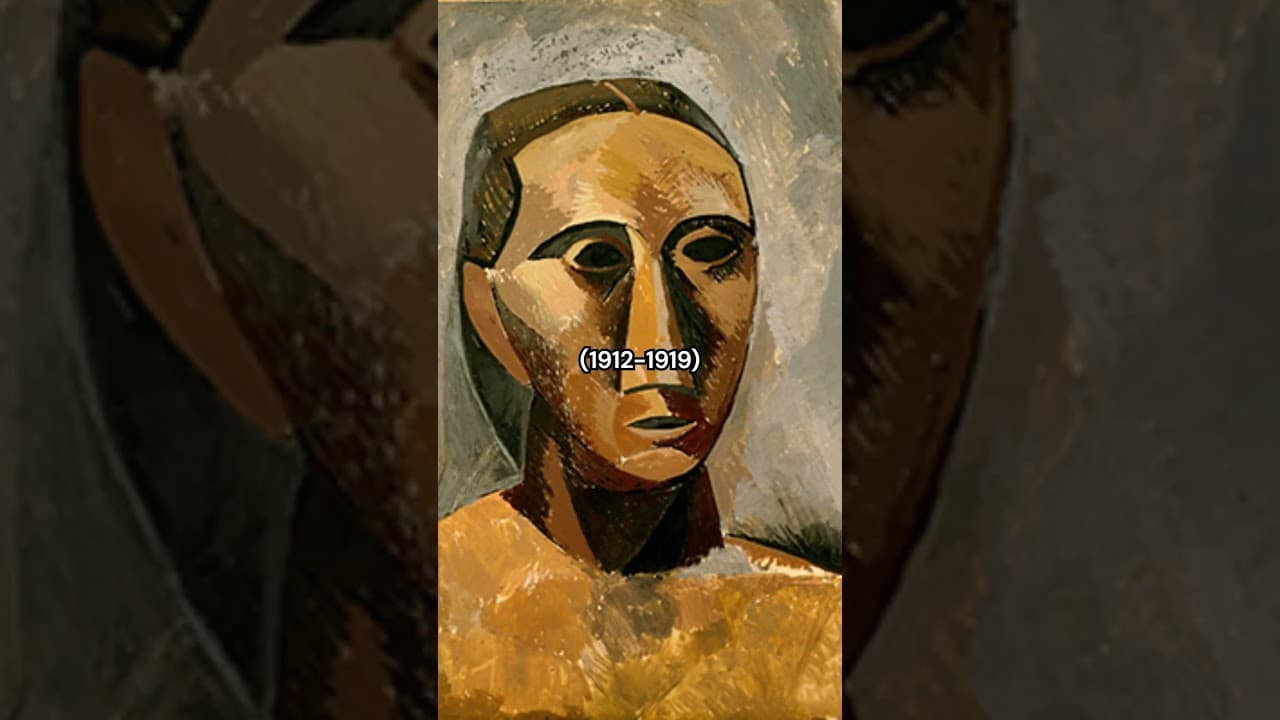


The Evolution of Pablo Picasso's style | #art #arthistory #picasso #paintings
1,528,938
Socialcounts.Org
82,386
likes
936
comments
daily view 0
monthly view 0
Live Analytics
Comments 0
The Evolution of Pablo Picasso's style | #art #arthistory #picasso #paintings Analytics Table
Income Estimates for The Evolution of Pablo Picasso's style | #art #arthistory #picasso #paintings
Based on this YouTube video's total view count of 1.52M views and industry-standard rates, the estimated total earning is $1.07K - $3.05K through ad revenue. Historical data is not yet available to calculate daily, weekly, or monthly averages.
About The Evolution of Pablo Picasso's style | #art #arthistory #picasso #paintings
Explore The Evolution of Pablo Picasso's style | #art #arthistory #picasso #paintings with 1,528,938 views, 82,386 likes, and 936 comments. Experience the impact of this video content that has captured audience attention.
Pablo Picasso’s artistic journey is a rich tapestry of distinct phases, each reflecting his evolving style and personal experiences. Born in Málaga, Spain, Picasso displayed remarkable artistic talent from an early age. He initially studied at the Royal Academy of San Fernando in Madrid but soon grew disillusioned with traditional education. His early works were influenced by realism, symbolism, and classical art as he moved between Spain and France, absorbing these varied influences. The Blue Period marked one of Picasso’s most emotionally charged phases, triggered by the tragic death of his close friend, Carlos Casagemas. Dominated by somber tones of blue and green, his paintings from this time reflect themes of deep melancholy, poverty, and isolation. Picasso often portrayed beggars, blind figures, and people living on the margins of society. This period produced some of his most iconic works, such as The Old Guitarist and La Vie, where the use of cold, muted colors reflects the emotional depth of the subjects. In contrast, the Rose Period brought a brighter, more optimistic tone to his art. After settling in Paris, Picasso’s palette warmed up, with soft pinks, reds, and earth tones characterizing his works. The focus shifted to circus performers, harlequins, and acrobats—figures from the world of entertainment who, despite their festive appearances, often carried an air of introspection and melancholy. This period marked a subtle transition from the heaviness of his previous work to a more playful, albeit still deeply human, exploration of subjects. Picasso’s African Period, also known as his Proto-Cubist phase, was a radical turning point in his artistic development. He became fascinated by African art and Iberian sculpture, leading to a deconstruction of the human form in his work. This exploration paved the way for the birth of Cubism. His famous painting Les Demoiselles d'Avignon broke away from conventional depictions of the human figure, instead presenting distorted and angular bodies inspired by African masks and ancient sculpture. This marked the beginning of his experimentation with abstraction and fragmentation. Cubism, co-founded by Picasso and Georges Braque, revolutionized modern art. Instead of portraying objects from a single perspective, Cubism fragmented them into geometric shapes and presented multiple viewpoints simultaneously. In Analytic Cubism, Picasso deconstructed forms in a highly abstract manner, while in Synthetic Cubism, he simplified these forms and introduced collage elements, incorporating materials like newspaper and wallpaper. This innovative approach, seen in works such as Girl with a Mandolin and Still Life with Chair Caning, challenged traditional notions of perspective and representation. In the 1920s and 1930s, Picasso’s work reflected surrealist influences, even though he never formally joined the Surrealist movement. His paintings from this period often conveyed dreamlike, distorted imagery, exploring themes of sexuality, inner turmoil, and the subconscious. One of the most powerful and politically charged works from this time is Guernica, painted in response to the bombing of the Spanish town during the Civil War. This massive black-and-white canvas is a harrowing portrayal of the horrors of war, blending surrealism with stark political commentary. Picasso remained a prolific artist well into his later years, constantly experimenting with new styles and mediums, including ceramics, sculpture, and printmaking. He revisited earlier themes but always infused them with fresh energy and innovation. His later works often dealt with political concerns, particularly anti-fascism, and they continued to challenge the boundaries of art. Even as an elderly artist, Picasso’s work retained the vigor and passion that had defined his career, showing a lifelong commitment to creativity and experimentation. His reinterpretations of masterpieces, such as Las Meninas, exemplify his ongoing drive to reimagine and redefine art up until his death in 1973. Picasso’s legacy endures as one of the most influential and groundbreaking artists of the 20th century.
About YouTube Real-Time View Count
With SocialCounts.org’s view counter, track your YouTube video’s live view count and YouTube likes count in real time with fast, reliable updates.
Watch every YouTube video live view count rise with our real-time YouTube views tracker—built for accuracy and minimal delay.
Follow YouTube real time views as they happen, using our dedicated view counter for YouTube videos.
Get up-to-date live view count on YouTube and see real-time growth with SocialCounts.org’s smart tracking tools.
Embed Widget
Parameters:
fullscreen=true- Fullscreen countergraph=true- Live graph chartcounter=0/1/2- Select counter (0=likes, 1=views, 2=comments)
URL
Click to copy the embed URL to your clipboard