

2
likes
1
comments
daily view 0
monthly view 0
Live Analytics
Comments 0
STS-67 | Space Shuttle Endeavour Launches from Complex 39A Analytics Table
Income Estimates for STS-67 | Space Shuttle Endeavour Launches from Complex 39A
Based on this YouTube video's total view count of 169 views and industry-standard rates, the estimated total earning is $0 - $0 through ad revenue. Historical data is not yet available to calculate daily, weekly, or monthly averages.
About STS-67 | Space Shuttle Endeavour Launches from Complex 39A
Explore STS-67 | Space Shuttle Endeavour Launches from Complex 39A with 169 views, 2 likes, and 1 comments. Experience the impact of this video content that has captured audience attention.
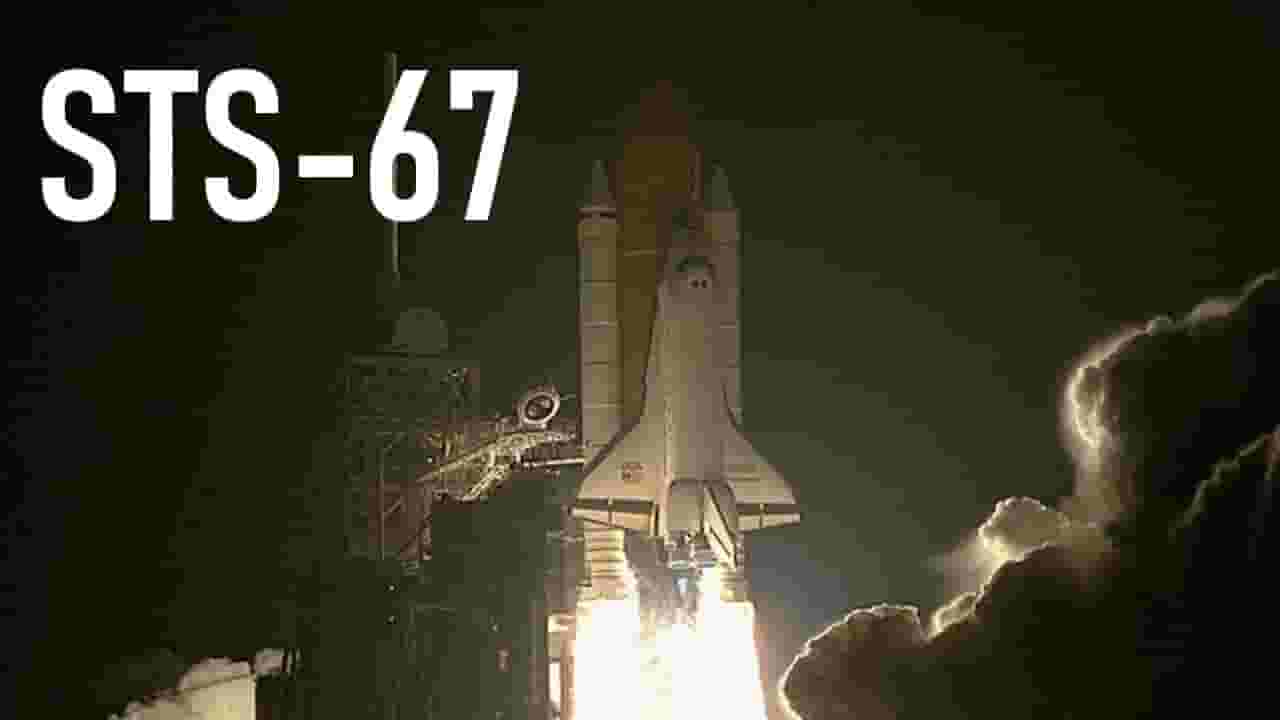
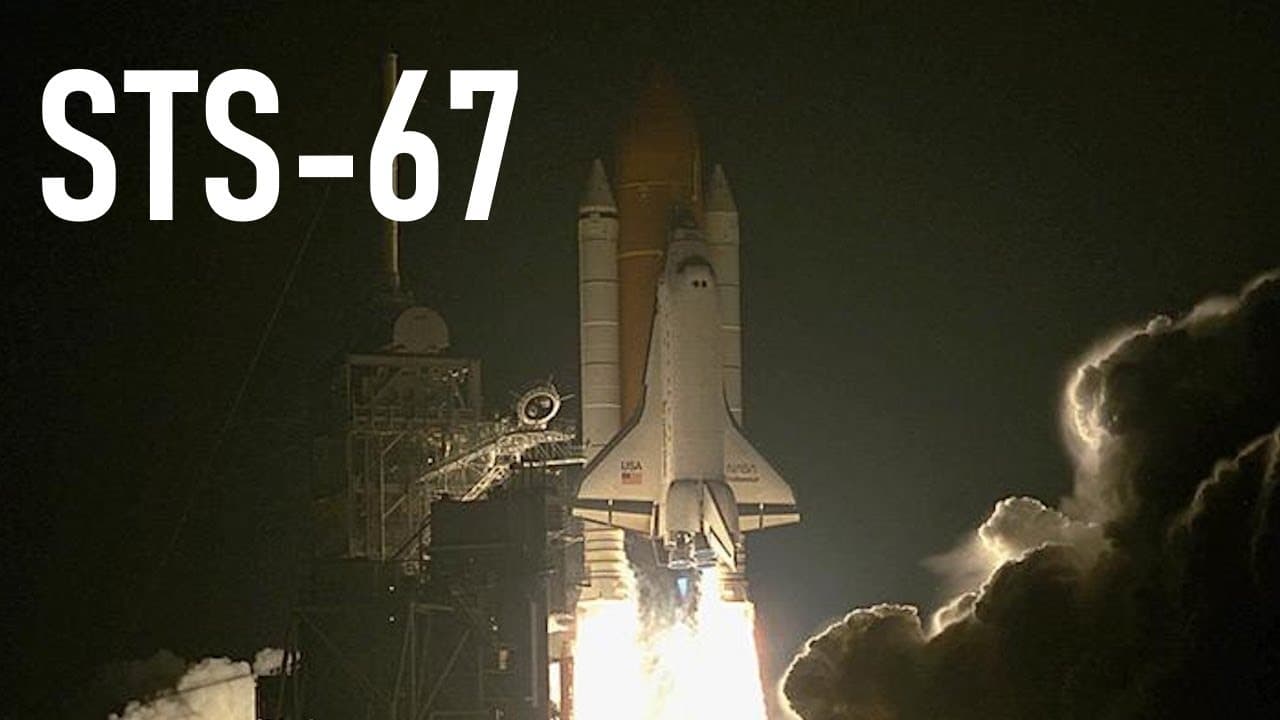
STS-67 was a human spaceflight mission using Space Shuttle Endeavour that launched from Kennedy Space Centre, Florida on March 2, 1995. Astro-2 was the second dedicated Spacelab mission to conduct astronomical observations in the ultraviolet spectral regions (the first was the Astro-1 mission flown on STS-35). The Astro-2 Spacelab consisted of three unique instruments – the Hopkins Ultraviolet Telescope (HUT), the Ultraviolet Imaging Telescope (UIT) and the Wisconsin Ultraviolet Photo-Polarimeter Experiment (WUPPE). These took measurements from objects within the Solar System as well as individual stars, nebulae, supernova remnants, galaxies and active extragalactic objects. The data supplemented the data obtained from the Astro-1 mission. The purpose of the UIT was to observe UV radiation from space (most UV radiation is absorbed by Earth's atmosphere and cannot be studied from the ground). The data collected from UIT Astro-1 mission provided the first accurate knowledge of UV data from the universe. The UIT in the Astro-2 Spacelab was capable of capturing almost twice the UV spectrum of its predecessor. As STS-67 launched at a different time of year from STS-35, data was collected from portions of the sky that Astro-1 was not able to view. On the Middeck, science experiments included the Protein Crystal Growth Thermal Enclosure System Vapor Diffusion Apparatus-03 experiment (PCG-TES-03), the Protein Crystal Growth Single Thermal Enclosure System-02 (PCG-STES-02), the Shuttle Amateur Radio Experiment-II (SAREX-II), the Middeck Active Control Experiment (MACE), the Commercial Materials Dispersion Apparatus Instrumentation Technology Associates Experiments-03 (CMIX-03) and the Midcourse Space Experiment (MSX). The Middeck Active Control Experiment (MACE) was a space engineering research payload and activity. It consisted of a rate gyro, reaction wheels, a precision pointing payload, and a scanning and pointing payload that produces motion disturbances. The goal of the experiment was to test a closed loop control system that could compensate for motion disturbances. On orbit, Commander Stephen S. Oswald and Pilot William G. Gregory used MACE to test about 200 different motion disturbance situations over 45 hours of testing during the mission. Information from MACE was to be used to design better control systems that compensate for motion in future spacecraft. Two Get Away Special (GAS) payloads were also on board. They were the G-387 and G-388 canisters. This experiment was sponsored by the Australian Space Office and AUSPACE ltd. The objectives were to make ultraviolet observations of deep space or nearby galaxies. These observations were made to study the structure of galactic supernova remnants, the distribution of hot gas in the Magellanic Clouds, the hot galactic halo emission, and emission associated with galactic cooling flows and jets. The two GAS canisters were interconnected with a cable. Canister 1 had a motorized door assembly that exposed a UV telescope to space when opened. UV reflective filters on the telescopes optics determine its UV bandpass. Canister 2 contained two video recorders for data storage and batteries to provide experiment power. It was Space Shuttle Endeavour's longest flight. The spiral galaxy, Jupiter, and the four moons (total of six space objects) as well as the seven stars of the insignia symbolize the flight's numerical designation in the Space Transportation System's mission sequence. Endeavour, with ASTRO-2, is speeding by. Credit: @NASA
About YouTube Real-Time View Count
With SocialCounts.org’s view counter, track your YouTube video’s live view count and YouTube likes count in real time with fast, reliable updates.
Watch every YouTube video live view count rise with our real-time YouTube views tracker—built for accuracy and minimal delay.
Follow YouTube real time views as they happen, using our dedicated view counter for YouTube videos.
Get up-to-date live view count on YouTube and see real-time growth with SocialCounts.org’s smart tracking tools.
Embed Widget
Parameters:
fullscreen=true- Fullscreen countergraph=true- Live graph chartcounter=0/1/2- Select counter (0=likes, 1=views, 2=comments)
URL
Click to copy the embed URL to your clipboard