

244,375
likes
7,861
comments
daily view 0
monthly view 0
Live Analytics
Comments 0
Why The First Computers Were Made Out Of Light Bulbs Analytics Table
Income Estimates for Why The First Computers Were Made Out Of Light Bulbs
Based on this YouTube video's total view count of 8.55M views and industry-standard rates, the estimated total earning is $5.98K - $17.1K through ad revenue. Historical data is not yet available to calculate daily, weekly, or monthly averages.
About Why The First Computers Were Made Out Of Light Bulbs
Explore Why The First Computers Were Made Out Of Light Bulbs with 8,553,985 views, 244,375 likes, and 7,861 comments. Experience the impact of this video content that has captured audience attention.
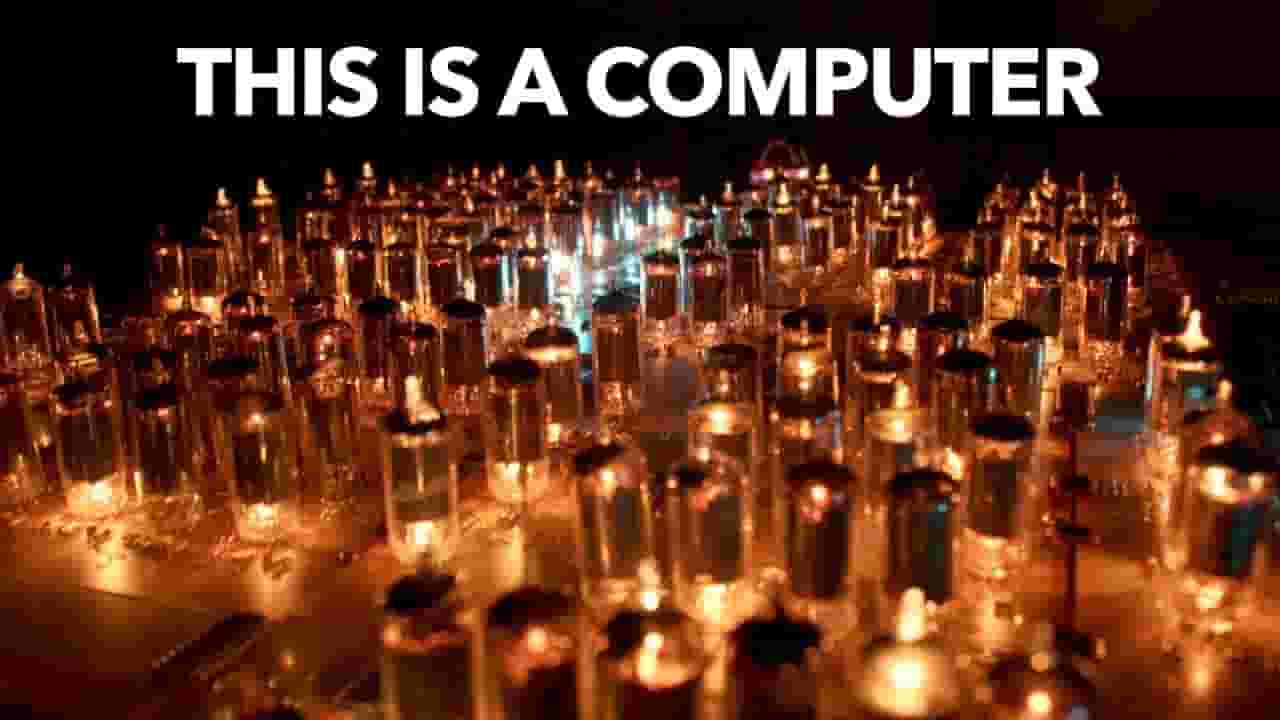
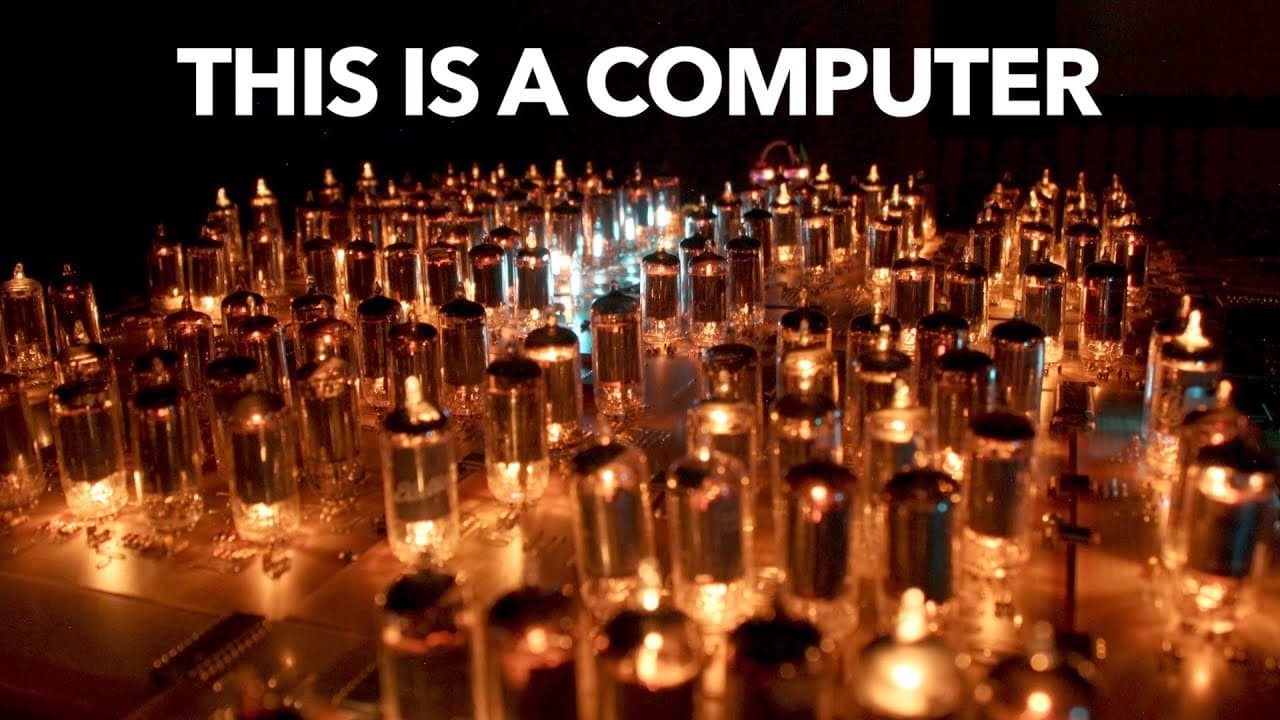
How were the first computers made? Head to https://brilliant.org/veritasium to start your free 30-day trial, and the first 200 people get 20% off an annual premium subscription. A huge thanks to David Lovett for showing me his awesome relay and vacuum tube based computers. Check out his YouTube channel @UsagiElectric ▀▀▀ References: Herring, C., & Nichols, M. H. (1949). Thermionic emission. Reviews of modern physics, 21(2), 185. – https://ve42.co/Herring1949 Goldstine, H. H., & Goldstine, A. (1946). The electronic numerical integrator and computer (eniac). Mathematical Tables and Other Aids to Computation, 2(15), 97-110. – https://ve42.co/ENIAC Shannon, C. E. (1938). A symbolic analysis of relay and switching circuits. Electrical Engineering, 57(12), 713-723. – https://ve42.co/Shannon38 Boole, G. (1847). The mathematical analysis of logic. Philosophical Library. – https://ve42.co/Boole1847 The world’s first general purpose computer turns 75 – https://ve42.co/ENIAC2 Dylla, H. F., & Corneliussen, S. T. (2005). John Ambrose Fleming and the beginning of electronics. Journal of Vacuum Science & Technology A: Vacuum, Surfaces, and Films, 23(4), 1244-1251. – https://ve42.co/Dylla2005 Stibitz, G. R. (1980). Early computers. In A History of Computing in the Twentieth Century (pp. 479-483). Academic Press. ENIAC’s Hydrogen Bomb Calculations – https://ve42.co/ENIAC3 ▀▀▀ Special thanks to our Patreon supporters: Emil Abu Milad, Tj Steyn, meg noah, Bernard McGee, KeyWestr, Amadeo Bee, TTST, Balkrishna Heroor, John H. Austin, Jr., john kiehl, Anton Ragin, Benedikt Heinen, Diffbot, Gnare, Dave Kircher, Burt Humburg, Blake Byers, Evgeny Skvortsov, Meekay, Bill Linder, Paul Peijzel, Josh Hibschman, Mac Malkawi, Juan Benet, Ubiquity Ventures, Richard Sundvall, Lee Redden, Stephen Wilcox, Marinus Kuivenhoven, Michael Krugman, Cy ‘kkm’ K’Nelson, Sam Lutfi. ▀▀▀ Written by Petr Lebedev, Derek Muller and Kovi Rose Edited by Trenton Oliver Animated by Mike Radjabov, Ivy Tello and Fabio Albertelli Filmed by Derek Muller & Raquel Nuno Additional video/photos supplied by Getty Images & Pond5 Music from Epidemic Sound Produced by Derek Muller, Petr Lebedev, & Emily Zhang Thumbnail by Ignat Berbeci
About YouTube Real-Time View Count
With SocialCounts.org’s view counter, track your YouTube video’s live view count and YouTube likes count in real time with fast, reliable updates.
Watch every YouTube video live view count rise with our real-time YouTube views tracker—built for accuracy and minimal delay.
Follow YouTube real time views as they happen, using our dedicated view counter for YouTube videos.
Get up-to-date live view count on YouTube and see real-time growth with SocialCounts.org’s smart tracking tools.
Embed Widget
Parameters:
fullscreen=true- Fullscreen countergraph=true- Live graph chartcounter=0/1/2- Select counter (0=likes, 1=views, 2=comments)
URL
Click to copy the embed URL to your clipboard