

686
likes
22
comments
daily view 0
monthly view 0
Live Analytics
Comments 0
Demystifying Functional Safety: SIS, SIL, and MooN Explained Analytics Table
Income Estimates for Demystifying Functional Safety: SIS, SIL, and MooN Explained
Based on this YouTube video's total view count of 29.7K views and industry-standard rates, the estimated total earning is $21 - $60 through ad revenue. Historical data is not yet available to calculate daily, weekly, or monthly averages.
About Demystifying Functional Safety: SIS, SIL, and MooN Explained
Explore Demystifying Functional Safety: SIS, SIL, and MooN Explained with 29,786 views, 686 likes, and 22 comments. Experience the impact of this video content that has captured audience attention.
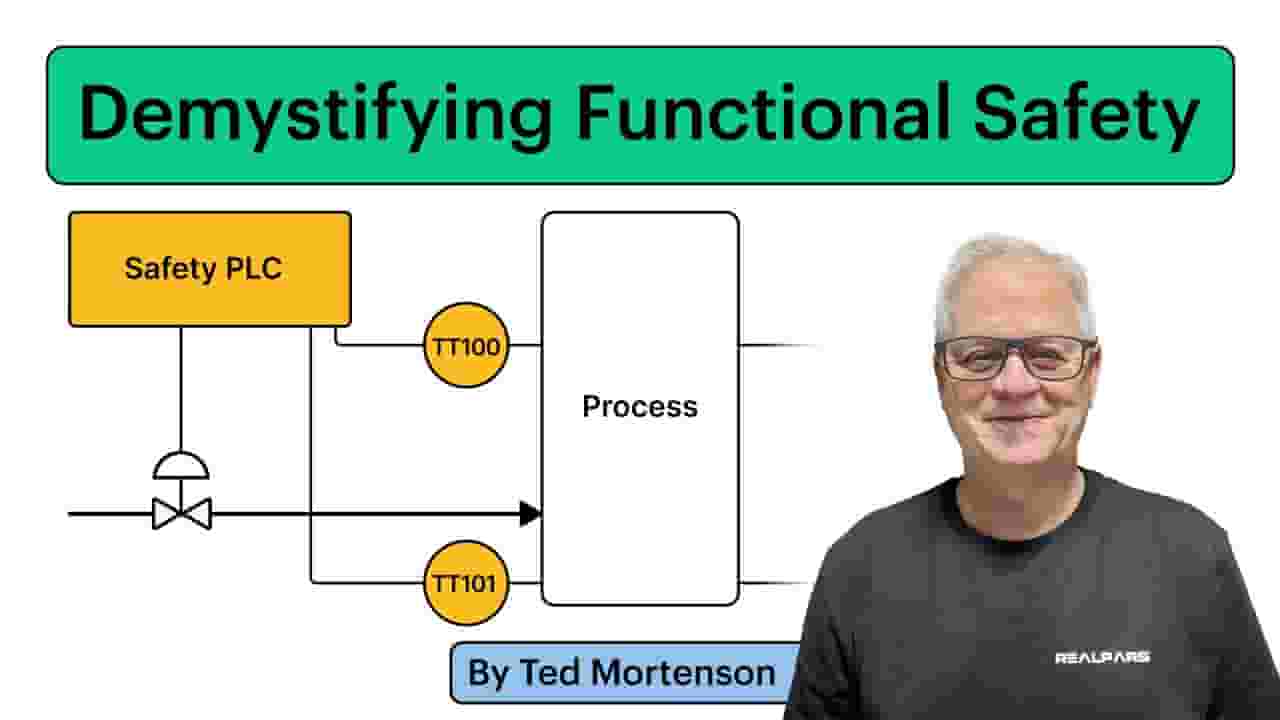
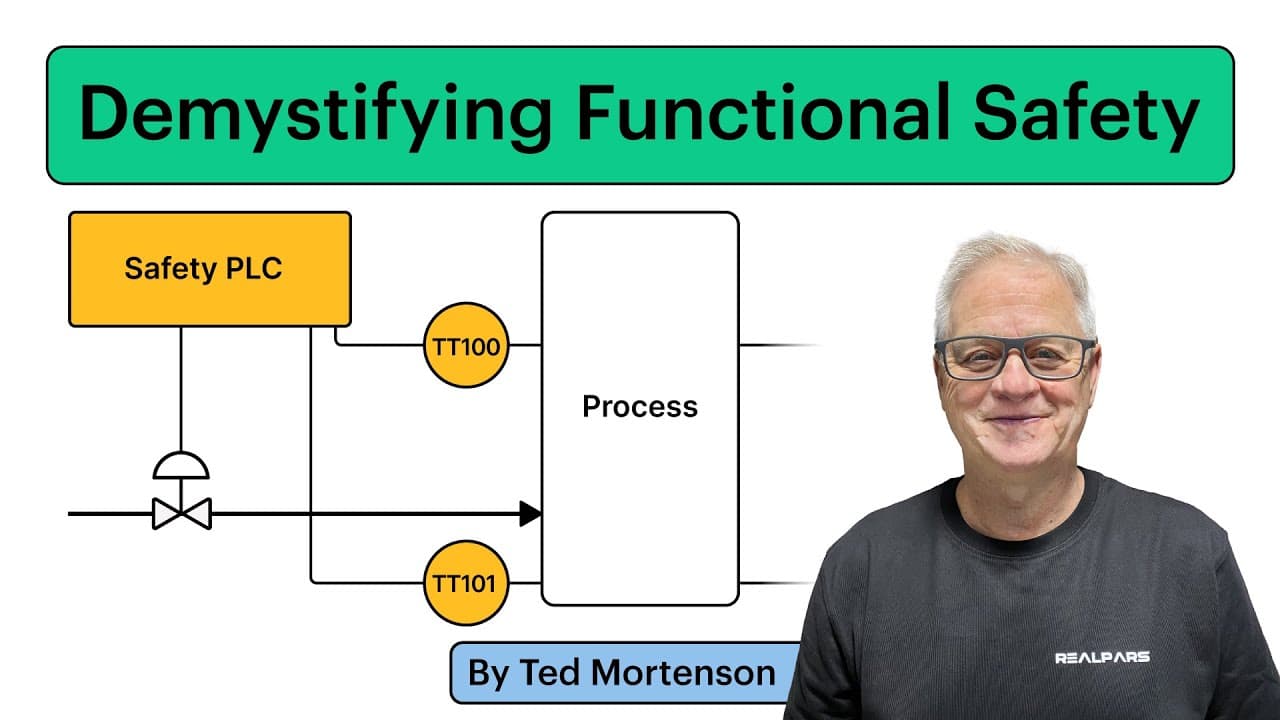
▶ Want to learn industrial automation? Go here: http://realpars.com ▶ Want to train your team in industrial automation? Go here: http://realpars.com/business ▶ You can read the full post here: https://www.realpars.com/blog/functional-safety ⌚Timestamps: 00:00 - Intro 00:24 - What is Functional Safety? 01:27 - Safety Instrumented System (SIS) 02:51 - Safety Integrity Level (SIL) 05:47 - MooN system 07:01 - Summary In this video, we will explore the concepts commonly included within the domain of Functional Safety. The International Electrotechnical Commission (IEC), defines functional safety as identifying potential dangers and activating protective measures to prevent or reduce the impact of hazardous events. It seems logical then that the goals of functional safety are to ensure a system or equipment is operating appropriately and actively prevent the failure of a system from causing harm to people and property. All regulatory process control systems are designed and installed with safety in mind. Even so, the risk of injury, fire, explosion, and other catastrophes is not at a tolerable level. Deploying a functional safety system allows for an automated, safe shutdown of processing units in instances of unusually risky or potentially catastrophic situations that exceed the capabilities of the automatic process control system or trained operators to rectify. Adding another layer of protection called the Safety Instrumented System, or SIS, moves us closer to achieving the desired functional safety condition. The regulatory process control system and the SIS are separate. A Safety Instrumented System consists of sensors, logic solvers, and final control elements with the sole aim of ensuring the process enters a safe state upon encountering specific conditions. The logic solver is often a Safety PLC manufactured by vendors such as Allen Bradley, Omron, or Schneider. In functional safety, SIL is a measure of the probability of failure on demand (PFD) for a Safety Instrumented System. PFD is the probability that a device or logic solver will fail causing the SIS not to respond when demanded. There are four discrete SIL integrity levels. The higher the SIL level, the lower the PFD for the safety system. A SIL integrity level applies to an entire system. Individual devices or components do not have SIL ratings. To be clear, there is no such thing as a SIL-rated device. You can't buy SIL-rated temperature transmitters. You can buy a transmitter suitable for use in a SIL environment. The International Electrotechnical Commission IEC 61508:2010 standard classifies the safety functions into four discrete SIL integrity levels. Alright, so how are the SIL environment requirements determined? In a nutshell, each hazard is assigned to a target SIL. The determination process involves Hazard Analysis and Risk Assessment to bring the overall risk to an acceptable level. Not every company uses the same determination process. There's the Layer of Protection Analysis (LOPA) method whereby all known process hazards and layers of protection are carefully examined. Some companies use an Assignment Matrix to assign a SIL based on a qualitative ranking of the event likelihood, event consequences, and the availability of regulatory process control safeguards already in place. Let's go to the MooN system concept… Not the actual MooN in the sky, but the "M out of N" system. The MooN system introduces a collective decision-making framework. It is defined as a system with N units (components, channels, etc.), in which M out of N units are sufficient to initiate an action. There are a required minimum of M units to vote in agreement to command the execution of the safety action. ============================= If you would like to learn more about Temperature Transmitters, then we suggest you check out our course Temperature Transmitters: Calibration, Principles & Industry Applications: https://www.realpars.com/courses/temperature-transmitter This course was developed in partnership with @endresshauser At the end of the course, you will receive a certificate of completion from Endress + Hauser. ============================= Did you miss out on the latest and greatest? Catch up now by watching our videos right here: https://www.realpars.com/blog/codesys-traces https://www.realpars.com/blog/ladder-logic-optimization https://www.realpars.com/blog/opc-ua-automotive-industry ============================= TWEET THIS VIDEO: https://ctt.ac/SNRkL ============================= Follow us on Facebook 👉 https://www.facebook.com/therealpars Follow us on Twitter 👉 https://twitter.com/realpars Follow us on LinkedIn 👉 https://www.linkedin.com/company/realpars Follow us on Instagram 👉 https://www.instagram.com/realparsdotcom #RealPars #functionalsafety #industrialsafety
About YouTube Real-Time View Count
With SocialCounts.org’s view counter, track your YouTube video’s live view count and YouTube likes count in real time with fast, reliable updates.
Watch every YouTube video live view count rise with our real-time YouTube views tracker—built for accuracy and minimal delay.
Follow YouTube real time views as they happen, using our dedicated view counter for YouTube videos.
Get up-to-date live view count on YouTube and see real-time growth with SocialCounts.org’s smart tracking tools.
Embed Widget
Parameters:
fullscreen=true- Fullscreen countergraph=true- Live graph chartcounter=0/1/2- Select counter (0=likes, 1=views, 2=comments)
URL
Click to copy the embed URL to your clipboard