


4
likes
0
comments
daily view 0
monthly view 0
Live Analytics
Comments 0
Language Barriers in Care: The Double-Up Visit Problem (2026) Analytics Table
Income Estimates for Language Barriers in Care: The Double-Up Visit Problem (2026)
Based on this YouTube video's total view count of 431 views and industry-standard rates, the estimated total earning is $0 - $1 through ad revenue. Historical data is not yet available to calculate daily, weekly, or monthly averages.
About Language Barriers in Care: The Double-Up Visit Problem (2026)
Explore Language Barriers in Care: The Double-Up Visit Problem (2026) with 431 views, 4 likes, and 0 comments. Experience the impact of this video content that has captured audience attention.
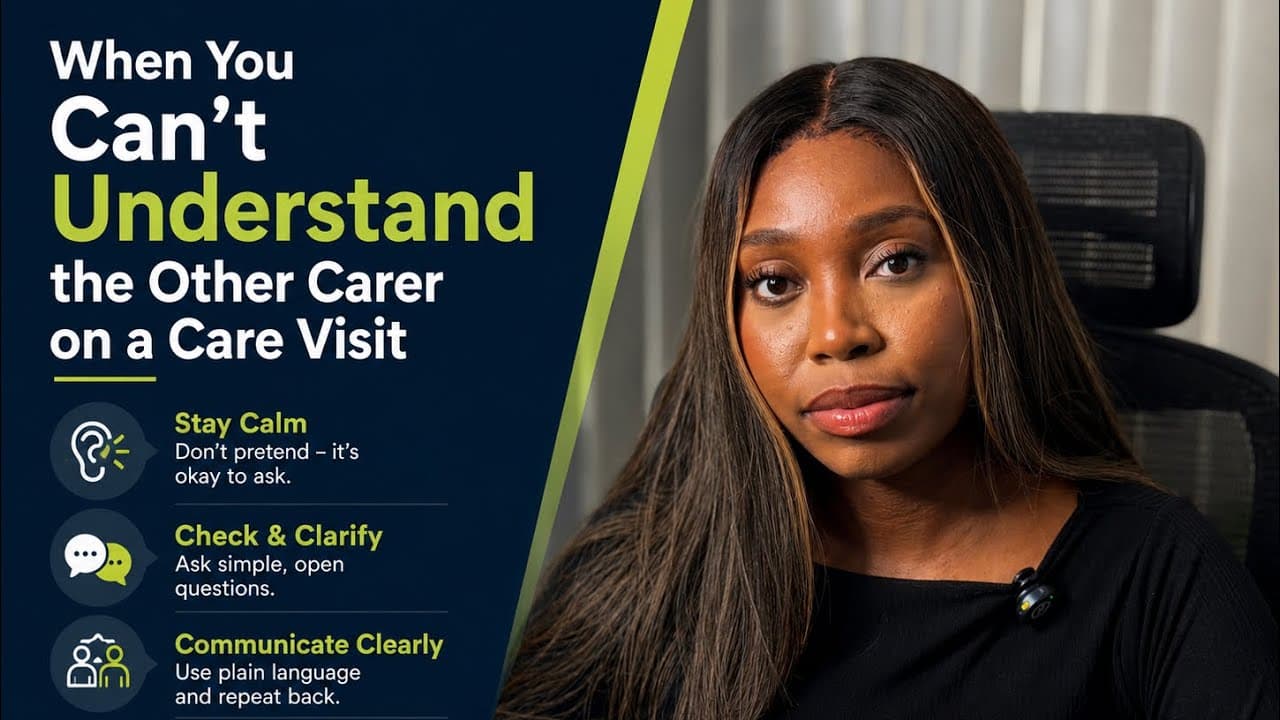
Language Barriers in Care: The Double-Up Visit Problem (2026) Language Barriers in Care: The Double-Up Visit Problem: You are on a double-up visit and the other carer and the client are having a full conversation in a language you do not understand. Language barriers in domiciliary care are one of the most common, and most avoided, issues facing care teams in 2026. Here is how to manage it properly. 🔴 Speaking another language on a visit is not the problem. Leaving a carer unable to follow what is being said about a client is a care quality and safeguarding risk, and it can cut both ways legally. ==================================== 📋 WHAT THIS VIDEO COVERS: ✅ The double-up visit scenario that plays out in care companies every single day ✅ Why this is a care quality and safeguarding issue, not just a language or culture issue ✅ The client's right to communicate in their preferred language, and why that is an asset ✅ The staff side: exclusion, morale, and why good carers quietly leave ✅ The Equality Act 2010 risk that cuts both ways for English and non-English speaking staff ✅ Why a blanket English-only policy is not the answer and can backfire ✅ Six practical steps you can put in place this week ==================================== 🆕 KEY INFORMATION FOR 2026: ❌ Banning staff from speaking their native language can amount to indirect race discrimination ❌ Ignoring staff who feel excluded is a management failure and a compliance risk ✅ Language preference should be recorded in the client's care plan ✅ Smart rostering and clear expectations solve most of these issues before they start ==================================== 💡 WHAT YOU SHOULD ACTUALLY DO: ✅ Record the client's preferred language in their care plan ✅ Where possible, pair carers who speak the client's language on double-up visits ✅ When pairing is not possible, set a clear expectation that key information is summarised in English ✅ Frame it as a communication and care quality issue, not a language or culture issue ✅ Invest in proper cultural awareness training, not a tick-box module ✅ Consider translation apps to bridge gaps in the moment ==================================== 🎯 THIS VIDEO IS FOR: - Registered Managers leading a diverse domiciliary care team - Care providers managing double-up visits and rostering - Carers who feel excluded or unsure how to raise it - Anyone setting up a care company who wants to get culture right from day one ==================================== 📌 NEED SUPPORT WITH POLICIES, TRAINING OR CQC REGISTRATION? Care Sync Experts provides: ✅ Inspection-ready policies that map to CQC requirements ✅ Tailored staff training matrices and cultural awareness support ✅ Statement of Purpose, business plans, and interview preparation ✅ Full CQC registration support from application to approval 📊 94% first-time registration success | 50+ providers registered 📞 Book a FREE 30-Minute Consultation: 🌐 https://www.caresyncexperts.co.uk 📧 [email protected] 📞 0333 577 0877 ==================================== 🔗 USEFUL LINKS: 👉 Equality Act Protected Characteristics: 2026 Importance for Care Work: https://www.caresyncexperts.co.uk/blogs/equality-act-protected-characteristics 👉 Skills for Care, culturally appropriate care: https://www.skillsforcare.org.uk 👉 Equality Act 2010: https://www.legislation.gov.uk/ukpga/2010/15/contents ==================================== 🔔 SUBSCRIBE: https://www.youtube.com/@CareSyncExperts ✅ CONNECT WITH US: 👉 TikTok and Instagram: @caresyncexperts 👉 Website: https://www.caresyncexperts.co.uk ==================================== ✅ Other Videos You Might Be Interested In Watching 👉 How to Pass Your CQC Interview on the First Try https://www.youtube.com/watch?v=CvAT7VpYLAY 👉 How Care Sync Experts Helped Me Ace My CQC Interview! https://www.youtube.com/watch?v=JkIIjVWc3pI ==================================== #LanguageBarriersInCare #DomiciliaryCare #CareAgencyUK #CareWorker #SocialCare #CQCCompliance #HomeCare #CareTraining #LanguageBarrier #CareQuality #PersonCentredCare #CareStaff #ElderlyCare #UKCareSector #Safeguarding #CareManagement #CareChallenges #MulticulturalCare #CareHomeUK #HealthAndSocialCare #CareIndustry ==================================== © Care Sync Experts 2026. All rights reserved
About YouTube Real-Time View Count
With SocialCounts.org’s view counter, track your YouTube video’s live view count and YouTube likes count in real time with fast, reliable updates.
Watch every YouTube video live view count rise with our real-time YouTube views tracker—built for accuracy and minimal delay.
Follow YouTube real time views as they happen, using our dedicated view counter for YouTube videos.
Get up-to-date live view count on YouTube and see real-time growth with SocialCounts.org’s smart tracking tools.
Embed Widget
Parameters:
fullscreen=true- Fullscreen countergraph=true- Live graph chartcounter=0/1/2- Select counter (0=likes, 1=views, 2=comments)
URL
Click to copy the embed URL to your clipboard