

Live Analytics
Comments 0
5 FACTS ABOUT THE DEINOTHERIUM Analytics Table
Income Estimates for 5 FACTS ABOUT THE DEINOTHERIUM
Based on this YouTube video's total view count of 1.90K views and industry-standard rates, the estimated total earning is $1 - $4 through ad revenue. Historical data is not yet available to calculate daily, weekly, or monthly averages.
About 5 FACTS ABOUT THE DEINOTHERIUM
Explore 5 FACTS ABOUT THE DEINOTHERIUM with 1,908 views, 27 likes, and 1 comments. Experience the impact of this video content that has captured audience attention.
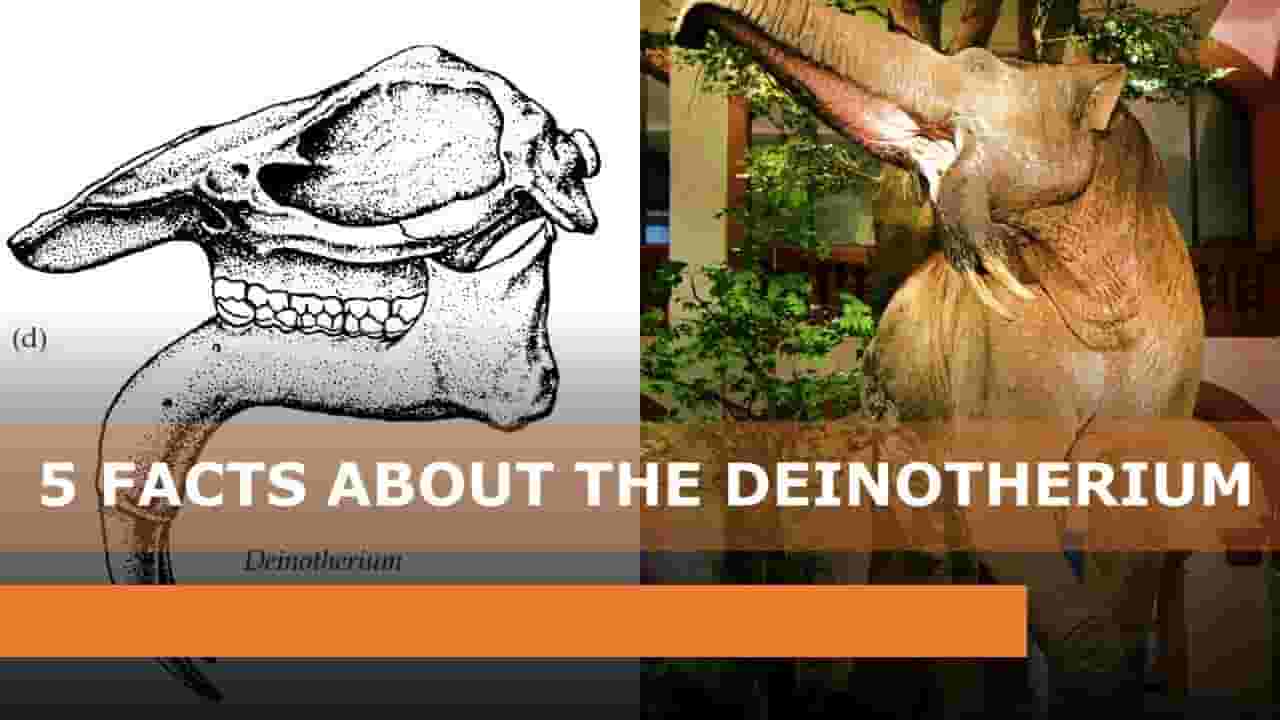
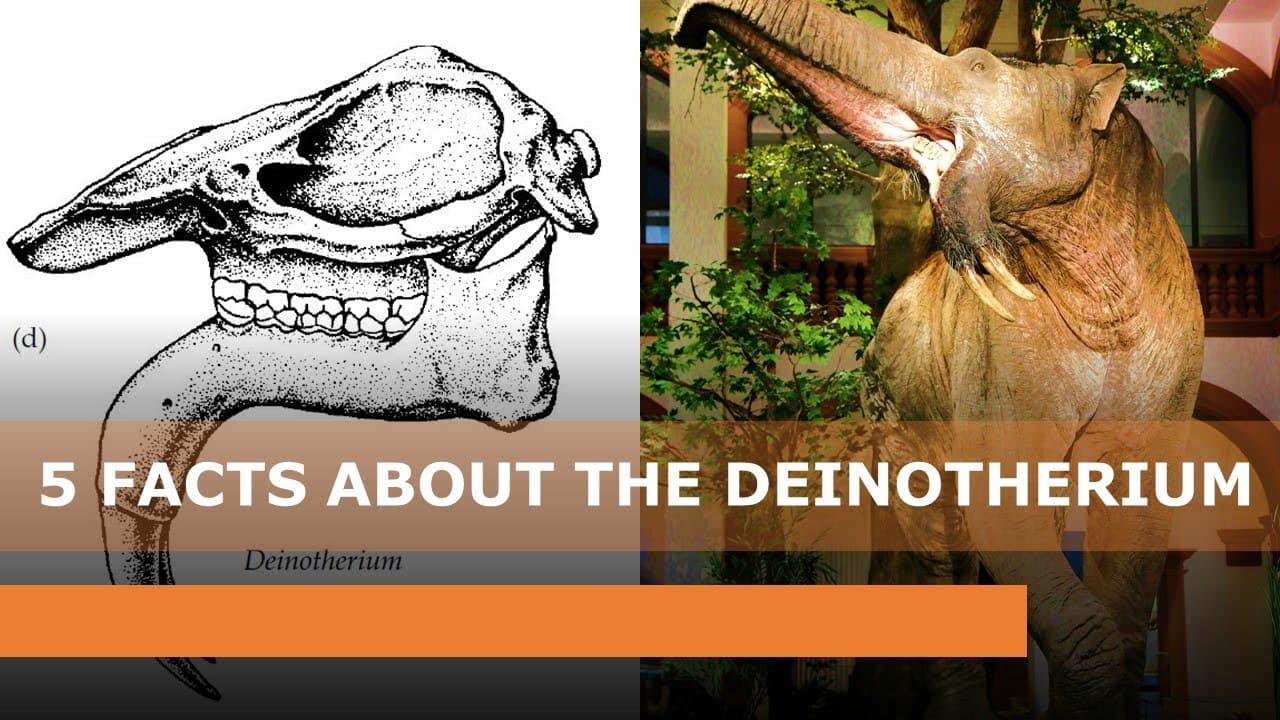
This time I bring you 5 interesting facts about the Deinotherium, an ancient genus of elephant from the Miocene epoch 🐘 Deinotherium ("terrible beast" derived from the Ancient Greek δεινός, deinos meaning "terrible" and θηρίον, therion meaning "beast") was a large prehistoric relative of modern-day elephants that appeared in the Middle Miocene and survived until the Early Pleistocene. During that time, it changed very little. In life, it probably resembled modern elephants, except it had downward-curving tusks attached to the lower jaw. References: https://en.wikipedia.org/wiki/Deinotherium https://www.fossilguy.com/gallery/vert/mammal/land/deinotherium/index.htm Behrensmeyer, A. K., R. Potts, T. Plummer, L. Tauxe, N. Opdyke, and T. Jorstad. (1995). Stratigraphy, chronology, and paleoenvironments of the Pleistocene locality of Kanjera, western Kenya. The Journal of Human Evolution:29: 247-274. Cerling, T., Y. Wang, and J. Quade (1993). Expansion of C4 ecosystems as an indicator of global ecological change in the late Miocene, Nature, 361, 344–345. Chamberlain, C., Winnick, M., Hari, M., Chamberlain, S., Katharine M. (2014). The impact of Neogene grassland expansion and aridification on the isotopic composition of continental precipitation. Global Biogeochemical Cycles. DOI: 10.1002/2014GB004822.. Janis, C. M. (1993). Mammal evolution in the context of changing climates, vegetation and tectonic events, Annu. Rev. Ecol. Syst., 24, 467–500. Kovachev, D. and Nikolov, I. (2006). Deinotherium thraceiensis sp. nov. from the Miocene near Ezerovo, Plovdiv District. Geologica Balcanica 35 (3–4): 5–40. Retrieved from: geologica-balcanica. Larramendi, A. (2015). Shoulder Height, Body Mass and Shape of Proboscideans. Acta Palaeontologica Polonica. 61. dx.doi.org/10.4202/app.00136.2014. Markov G.N., Spassov N., Simeonovski V. (2001). "A reconstruction of the facial morphology and feeding behaviour of the deinotheres". The World of Elephants – International Congress: 652–655. doi.org/10.4202/app.00136.2014. The age of mammals : the Oligocene and Miocene epochs / Thom Holmes, Chelsea House, New York, 2009 #deinotherium #miocene #prehistoricanimal
About YouTube Real-Time View Count
With SocialCounts.org’s view counter, track your YouTube video’s live view count and YouTube likes count in real time with fast, reliable updates.
Watch every YouTube video live view count rise with our real-time YouTube views tracker—built for accuracy and minimal delay.
Follow YouTube real time views as they happen, using our dedicated view counter for YouTube videos.
Get up-to-date live view count on YouTube and see real-time growth with SocialCounts.org’s smart tracking tools.
Embed Widget
Parameters:
fullscreen=true- Fullscreen countergraph=true- Live graph chartcounter=0/1/2- Select counter (0=likes, 1=views, 2=comments)
URL
Click to copy the embed URL to your clipboard