


1,066
likes
113
comments
daily view 0
monthly view 0
Live Analytics
Comments 0
What If Humans Lived 4.5 Billion Years Ago? Analytics Table
Income Estimates for What If Humans Lived 4.5 Billion Years Ago?
Based on this YouTube video's total view count of 38.5K views and industry-standard rates, the estimated total earning is $27 - $77 through ad revenue. Historical data is not yet available to calculate daily, weekly, or monthly averages.
About What If Humans Lived 4.5 Billion Years Ago?
Explore What If Humans Lived 4.5 Billion Years Ago? with 38,510 views, 1,066 likes, and 113 comments. Experience the impact of this video content that has captured audience attention.
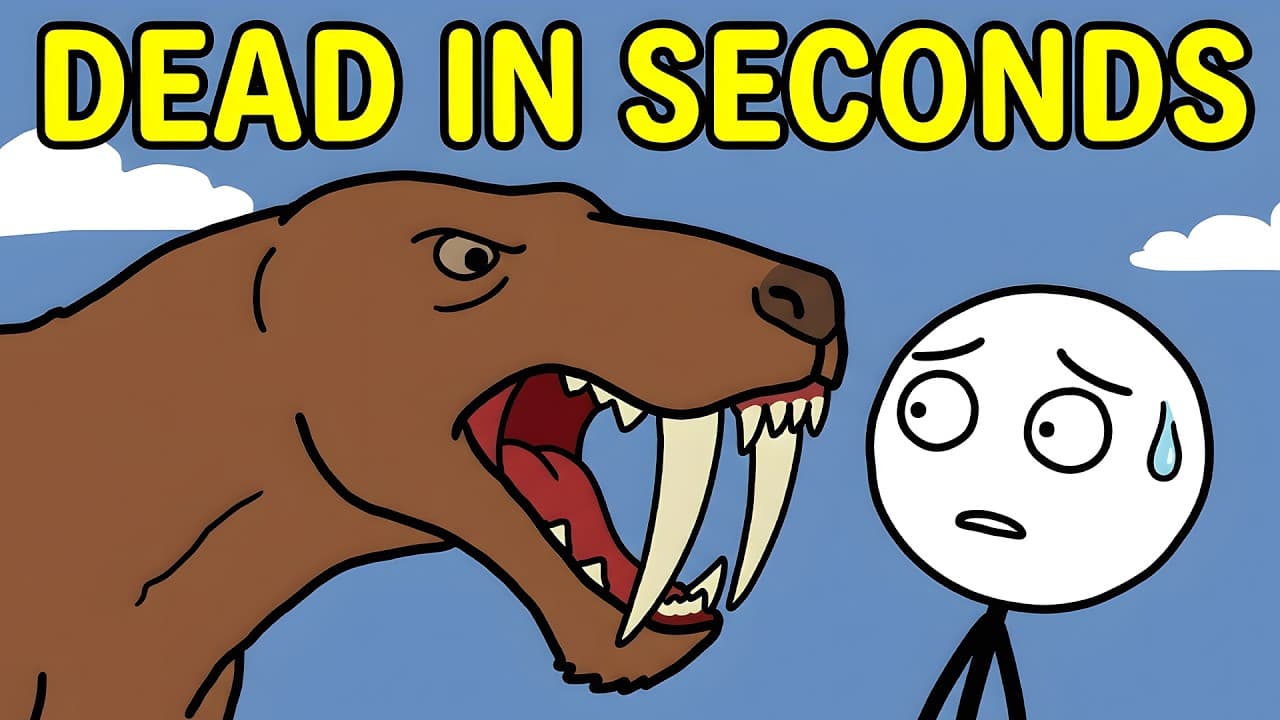
Long before the first human took a breath, Earth was a world you would not recognize. For almost all of its 4.5 billion years, this was an alien planet. The ground ran as liquid rock beneath a burning orange sky, and the air was poison. The things that ruled it looked nothing like anything alive today. This is the story of everything that came before us. The story of how life on Earth was almost wiped out, again and again, and how a long chain of catastrophes and pure luck cleared the way for you to exist at all. Step back through deep time and stand on the Earth as it once was: → A molten newborn planet, in a sky with no Moon → The giant impact that formed the Moon and tilted the world → Two billion years when life was too small to see → The oxygen catastrophe that nearly destroyed all life → Snowball Earth, frozen over from pole to pole → The Cambrian explosion, when life suddenly turned big and strange → The gorgonopsids, saber-toothed hunters from long before the dinosaurs → The Great Dying, the worst mass extinction in the history of Earth → Two million years of endless rain that gave the dinosaurs the planet → The asteroid that ended their world and cleared the way for ours This was never really our story. We are the newest and most fragile thing ever to survive it, here for a blink at the very end of an almost unimaginably long road. This is what was here before us. ━━━━━━━━━━━━━━━━━━━━━━━━━━━━ SOURCES ━━━━━━━━━━━━━━━━━━━━━━━━━━━━ AGE OF THE EARTH Patterson, Claire C. (1956). "Age of Meteorites and the Earth." Geochimica et Cosmochimica Acta. Earth is about 4.54 billion years old. EARLY MOLTEN EARTH Solomatova, N. V. and Caracas, R. (2021). "Genesis of a CO2-rich and H2O-depleted atmosphere from Earth's early magma ocean." Science Advances. Molten surface; carbon-dioxide-rich, oxygen-free early air. THE MOON-FORMING IMPACT Hartmann, W. K. and Davis, D. R. (1975). "Satellite-Sized Planetesimals and Lunar Origin." Icarus. The Moon formed after a Mars-sized body (Theia) struck early Earth. EARTH'S TILT AND SEASONS Laskar, J., Joutel, F. and Robutel, P. (1993). "Stabilization of the Earth's obliquity by the Moon." Nature. The roughly 23-degree tilt, the seasons, and the Moon's role. THE FIRST LIFE Nutman, A. P., et al. (2016). "Rapid emergence of life shown by discovery of 3,700-million-year-old microbial structures." Nature. Life began billions of years ago; microbes ruled alone for ages. THE GREAT OXIDATION EVENT Lyons, T. W., Reinhard, C. T. and Planavsky, N. J. (2014). "The rise of oxygen in Earth's early ocean and atmosphere." Nature. Oxygen from photosynthesis flooded the air and poisoned early life. SNOWBALL EARTH Kopp, R. E., et al. (2005). "The Paleoproterozoic snowball Earth." PNAS. Oxygen stripped greenhouse methane and froze the planet. THE CAMBRIAN EXPLOSION Erwin, D. H., et al. (2011). "The Cambrian Conundrum." Science. The sudden rise of complex animal life ~540 million years ago. LIFE MOVES ONTO LAND UC Museum of Paleontology. The Paleozoic Era. Plants colonize land, fish evolve legs, forests become coal. SHORTER DAYS Williams, G. E. (2000). "Precambrian history of Earth's rotation and the Moon's orbit." Reviews of Geophysics. A day lasted only ~22 to 23 hours in the deep past. THE FIRST SABER-TOOTHED PREDATORS Kammerer, C. F., Viglietti, P. A., et al. (2023). Current Biology. Gorgonopsians as the first saber-tooths, and Inostrancevia. THE GREAT DYING Burgess, S. D., Bowring, S. and Shen, S. (2014). "Timeline for Earth's most severe extinction." PNAS. Siberian Traps eruptions ~252 mya killed ~90% of species. TWO MILLION YEARS OF RAIN Dal Corso, J., et al. (2020). "Extinction and dawn of the modern world in the Carnian." Science Advances. The long Carnian rainy period that reshaped life on land. THE RISE OF THE DINOSAURS Benton, M. J., et al. (2018). "Dinosaur diversification linked with the Carnian Pluvial Episode." Nature Communications. Dinosaurs went from under 5% to over 90% of land animals. HOW LONG DINOSAURS RULED U.S. Geological Survey; Natural History Museum, London. Dinosaurs ruled from ~230 mya until 66 mya. THE ASTEROID Alvarez, L. W., et al. (1980). "Extraterrestrial Cause for the Cretaceous-Tertiary Extinction." Science. The ~10 km asteroid, the blocked sunlight, the ~75% extinction. MAMMALS TAKE OVER Natural History Museum, London. Small mammals survived and became our ancestors. THE FIRST HOMO SAPIENS Hublin, J., et al. (2017). "New fossils from Jebel Irhoud, Morocco, and the pan-African origin of Homo sapiens." Nature. The oldest known Homo sapiens, ~300,000 years old. OTHER HUMAN SPECIES Detroit, F., et al. (2019). "A new species of Homo from the Late Pleistocene of the Philippines." Nature. Other human species (Neanderthals, Denisovans, floresiensis, luzonensis) shared the world with us. #EarthHistory #DeepTime #MassExtinction #Evolution #Science
About YouTube Real-Time View Count
With SocialCounts.org’s view counter, track your YouTube video’s live view count and YouTube likes count in real time with fast, reliable updates.
Watch every YouTube video live view count rise with our real-time YouTube views tracker—built for accuracy and minimal delay.
Follow YouTube real time views as they happen, using our dedicated view counter for YouTube videos.
Get up-to-date live view count on YouTube and see real-time growth with SocialCounts.org’s smart tracking tools.
Embed Widget
Parameters:
fullscreen=true- Fullscreen countergraph=true- Live graph chartcounter=0/1/2- Select counter (0=likes, 1=views, 2=comments)
URL
Click to copy the embed URL to your clipboard