

Why the Ottoman Empire Stopped Expanding ⚔️🔥 Rise and Fall of the Ottoman Empire 🕌
77,651
Socialcounts.Org
0
likes
82
comments
daily view 0
monthly view 0
Live Analytics
Comments 0
Why the Ottoman Empire Stopped Expanding ⚔️🔥 Rise and Fall of the Ottoman Empire 🕌 Analytics Table
Income Estimates for Why the Ottoman Empire Stopped Expanding ⚔️🔥 Rise and Fall of the Ottoman Empire 🕌
Based on this YouTube video's total view count of 77.6K views and industry-standard rates, the estimated total earning is $54 - $155 through ad revenue. Historical data is not yet available to calculate daily, weekly, or monthly averages.
About Why the Ottoman Empire Stopped Expanding ⚔️🔥 Rise and Fall of the Ottoman Empire 🕌
Explore Why the Ottoman Empire Stopped Expanding ⚔️🔥 Rise and Fall of the Ottoman Empire 🕌 with 77,651 views, 0 likes, and 82 comments. Experience the impact of this video content that has captured audience attention.
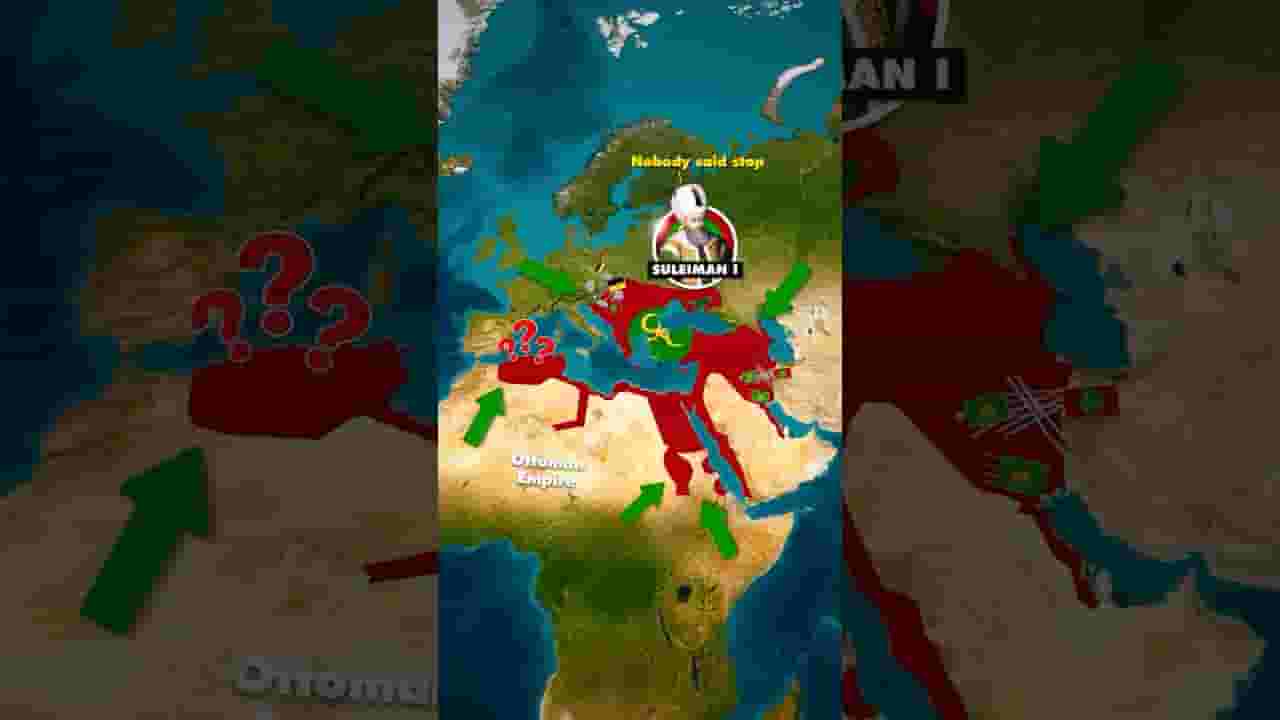
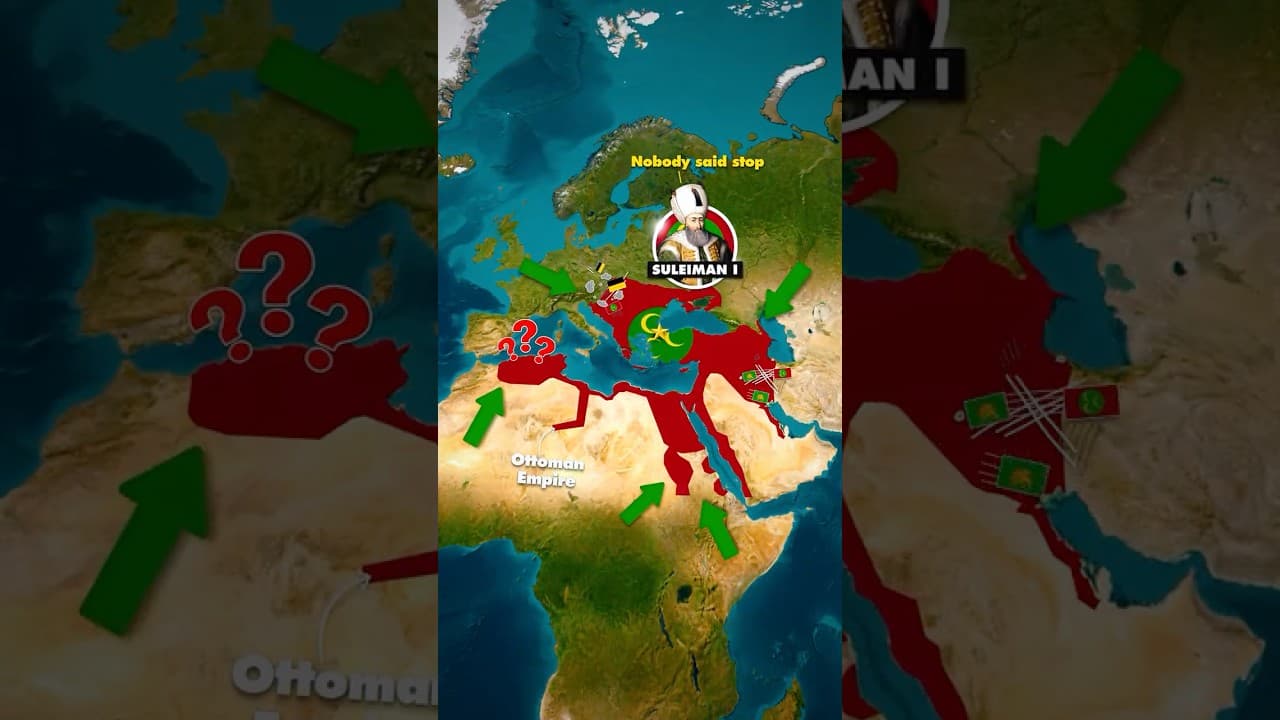
The Ottoman Empire started as a tiny principality in Anatolia and eventually became one of the largest empires in early modern history 👑 At its height, Ottoman territory stretched across Europe, Asia, and Africa, connecting the Balkans, Middle East, North Africa, and the Mediterranean. So why did this enormous empire eventually stop expanding? The answer wasn't one single enemy. The Ottomans gradually ran into stronger rivals, difficult geography, longer supply lines, and the enormous challenge of governing what they already controlled 🏛️ 🇹🇷 From Anatolia to Three Continents The Ottoman state began around the end of the 13th century in northwestern Anatolia. Early Ottoman rulers expanded into Byzantine territory, while later sultans conquered much of the Balkans. The capture of Constantinople in 1453 transformed the empire. Under Mehmed II, the city became the Ottoman capital and the center of an increasingly powerful empire. By the 16th century, Ottoman power stretched from Hungary and the Balkans to Egypt, Iraq, Arabia, and North Africa. 🇦🇹 The Habsburg Barrier Western expansion eventually brought the Ottomans directly against the Habsburg monarchy. Sultan Süleiman the Magnificent marched toward Vienna in 1529, but the siege failed. More than 150 years later, the Ottomans tried again. In 1683, Grand Vizier Kara Mustafa Pasha led another massive army toward Vienna. The siege again failed, and the Ottoman defeat became a major turning point in the struggle between the Ottomans and the Habsburgs. The problem wasn't simply distance. Every kilometer deeper into Central Europe meant more food, ammunition, horses, and reinforcements had to travel from Ottoman bases. 🇮🇷 Persia Was Different To the east, the Ottomans repeatedly fought the Safavid Empire of Persia. This frontier was completely different from the open plains of the Balkans. The Zagros Mountains, deserts, and enormous distances made large military campaigns difficult. Even when the Ottomans captured major cities, permanently holding territory beyond their existing frontier could be extremely expensive. The Persian frontier therefore became more of a permanent military competition than an easy route for further conquest. 🇷🇺 The Caspian Problem The Ottomans also wanted greater influence around the Caucasus and Caspian region. In 1569, they attempted to capture Astrakhan, controlled by Russia. The expedition failed. The campaign demonstrated just how difficult it was to project Ottoman power across the steppe and around the Caspian Sea. Russia would become an increasingly serious enemy in the following centuries. 🇷🇺 Russia Becomes the Bigger Problem By the 18th century, Russia was expanding southward. The Ottomans now faced a powerful state pushing toward the Black Sea, Caucasus, and Balkans. The balance was gradually changing. Instead of the Ottomans constantly conquering new territory, Russia increasingly took territory from them. The Crimean Khanate, once an important Ottoman ally, eventually fell under Russian control, dramatically changing the strategic balance around the Black Sea. 🇲🇦 Why Not Morocco? The Ottomans controlled much of North Africa, including Algeria, Tunisia, and Libya. But Morocco remained independent. The problem wasn't simply the Sahara. Morocco had its own powerful dynasties and political system, while the enormous distance from the Ottoman heartland made a permanent conquest difficult to justify. The Ottomans already possessed major North African ports and routes. Going farther west offered fewer advantages for an increasingly overstretched empire. 🏜️ The Sahara Was a Natural Barrier Southward expansion faced another problem: the Sahara. Moving large armies across thousands of kilometers of desert required enormous amounts of water, food, animals, and supplies. There were no easy roads connecting Ottoman North Africa with the major states south of the desert. For an empire whose military strength depended heavily on logistics, conquering territory was only half the problem. Keeping it supplied was the other half. ⚓ The Empire's Biggest Problem The Ottomans weren't becoming weak overnight. Their enemies were becoming stronger. European states developed increasingly powerful armies, artillery, fortifications, navies, and financial systems. Meanwhile, the Ottomans had to defend an enormous frontier stretching from Central Europe to the Caucasus and the Middle East. Every new conquest created another border that had to be defended. 🧭 Check Bonus Facts on my Patreon: https://www.patreon.com/cw/GeoWorldAtlas 🗺️ Subscribe to GeoWorldAtlas https://www.youtube.com/channel/UCwB8aiz6W0_bXVsKGxVrtCg?sub_confirmation=1 #ottomanempire #ottomanhistory #ottomans #turkey #vienna #habsburg #russia #persia #safavidempire #morocco #astrakhan #europeanhistory #islamichistory #militaryhistory #empire #history #worldhistory #historyfacts #didyouknow #geopolitics #historyshorts #youtubeshorts #viralshorts #explore #shorts
About YouTube Real-Time View Count
With SocialCounts.org’s view counter, track your YouTube video’s live view count and YouTube likes count in real time with fast, reliable updates.
Watch every YouTube video live view count rise with our real-time YouTube views tracker—built for accuracy and minimal delay.
Follow YouTube real time views as they happen, using our dedicated view counter for YouTube videos.
Get up-to-date live view count on YouTube and see real-time growth with SocialCounts.org’s smart tracking tools.
Embed Widget
Parameters:
fullscreen=true- Fullscreen countergraph=true- Live graph chartcounter=0/1/2- Select counter (0=likes, 1=views, 2=comments)
URL
Click to copy the embed URL to your clipboard