

13,289
likes
512
comments
daily view 0
monthly view 0
Live Analytics
Comments 0
Irony Explained — 3 Types of Irony Every Storyteller Should Know (Verbal, Situational, and Dramatic) Analytics Table
Income Estimates for Irony Explained — 3 Types of Irony Every Storyteller Should Know (Verbal, Situational, and Dramatic)
Based on this YouTube video's total view count of 420K views and industry-standard rates, the estimated total earning is $295 - $842 through ad revenue. Historical data is not yet available to calculate daily, weekly, or monthly averages.
About Irony Explained — 3 Types of Irony Every Storyteller Should Know (Verbal, Situational, and Dramatic)
Explore Irony Explained — 3 Types of Irony Every Storyteller Should Know (Verbal, Situational, and Dramatic) with 420,779 views, 13,289 likes, and 512 comments. Experience the impact of this video content that has captured audience attention.
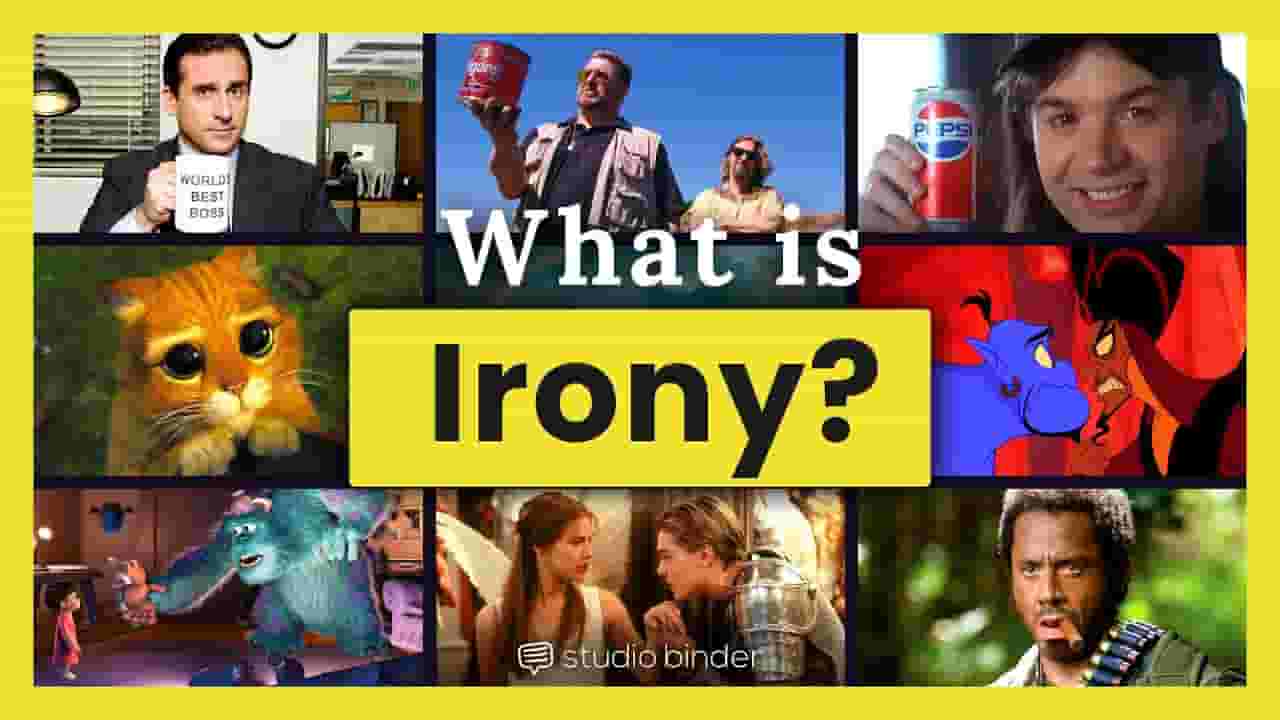
What is irony — An overview of all types of irony, including verbal irony, situational irony, dramatic irony, their sub-types, and irony examples. Download FREE "Irony Explained" eBook ►► https://bit.ly/ir-eb 3 Types of Irony Every Storyteller Should Know ►► https://bit.ly/wi-ir StudioBinder Blog ►► http://bit.ly/sb-bl ───────────────────── Chapters: 00:00 - Intro 01:05 - What is Irony? 02:37 - Verbal Irony 05:13 - Situational Irony 08:28 - Dramatic Irony 10:48 - Wrap Up ───────────────────── Irony is just as inseparable from storytelling as it is from life. We see it in our everyday lives but irony is also one of the most misunderstood concepts. That is the goal of this video: to define irony and all its forms so that writers and storytellers can wield it with clarity and precision. So, what is irony? What are the different types of irony and how can they be used across any genre for a multitude of purposes? Let’s get started. We define irony as when reality is the opposite of expectation or when what is said is the opposite of the intended meaning. Perhaps the biggest misconception about irony is that any lucky or strange or coincidental situation qualifies as ironic. The key thing to remember when thinking of irony is the word “opposite” — if it’s not opposite, it’s not irony. Everything else is bad luck, odd coincidence, or an unexpected surprise. We just defined pure irony but there are many variations we need to discuss. There are three main types of irony: verbal irony, situational irony, and dramatic irony. And within those main branches, we have sarcasm, understatement, overstatement, Socratic irony, cosmic irony, poetic irony, structural irony, historical irony, and tragic irony. Phew! Verbal irony covers speech — what we say is the opposite of what we mean. This isn’t the same as lying or being hypocritical, this is an intentionally worded phrase that is meant to be understood as ironic. Sarcasm is when you use verbal irony to criticize or ridicule someone else. Overstatement is using exaggeration to express a thought or feeling and understatement goes the opposite direction to de-emphasize the intended meaning. Socratic irony is used when someone “feigns ignorance” (aka “plays dumb”) to outsmart someone else. Situational irony is when the opposite of what we expect to happen, happens. Cosmic irony adds a layer of “fate” or “divine influence” to traditional situational irony. Poetic irony occurs when goodness is rewarded and evil is punished in a particularly ironic way. Structural irony is when an entire character and/or story is based on an ironic situation. And historical irony is when hindsight provides an ironic twist on past events. Dramatic irony also involves a sharp contrast between expectation and reality but, in this case, the audience or reader understands the truth before the characters do. This can create tension and suspense as we wait to see what happens when the characters finally encounter the truth. Tragic irony is simply dramatic irony with tragic consequences — think of Shakespeare’s tragedies like Othello and Romeo and Juliet. When writers understand the depths and nuances of irony, they can tackle any subject or genre with this exceptionally effective tool. #FilmTheory #VideoEssay #Filmmaking ───────────────────── VIDEO EDITOR: BRANDON SCULLION ───────────────────── ♬ SONGS USED: “String Quartet in F Major Second Movement” - Ysae Quartet “The Slough Pit of Creation” - Carter Burwell “Peter and the Wolf” - Sergei Prokofiev “The Wanderer” - Makeup and Vanity Set “All Star” - Smash Mouth “Bohemian Rhapsody” - Queen “Keep Your Eyes On Me” Instrumental - Heather Lee “To Die For” - Danny Elfman “Should I Stay or Should I Go?” - The Clash “White Tiger” - John Carpenter “Son of a Preacher Man” - Dusty Springfield “Tannhäuser Gate” - Makeup and Vanity Set “The First Victim” - John Williams Music by Artlist ► https://utm.io/umJx Music by Artgrid ► https://utm.io/umJy Music by Soundstripe ► http://bit.ly/2IXwomF Music by MusicBed ► http://bit.ly/2Fnz9Zq ───────────────────── SUBSCRIBE to StudioBinder’s YouTube channel! ►► http://bit.ly/2hksYO0 Looking for production management solution for your film? Try StudioBinder for FREE today: https://studiobinder.com/pricing — Join us on Social Media! — Instagram ►► https://www.instagram.com/studiobinder Facebook ►► https://www.facebook.com/studiobinderapp Twitter ►► https://www.twitter.com/studiobinder
About YouTube Real-Time View Count
With SocialCounts.org’s view counter, track your YouTube video’s live view count and YouTube likes count in real time with fast, reliable updates.
Watch every YouTube video live view count rise with our real-time YouTube views tracker—built for accuracy and minimal delay.
Follow YouTube real time views as they happen, using our dedicated view counter for YouTube videos.
Get up-to-date live view count on YouTube and see real-time growth with SocialCounts.org’s smart tracking tools.
Embed Widget
Parameters:
fullscreen=true- Fullscreen countergraph=true- Live graph chartcounter=0/1/2- Select counter (0=likes, 1=views, 2=comments)
URL
Click to copy the embed URL to your clipboard