

49,411
likes
3,193
comments
daily view 0
monthly view 0
Live Analytics
Comments 0
The Crazy Mass-Giving Mechanism of the Higgs Field Simplified Analytics Table
Income Estimates for The Crazy Mass-Giving Mechanism of the Higgs Field Simplified
Based on this YouTube video's total view count of 1.72M views and industry-standard rates, the estimated total earning is $1.20K - $3.45K through ad revenue. Historical data is not yet available to calculate daily, weekly, or monthly averages.
About The Crazy Mass-Giving Mechanism of the Higgs Field Simplified
Explore The Crazy Mass-Giving Mechanism of the Higgs Field Simplified with 1,725,140 views, 49,411 likes, and 3,193 comments. Experience the impact of this video content that has captured audience attention.
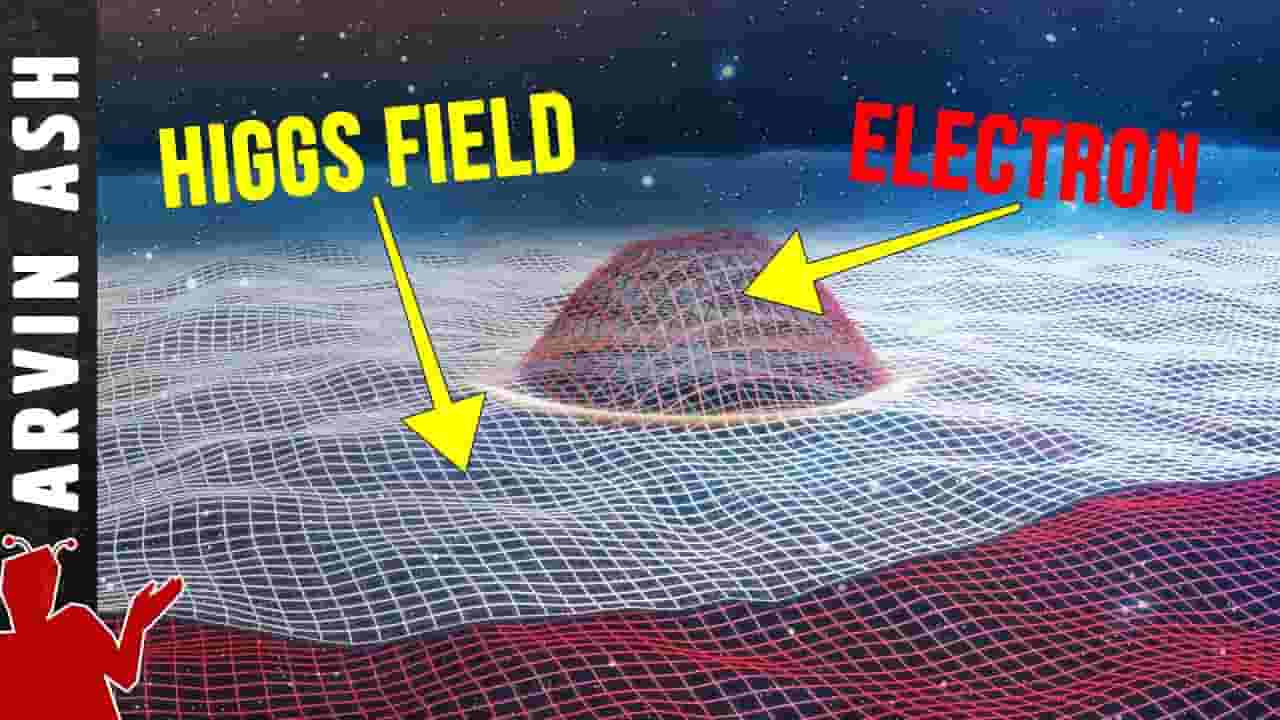
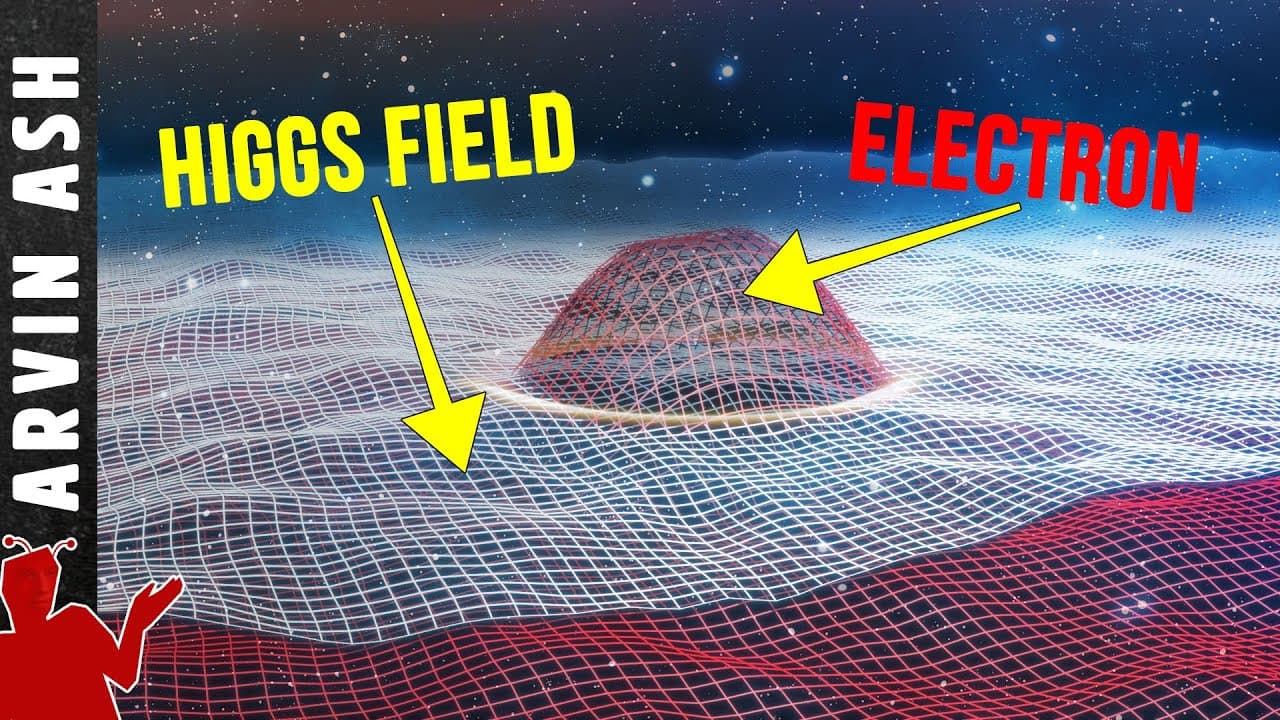
Get 30% off Blinkist premium and enjoy 2 memberships for the price of 1! Start your 7-day free trial by clicking here: https://www.blinkist.com/arvinash REFERENCES: Where 99% of mass comes from: https://youtu.be/KnbrRhkJCRk ElectroWeak Unification: https://youtu.be/u05VK0pSc7I Symmetry Breaking: https://youtu.be/yzqLHiA0uFI PATREON: For Input on Videos, Private messages, Early Viewing, Join Us: https://www.patreon.com/arvinash CHAPTERS: 0:00 Sources of mass 2:33 Blinkist Free Trial 3:51 Particles are excitations in Fields 6:09 How Mass comes from interaction with Higgs 10:42 Why do some particles interact and others don't? 11:31 How our universe would not exist without Higgs SUMMARY: How does the Higgs give mass to particles? How do elementary particles gain mass? All mass is Energy. 99% of the mass of an atom is contained in the binding energy within the nucleus. But about 1% of your mass is contained in the mass of the subatomic particles that make up the atoms, electrons and quarks. How do these subatomic particles get an intrinsic mass? This is due to the Higgs Field. To understand how it works, let's look at the standard model of particle physics. Every particle is a quantized excitation in its own field. An excitation of the electromagnetic field is a photon, an excitation of the electron field is an electron, etc. All fields, in their lowest energy state, even when no excitations or particles are present, always have fluctuations. These are virtual particles that exist for such a short period of time, that they cannot be measured. They borrow energy from the vacuum and give it right back very quickly when they are annihilated. But this energy from virtual particles, collectively adds up to no real particles. Real particles are created only when enough energy is transferred to a field from other fields to cause an excitation. An electron can only occur in energy units of 0.511 MeV, which is its mass. #higgs But it only has a mass because of its interaction with the Higgs field. Without this interaction, an electron would be massless. A massless electron would be like a charged photon, and move at the speed of light. Without the Higgs field, all the other fundamental particles of the standard model would also be massless, with the possible exception of neutrinos. So the question is how does this mass come about? To understand this, we have to understand the concept of vacuum expectation value of the various fields. Let’s imagine there were no Higgs field. If we then took any of the fields and put them inside an empty box, like the electron field, the weight of that box would be zero. In other words the field would have no mass, even though the virtual electrons would be present throughout it. Similarly, all the other fields of the Standard Model would also have no mass inside the empty box, just quantum fluctuations. But, there is an exception to this rule, the Higgs Field. It is unique because the Higgs Field in empty space, unlike every other field, has a mass. So if were to weigh the box with the Higgs field inside, it would have a weight. This is called the vacuum energy, or vacuum expectation value. It is equal to 246 GeV. This is just the value that we would "expect" the Higgs Field to have when it is in its lowest energy state. Anything that interacts with the Higgs field now effectively interacts with this new vacuum expectation value. And that interaction imparts energy. And since energy and mass are equivalent, the form this interaction energy takes is indistinguishable from the energy associated with a rest mass. So when a fundamental particle interacts with the Higgs field, it gains an energy or intrinsic mass. Individual electrons are constantly interacting with the Higgs field, which effectively slows the electron down. So if you apply a force to an electron, it gets a sort of push-back from the Higgs field that causes the electron to resist acceleration. This property is what we call inertial mass. How much mass an excitation or particle in any given field has, depends on its coupling constant. The fields of all massive particles are coupled to the Higgs field. The larger the coupling constant, the more mass its particles will have. Without the Higgs field, none of the fundamental particles would have an intrinsic mass. So electrons, quarks, and W and Z bosons are coupled to the Higgs field, while the fields of massless particles, like photons and gluons are not. Why are some particles coupled, meaning why do some particles interact with the Higgs field, while others do not? We’re not sure. The mechanism of the Higgs Field giving out mass to other particles is called symmetry breaking. Regarding neutrinos, the Standard Model predicts that they should be massless, but measurements indicate that they do have a very tiny mass. We don’t know the origin of that mass. It could be that they also interact with the Higgs, but no one really knows for sure.
About YouTube Real-Time View Count
With SocialCounts.org’s view counter, track your YouTube video’s live view count and YouTube likes count in real time with fast, reliable updates.
Watch every YouTube video live view count rise with our real-time YouTube views tracker—built for accuracy and minimal delay.
Follow YouTube real time views as they happen, using our dedicated view counter for YouTube videos.
Get up-to-date live view count on YouTube and see real-time growth with SocialCounts.org’s smart tracking tools.
Embed Widget
Parameters:
fullscreen=true- Fullscreen countergraph=true- Live graph chartcounter=0/1/2- Select counter (0=likes, 1=views, 2=comments)
URL
Click to copy the embed URL to your clipboard