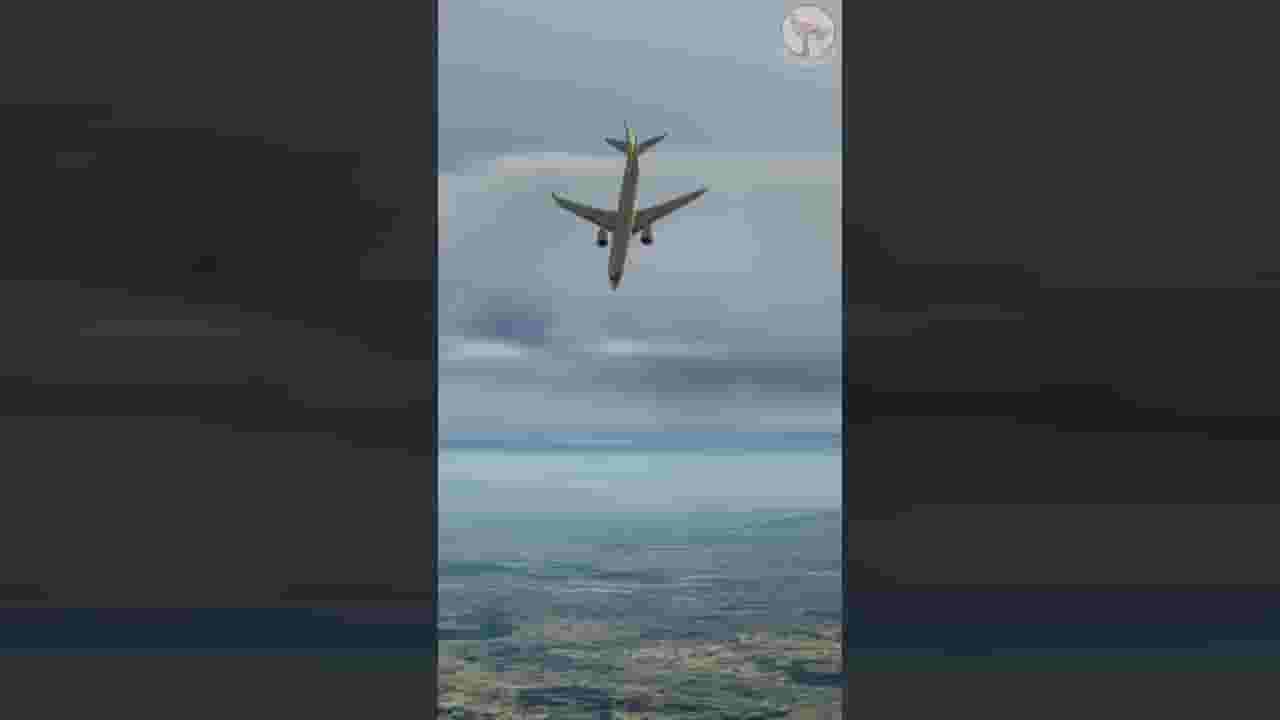
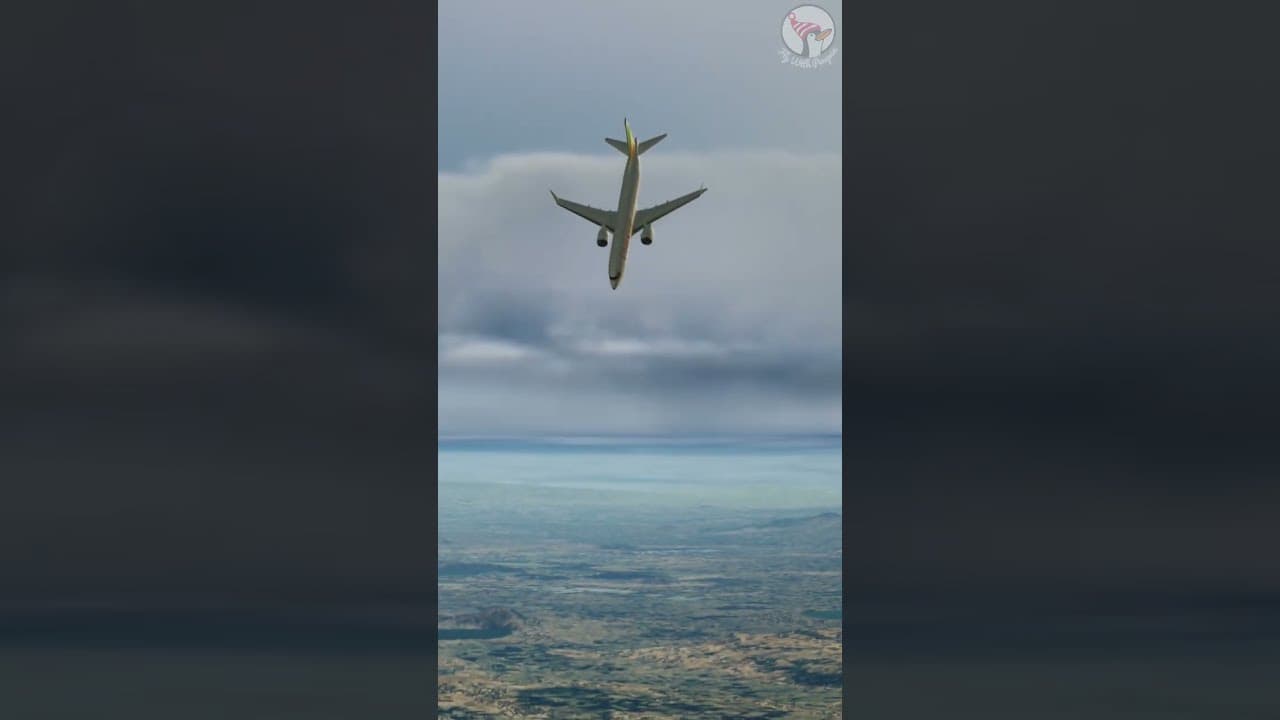


1,509
likes
77
comments
daily view 0
monthly view 0
Live Analytics
Comments 0
Preview of Ethiopian Airlines Flight 302 air crash Analytics Table
Income Estimates for Preview of Ethiopian Airlines Flight 302 air crash
Based on this YouTube video's total view count of 88.7K views and industry-standard rates, the estimated total earning is $62 - $178 through ad revenue. Historical data is not yet available to calculate daily, weekly, or monthly averages.
About Preview of Ethiopian Airlines Flight 302 air crash
Explore Preview of Ethiopian Airlines Flight 302 air crash with 88,757 views, 1,509 likes, and 77 comments. Experience the impact of this video content that has captured audience attention.
/// You can watch the full version on my channel soon! Enjoy watching! /// March 10, 2019 Ethiopian Airlines Flight 302 is a scheduled international passenger flight from Addis Ababa Bole International Airport in Ethiopia to Jomo Kenyatta International Airport in Nairobi, Kenya. The aircraft is a Boeing 737 MAX 8, registered as ET-AVJ. It was manufactured in October 2018 and delivered on 15 November 2018, four months ago. Boeing 737 MAX is the fourth generation of medium-range Boeing 737 passenger aircraft, created to replace the Boeing 737 Next Generation family. During the development of the aircraft, more powerful and efficient engines with a larger fan diameter were installed on the 737 MAX. However, due to their larger size, the new engines could not be installed in place of the old ones - they had to be moved forward and fixed higher. As a result, the moved forward engines, after the aircraft reached a certain angle of attack, were creating a moment of force under the influence of the oncoming air flow, and the aircraft began to turn up its nose during the flight. Because of this problem, the company's specialists had developed a special computer program — The Maneuvering Characters Augmentation System or MCAS. When the nose lift increases, MCAS automatically lowers it, putting the aircraft into a dive. The Boeing company acted in a very non-standard way - they didn't tell anyone about this new product. Before the Indonesian disaster, neither the pilots, technical services, or the airline managers knew about this program. The truth was revealed only after the crash of flight JT-610. The Boeing Company developed a special bulletin, which indicated the features of the MCAS, as well as a way to turn it off in the event of erroneous angle of attack data. Investigation stated that a copy of the Flight Operations Manual, in use by Ethiopian Airlines at the time of the crash, was dated 1 November 2017 and did not include material from the Operator's Bulletin issued by Boeing on 6 November 2018. So the plane was doomed? Not really. Almost immediately after takeoff, right and left airspeed indications started diverging. The 737 MAX Flight Crew Training Manual indicates the need to follow the steps outlined in the Airspeed Unreliable memory items. This section of the Flight Crew Operations Manual instructs the crew to set the thrust 75% N1 in one of the steps. But the Flight 302 crew, having set the power of the engines at about 94%, subsequently did not correct it in any way. Perhaps at lower speeds, there would be less pressure on the stabilizer and the crew would have succeeded to manually crank the stabilizer back into position. Finally, pilots going to do a STAB TRIM CUTOUT should have known they were dealing with a problem that had been around for years. This problem has long been described in the Flight Crew Operations Manual as the Runaway Stabilizer. Following this checklist, the crew would use the main electric trim more actively. This would help them reduce the force on the control column and then do a STAB TRIM CUTOUT with no further consequences. I would also like to add that pilots use electric trim on a regular basis when flying manually. When the pilot feels that the force on the control column is increasing, he trims the stabilizer into a neutral position with the electrical switch located on his yoke. With the constant practice of manual flight control, the pilot, as a rule, automatically trims the aircraft without thinking. This was the case with Lion Air flight 610, when a more experienced captain fought MCAS for a long time using the electrical switch on his yoke. The crash only began to develop when control was handed over to a younger First Officer who barely engaged trim. As a result, we are dealing with a complex problem. On the one hand, there was the Boeing company, which was trying to overtake Airbus in terms of fuel efficiency and was offering passengers a new aircraft with questionable safety characteristics. On the other hand, there was an insufficiently trained crew that didn't have the practice of flying manually and failed to apply the non-normal checklist when it was needed. Lastly, on the third hand, the Ethiopian Airlines didn't provide pilots with the Boeing bulletin. The company didn't pay enough attention to the pilots training and gave permission to the youngest captain and to one of the most inexperienced first officers to fly in one crew.
About YouTube Real-Time View Count
With SocialCounts.org’s view counter, track your YouTube video’s live view count and YouTube likes count in real time with fast, reliable updates.
Watch every YouTube video live view count rise with our real-time YouTube views tracker—built for accuracy and minimal delay.
Follow YouTube real time views as they happen, using our dedicated view counter for YouTube videos.
Get up-to-date live view count on YouTube and see real-time growth with SocialCounts.org’s smart tracking tools.
Embed Widget
Parameters:
fullscreen=true- Fullscreen countergraph=true- Live graph chartcounter=0/1/2- Select counter (0=likes, 1=views, 2=comments)
URL
Click to copy the embed URL to your clipboard