

9,542
likes
399
comments
daily view 0
monthly view 0
Live Analytics
Comments 0
Learn English Punctuation: How to use hyphens with compound adjectives Analytics Table
Income Estimates for Learn English Punctuation: How to use hyphens with compound adjectives
Based on this YouTube video's total view count of 409K views and industry-standard rates, the estimated total earning is $287 - $819 through ad revenue. Historical data is not yet available to calculate daily, weekly, or monthly averages.
About Learn English Punctuation: How to use hyphens with compound adjectives
Explore Learn English Punctuation: How to use hyphens with compound adjectives with 409,699 views, 9,542 likes, and 399 comments. Experience the impact of this video content that has captured audience attention.
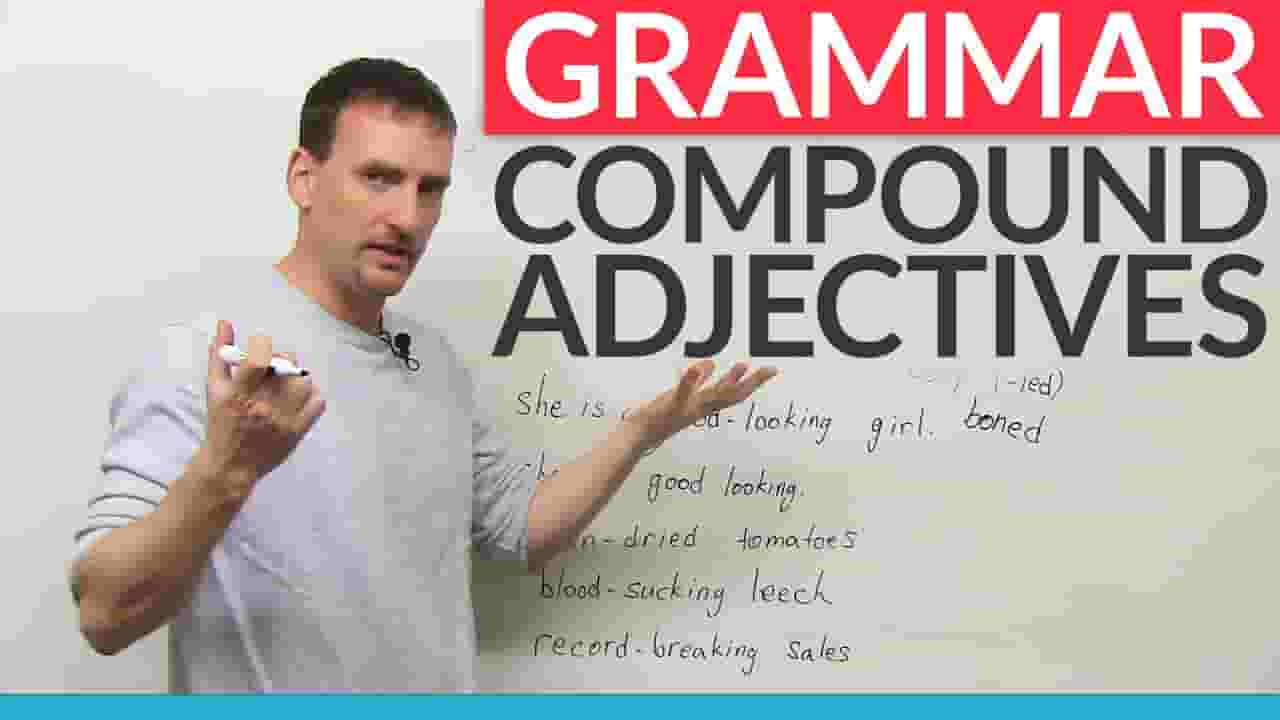
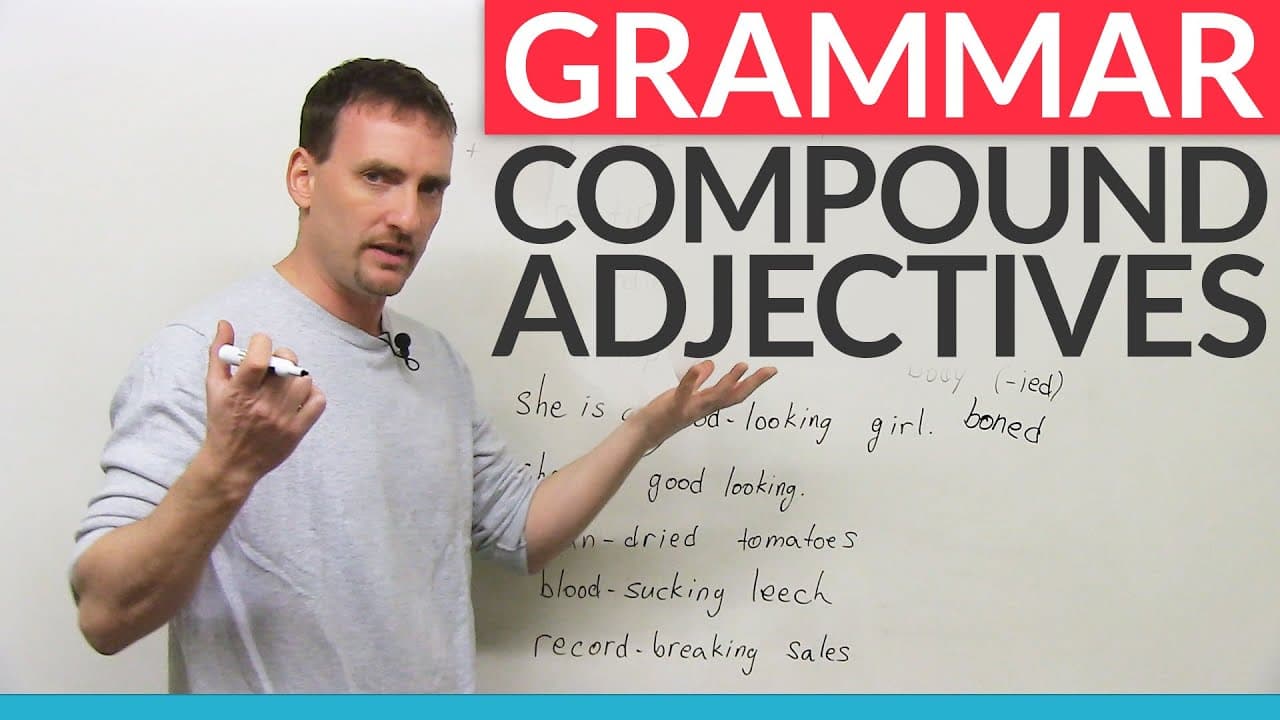
Improve your writing by learning the rules of punctuation! Do you wonder why a "world-famous actor" needs a hyphen while another actor is simply "world famous"? What is the difference between these two structures, and when exactly should you be using a hyphen? In this lesson, you will learn the basic structure of compound adjectives like "ten-year-old girl" and "green-eyed boy". After watching, you will be able to construct them yourself with ease. It's really not mind-boggling stuff, after all. Try the skill-testing quiz: http://www.engvid.com/learn-english-punctuation-hyphens-compound-adjectives/ TRANSCRIPT Hi again. Welcome back to www.engvid.com. I'm Adam. Today's lesson is grammar. And actually, I had quite a few requests for this lesson, because these seem to give people a lot of trouble, especially in writing. Okay? "Compound Adjectives". Firstly, what is a compound adjective? Mostly, you'll notice a compound adjective has the hyphen in it. Right? It's a two- or three-part... Two- or three-word adjective that, together, acts as one word. Okay? That's very important to remember. It may have one word, it may have two words, it may have three words connected by a hyphen, but they work all together like one word, one adjective word. Okay. Let's look at a few examples before we get into the details of how to construct these. "I heard a girl speaking English." "I have an English-speaking friend." Now, what's the difference between these two? "I heard a girl who was speaking English." or: "I heard a girl with an", gerund. So, this could be a participle, this could be a gerund; it doesn't matter. It comes after "the girl", and this is what she is doing. Okay? "I have an English-speaking friend." Now, I can change this sentence and say: "I have a friend who speaks English." But it's much easier just to say an adjective about the friend. Now, it's very important to remember an adject-... Sorry, a compound adjective comes before a noun. It always becomes before a noun; never after it. If it comes after it, it's no longer a compound adjective. There's no more need for the hyphen. Okay? Let's look at more examples. "A strong, healing lotion". Or: "A fast-healing cut". Now, even though it's a fast-healing cut, I would still want to use a strong, healing lotion. What's the difference, here? Here, first of all, you notice the comma. I have two adjectives. It's a strong lotion, it's a healing lotion. These are two separate ideas about this noun. Okay? They're not joined together. Each one affects the lotion. Here, "fast-healing lotion", it's fast and it's healing... "A fast-healing cut", sorry. It's fast and it's healing about this cut. So, for example, you go to a doctor and he needs to remove a mole. You have like a little thing growing on your arm. So he cuts it, but he's a specialist, he's very professional. It's a very fast-healing cut. In two days, you won't even know there was a cut there. Right? So, both these words-this is an adverb-okay?-this is a participle-both work as one word about "cut". Now, you don't really need to worry about this, but just in case you're interested, if you're writing and you have a word count... For example, IELTS or TOEFL, you have to write 250 words or 350 words, respectively. This is one word; not two words. Remember that. Okay? Next: "A man eating lion". Now, I don't know if people actually eat lions. I don't know how they would taste. I'm sure they're kind of gamey. It means a little bit strong taste. But I saw a man eating lion. So this man was eating that lion. But, then I saw: "A man-eating lion" eat the man. How does that work? "A man-eating lion", so this is a compound clause describing "lion". A lion who eats people. Okay? Very different meaning. So, now you're saying: "Okay, well, where do I put the adjective? Where do I put the compound adjective? Like, before, after, not at all, with a hyphen, without the hyphen?"
About YouTube Real-Time View Count
With SocialCounts.org’s view counter, track your YouTube video’s live view count and YouTube likes count in real time with fast, reliable updates.
Watch every YouTube video live view count rise with our real-time YouTube views tracker—built for accuracy and minimal delay.
Follow YouTube real time views as they happen, using our dedicated view counter for YouTube videos.
Get up-to-date live view count on YouTube and see real-time growth with SocialCounts.org’s smart tracking tools.
Embed Widget
Parameters:
fullscreen=true- Fullscreen countergraph=true- Live graph chartcounter=0/1/2- Select counter (0=likes, 1=views, 2=comments)
URL
Click to copy the embed URL to your clipboard