

5
likes
0
comments
daily view 0
monthly view 0
Live Analytics
Comments 0
Dr. Homi Bhabha: The Father of India's Nuclear Program - An Inspiring Biography and Quotes Analytics Table
Income Estimates for Dr. Homi Bhabha: The Father of India's Nuclear Program - An Inspiring Biography and Quotes
Based on this YouTube video's total view count of 499 views and industry-standard rates, the estimated total earning is $0 - $1 through ad revenue. Historical data is not yet available to calculate daily, weekly, or monthly averages.
About Dr. Homi Bhabha: The Father of India's Nuclear Program - An Inspiring Biography and Quotes
Explore Dr. Homi Bhabha: The Father of India's Nuclear Program - An Inspiring Biography and Quotes with 499 views, 5 likes, and 0 comments. Experience the impact of this video content that has captured audience attention.
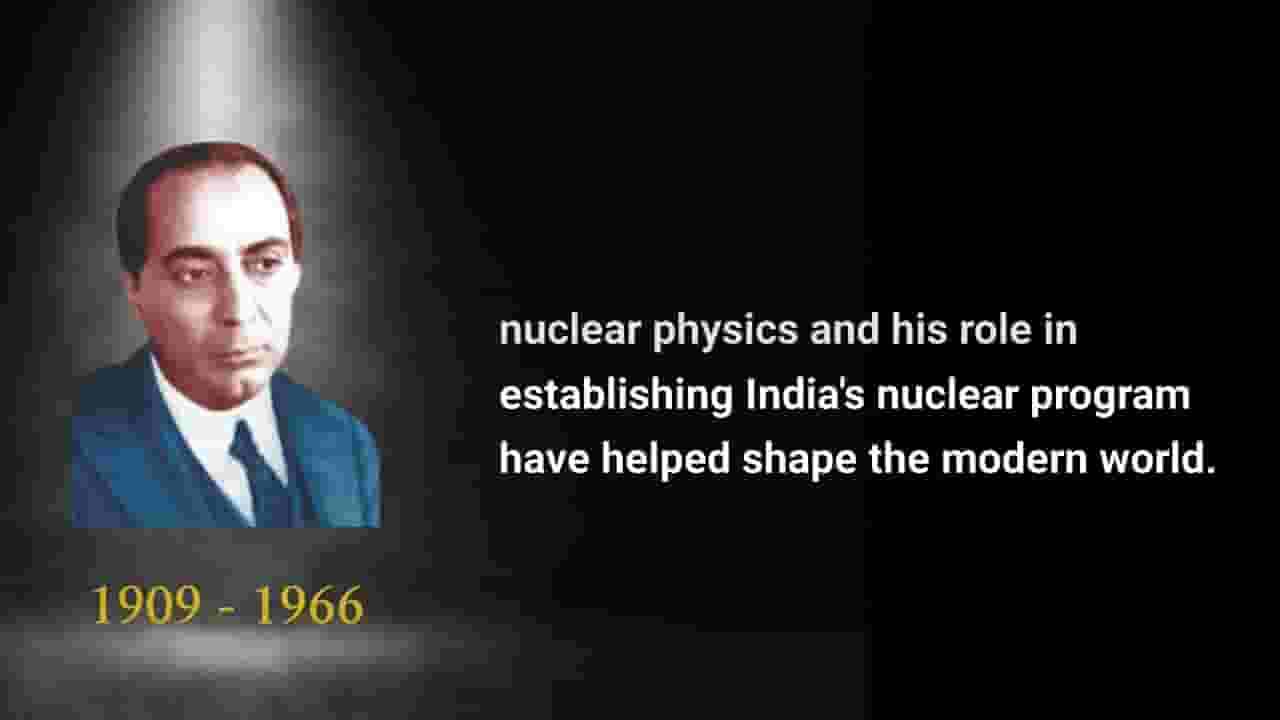
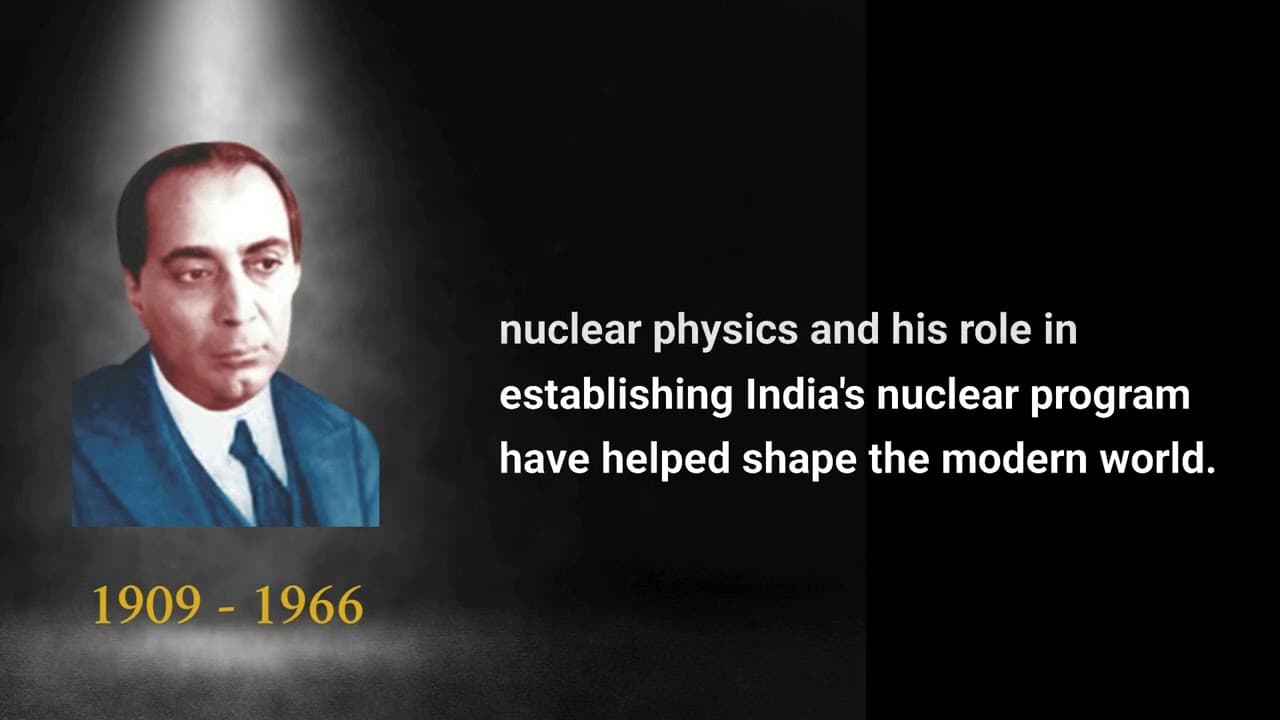
Dr. Homi Bhabha was one of India's most renowned scientists, known for his contributions to the field of nuclear physics. He was born on October 30, 1909, in Mumbai, India, to a wealthy Parsi family. From a young age, Bhabha showed an aptitude for science, and his family encouraged him to pursue his interests. Bhabha attended Elphinstone College in Mumbai, where he studied mathematics and physics. After completing his undergraduate degree, he went to Cambridge University in England, where he earned a Ph.D. in physics in 1935. Bhabha's work in nuclear physics began in the 1930s when he was working as a research fellow at the Cavendish Laboratory in Cambridge. At the time, the field of nuclear physics was still in its infancy, and Bhabha was at the forefront of the research that was being conducted in the field. One of Bhabha's most significant contributions to nuclear physics was his development of the theory of cosmic rays. In 1939, he published a paper in which he proposed that cosmic rays were created by the interaction of high-energy particles with the Earth's atmosphere. This theory was groundbreaking, and it laid the foundation for much of the research that has been done in the field of cosmic rays since that time. During World War II, Bhabha returned to India and began working on the development of nuclear energy. He founded the Tata Institute of Fundamental Research in Mumbai in 1945, which quickly became one of the leading centers for scientific research in India. Bhabha's work on nuclear energy was critical to the development of India's nuclear program. In the 1950s, he played a key role in the establishment of the Atomic Energy Commission of India, which was tasked with developing the country's nuclear capabilities. One of Bhabha's most significant achievements in the field of nuclear energy was the construction of India's first nuclear reactor, which went critical in 1956. This was a major milestone for India's nuclear program, and it paved the way for the development of nuclear power in the country. In addition to his work in nuclear physics, Bhabha was also a leading advocate for scientific research and education in India. He was a strong supporter of the idea that scientific research should be conducted for the benefit of all people, and he worked tirelessly to promote the development of scientific institutions and programs in India. Bhabha was also a passionate advocate for the arts and humanities. He believed that the sciences and the humanities were not mutually exclusive and that both were essential for a well-rounded education. He was a patron of the arts and supported many cultural organizations in India. Tragically, Bhabha's life was cut short in 1966, when he was killed in a plane crash near Mont Blanc in the French Alps. He was on his way to Vienna to attend a meeting of the International Atomic Energy Agency when the plane he was traveling in crashed. Despite his untimely death, Bhabha's legacy continues to inspire generations of scientists in India and around the world. His contributions to the field of nuclear physics and his commitment to scientific research and education have made him one of India's most revered figures. Dr. Homi Bhabha was a true visionary and a leader in the field of nuclear physics. His work laid the foundation for much of the research that has been done in the field, and his contributions to the development of India's nuclear program were critical to the country's growth and development. Bhabha was also a passionate advocate for scientific research and education, and his legacy continues to inspire scientists and scholars around the world. Though his life was tragically cut short, his influence on the field of nuclear physics and his commitment to promoting the arts and humanities have left an indelible mark on Indian society. Dr. Homi Bhabha's contributions to science, education, and culture have cemented his status as one of India's greatest minds, and his impact will continue to be felt for generations to come. Thank you for watching, we have worked hard to get this video published and we hope it deserves your attention. © The material is copyrighted audio and video, any use without our permission will be prosecuted under copyright law. We are the owner of the licenses to use all of the material in this video, including its thumbnails. Send us an e-mail for community post shoutout/collaboration/promotions — [email protected].
About YouTube Real-Time View Count
With SocialCounts.org’s view counter, track your YouTube video’s live view count and YouTube likes count in real time with fast, reliable updates.
Watch every YouTube video live view count rise with our real-time YouTube views tracker—built for accuracy and minimal delay.
Follow YouTube real time views as they happen, using our dedicated view counter for YouTube videos.
Get up-to-date live view count on YouTube and see real-time growth with SocialCounts.org’s smart tracking tools.
Embed Widget
Parameters:
fullscreen=true- Fullscreen countergraph=true- Live graph chartcounter=0/1/2- Select counter (0=likes, 1=views, 2=comments)
URL
Click to copy the embed URL to your clipboard