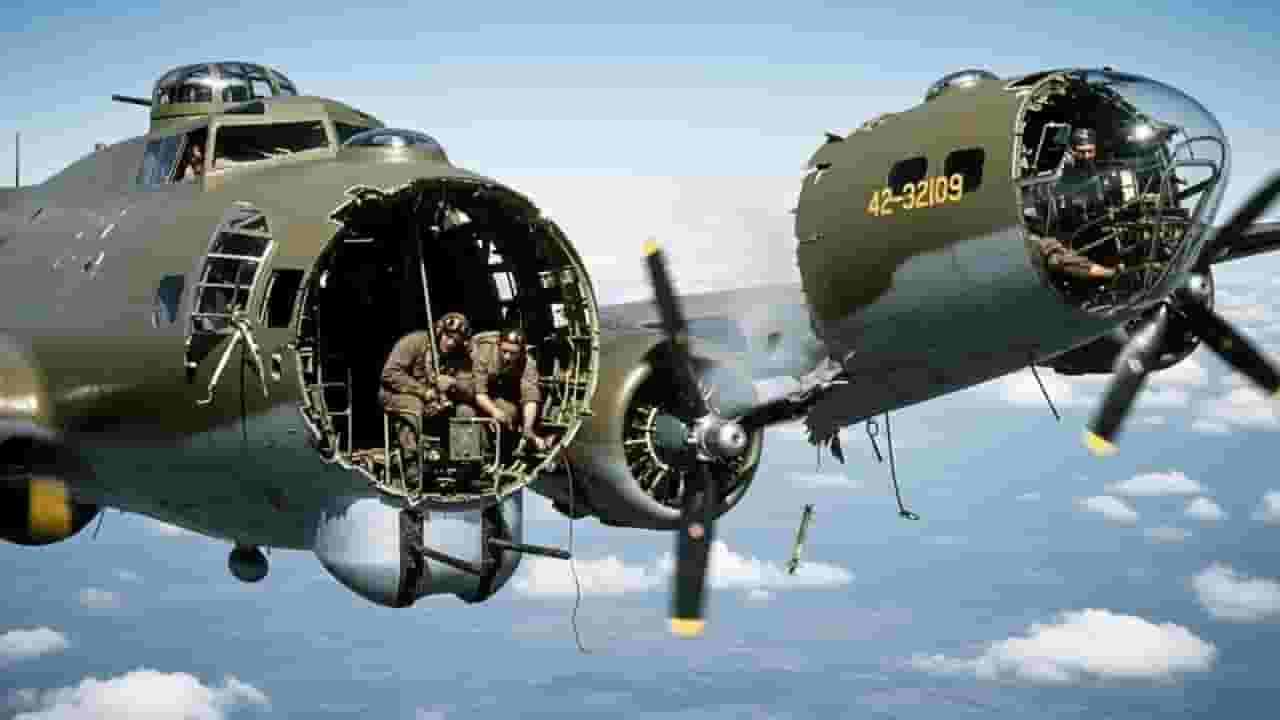
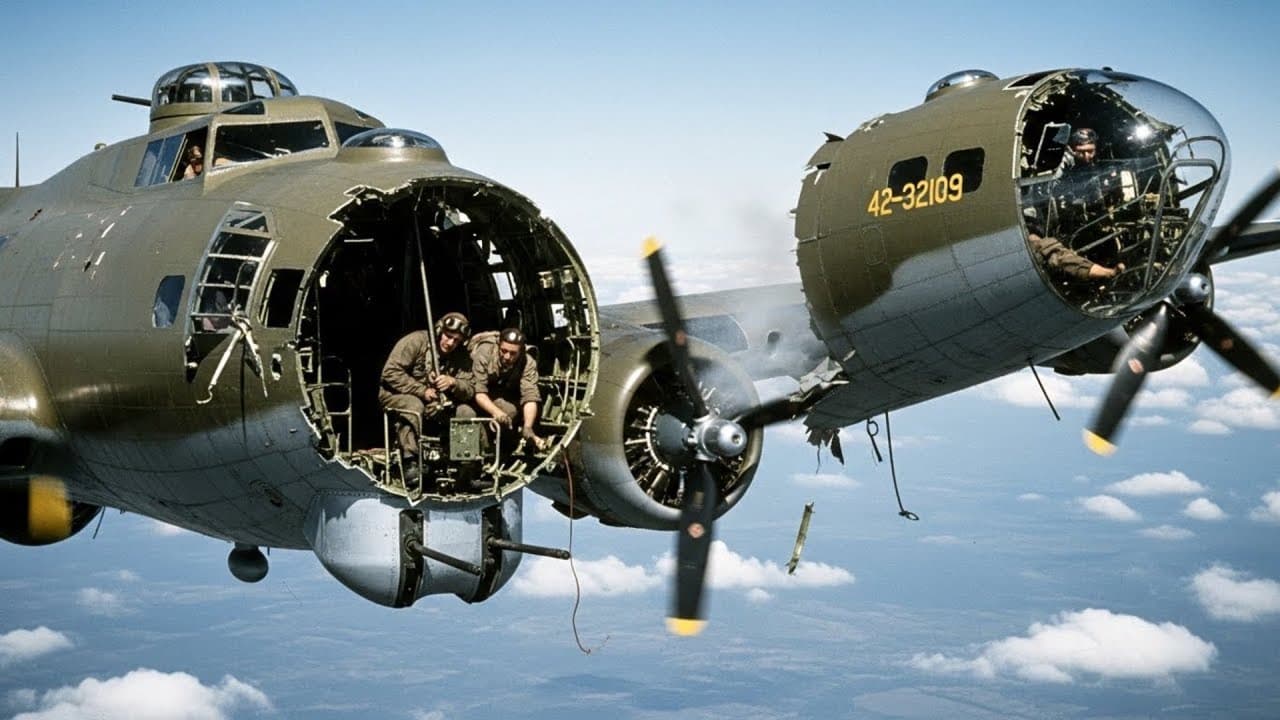


When This B-17 Lost Its Entire Nose — This Crew Flew 10 Minutes Pulling Bare Cables
714,928
Socialcounts.Org
28,942
likes
1,254
comments
daily view 0
monthly view 0
Live Analytics
Comments 0
When This B-17 Lost Its Entire Nose — This Crew Flew 10 Minutes Pulling Bare Cables Analytics Table
Income Estimates for When This B-17 Lost Its Entire Nose — This Crew Flew 10 Minutes Pulling Bare Cables
Based on this YouTube video's total view count of 714K views and industry-standard rates, the estimated total earning is $500 - $1.43K through ad revenue. Historical data is not yet available to calculate daily, weekly, or monthly averages.
About When This B-17 Lost Its Entire Nose — This Crew Flew 10 Minutes Pulling Bare Cables
Explore When This B-17 Lost Its Entire Nose — This Crew Flew 10 Minutes Pulling Bare Cables with 714,928 views, 28,942 likes, and 1,254 comments. Experience the impact of this video content that has captured audience attention.
Why First Lieutenant Ewald Swanson's crew flew a B-17 by pulling bare control cables with their hands during WW2 — and kept it airborne for ten minutes without a cockpit. This World War 2 story reveals how eight men survived what Boeing engineers said was impossible. July 14, 1944. First Lieutenant Ewald Swanson, pilot of B-17G Flying Fortress "Mizpah," 483rd Bomb Group, over Budapest, Hungary. An 88-millimeter flak shell hit the nose. The entire cockpit section vaporized. No instruments. No control column. No way to fly. Every engineering manual said this was impossible — a B-17 without a nose could not remain airborne. Ground crews, Boeing engineers, everyone called it a death sentence. They were all wrong. What Swanson and his crew discovered that morning wasn't about instruments or control columns. It was about the exposed control cables running through the fuselage and crew coordination in a way that contradicted everything Boeing had designed. The crew stationed themselves in the bomb bay and physically pulled the steel cables by hand — elevator cables, rudder cables, aileron cables — responding to what Swanson needed thirty feet forward. At thirty thousand feet over enemy territory, with three engines instead of four, they had minutes to figure out if human hands could do what hydraulics and control columns were designed to do. This incident became one of the most documented cases of B-17 structural damage survival in Fifteenth Air Force records. The story of Mizpah spread through bomber groups, demonstrating that the Flying Fortress earned its reputation not just through engineering, but through crew determination under impossible circumstances. The principles of crew coordination and aircraft stability discovered over Budapest that day continue to be studied in aviation survival training. 🔔 Subscribe for more untold WW2 stories: https://www.youtube.com/@WWII-Records 👍 Like this video if you learned something new 💬 Comment below: What other WW2 tactics should we cover? #worldwar2 #ww2history #ww2 #wwii #ww2records
About YouTube Real-Time View Count
With SocialCounts.org’s view counter, track your YouTube video’s live view count and YouTube likes count in real time with fast, reliable updates.
Watch every YouTube video live view count rise with our real-time YouTube views tracker—built for accuracy and minimal delay.
Follow YouTube real time views as they happen, using our dedicated view counter for YouTube videos.
Get up-to-date live view count on YouTube and see real-time growth with SocialCounts.org’s smart tracking tools.
Embed Widget
Parameters:
fullscreen=true- Fullscreen countergraph=true- Live graph chartcounter=0/1/2- Select counter (0=likes, 1=views, 2=comments)
URL
Click to copy the embed URL to your clipboard