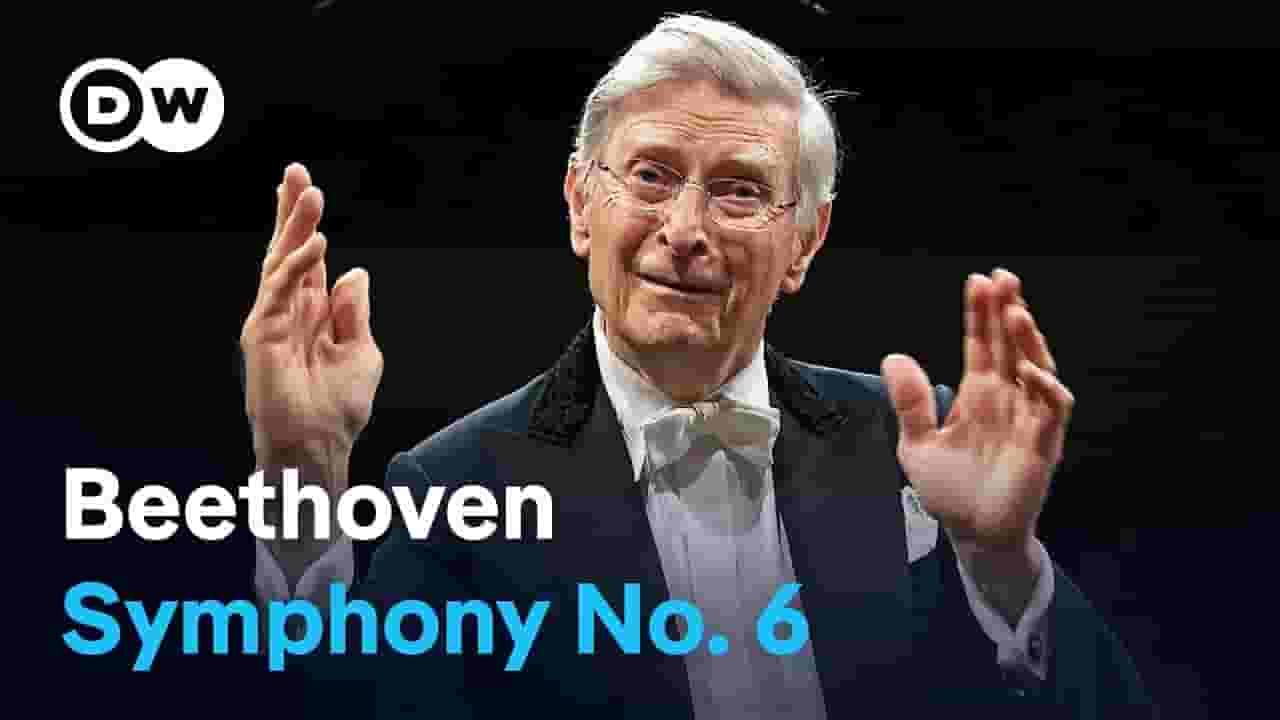


Beethoven: Symphony No. 6 "Pastoral" | Herbert Blomstedt and the Gewandhausorchester Leipzig
191,905
Socialcounts.Org
3,544
likes
144
comments
daily view 0
monthly view 0
Live Analytics
Comments 0
Beethoven: Symphony No. 6 "Pastoral" | Herbert Blomstedt and the Gewandhausorchester Leipzig Analytics Table
Income Estimates for Beethoven: Symphony No. 6 "Pastoral" | Herbert Blomstedt and the Gewandhausorchester Leipzig
Based on this YouTube video's total view count of 191K views and industry-standard rates, the estimated total earning is $134 - $384 through ad revenue. Historical data is not yet available to calculate daily, weekly, or monthly averages.
About Beethoven: Symphony No. 6 "Pastoral" | Herbert Blomstedt and the Gewandhausorchester Leipzig
Explore Beethoven: Symphony No. 6 "Pastoral" | Herbert Blomstedt and the Gewandhausorchester Leipzig with 191,905 views, 3,544 likes, and 144 comments. Experience the impact of this video content that has captured audience attention.
Beethoven’s ode to nature is a feast for the senses. The Symphony No. 6 – the Pastoral Symphony – is one of the most iconic works of the great composer. Here, it’s being performed by Herbert Blomstedt and the Gewandhausorchester on October 27, 2016, at the Gewandhaus in Leipzig. Beethoven (1770 - 1827) composed the symphony in 1807 and 1808. It has five movements, not four, and Beethoven gave them descriptive headings along with the usual tempo indications: (00:00) I. Allegro ma non troppo: 'Awakening of Cheerful Feelings upon Arrival in the Country' (11:38) II. Andante molto mosso: 'Scene by the Brook' (23:45) III. Allegro: 'Merry Gathering of the Country Folk' (29:14) IV. Allegro: ‘Storm Movement' (33:07) V. Allegretto: 'Shepherd's Song. Glad and Thankful Feelings After the Storm' The Symphony No. 6 in F major, Op. 68, known as the “Pastoral Symphony," begins with "Awakening of cheerful feelings upon arrival in the country," to be taken at an "Allegro ma non troppo" speed (fast but not exceedingly so). But there are actually many tempos, moods, feelings and effects in the first movement of Beethoven's Sixth. One thing is missing, though: that forward thrust so typical for Beethoven; the struggle and the passion in striving for a goal. Instead, the main theme is repeated, and in parts of the first movement, time seems to slow down and even stand still. The Symphony No. 6 isn't a graphic musical depiction of nature, though. As Ludwig van Beethoven personally wrote above the first movement: "More an expression of feeling than tone-painting." Use your imagination while listening to the second movement of Beethoven's Sixth, and you can hear ripples on a creek and birds tweeting. To make it clear, Beethoven added a description, "Scene by the Brook," to go with the tempo heading "Andante molto mosso" (as though walking, much movement). Beethoven only rarely explained his music, but in this case, he added: "It's left to the listener to figure out the situations. Anyone who has any idea of life in the countryside can discern the composer's intent even without titles or headings." For the musicians, Beethoven goes into greater detail, writing in the score that the calls of the nightingale, the quail and the cuckoo are rendered by the flute, the oboe and two clarinets. The triple-movement episode begins with a "Merry gathering of country folk," with "Allegro" (fast) the specified tempo. Altogether, the Symphony No. 6 in F major, Op. 68 anticipates what later went by the name of "program music:" music that describes a situation or tells a story. In the "merry gathering" we hear an oom-pah-pah village band that doesn't quite play together but, for that, is all the more boisterous. "My decree," wrote Ludwig van Beethoven: "Stay in the countryside. My unfortunate hearing problem doesn't plague me here. It's as though, in the country, every tree was speaking to me. Holy, holy! Who can express it all? Sweet quietude of the forest!" That sweet quietude comes to an abrupt end in the fourth movement of the Symphony No. 6 in F major, op. 68. It's titled "Thunder storm," and the composer specified it to be taken at a fast clip, "Allegro." It's the shortest but most dramatic movement in Ludwig van Beethoven’s Sixth Symphony. Thunder, screeching wind and a downpour are all clearly audible, while images come to mind from Walt Disney's 1940 animated film "Fantasia," where the Greek god Jupiter gleefully hurtles bolts of lightning and makes terrified villagers flee for shelter. After the merry gathering of the country folk and the storm comes the finale of Beethoven's Sixth, titled "Shepherd's song. Cheerful and thankful feelings after the storm," with the Italian tempo mark "Allegretto" (moderately fast). © 2016 Accentus Music Watch more concerts in your personal concert hall: https://www.youtube.com/playlist?list=PL_SdnzPd3eBV5A14dyRWy1KSkwcG8LEey in our Symphonies playlist: https://www.youtube.com/playlist?list=PL_SdnzPd3eBXvpOWNmQ1AUBPQeyNanpxY and in our Beethoven playlist: https://www.youtube.com/playlist?list=PL_SdnzPd3eBWcX1eOXH-w75x-_-7gRF-w Subscribe to DW Classical Music: https://www.youtube.com/dwclassicalmusic #Beethoven #symphony #pastorale
About YouTube Real-Time View Count
With SocialCounts.org’s view counter, track your YouTube video’s live view count and YouTube likes count in real time with fast, reliable updates.
Watch every YouTube video live view count rise with our real-time YouTube views tracker—built for accuracy and minimal delay.
Follow YouTube real time views as they happen, using our dedicated view counter for YouTube videos.
Get up-to-date live view count on YouTube and see real-time growth with SocialCounts.org’s smart tracking tools.
Embed Widget
Parameters:
fullscreen=true- Fullscreen countergraph=true- Live graph chartcounter=0/1/2- Select counter (0=likes, 1=views, 2=comments)
URL
Click to copy the embed URL to your clipboard