

62,405
likes
1,994
comments
daily view 0
monthly view 0
Live Analytics
Comments 0
But how do AI images and videos actually work? | Guest video by Welch Labs Analytics Table
Income Estimates for But how do AI images and videos actually work? | Guest video by Welch Labs
Based on this YouTube video's total view count of 2.00M views and industry-standard rates, the estimated total earning is $1.40K - $4.00K through ad revenue. Historical data is not yet available to calculate daily, weekly, or monthly averages.
About But how do AI images and videos actually work? | Guest video by Welch Labs
Explore But how do AI images and videos actually work? | Guest video by Welch Labs with 2,003,854 views, 62,405 likes, and 1,994 comments. Experience the impact of this video content that has captured audience attention.
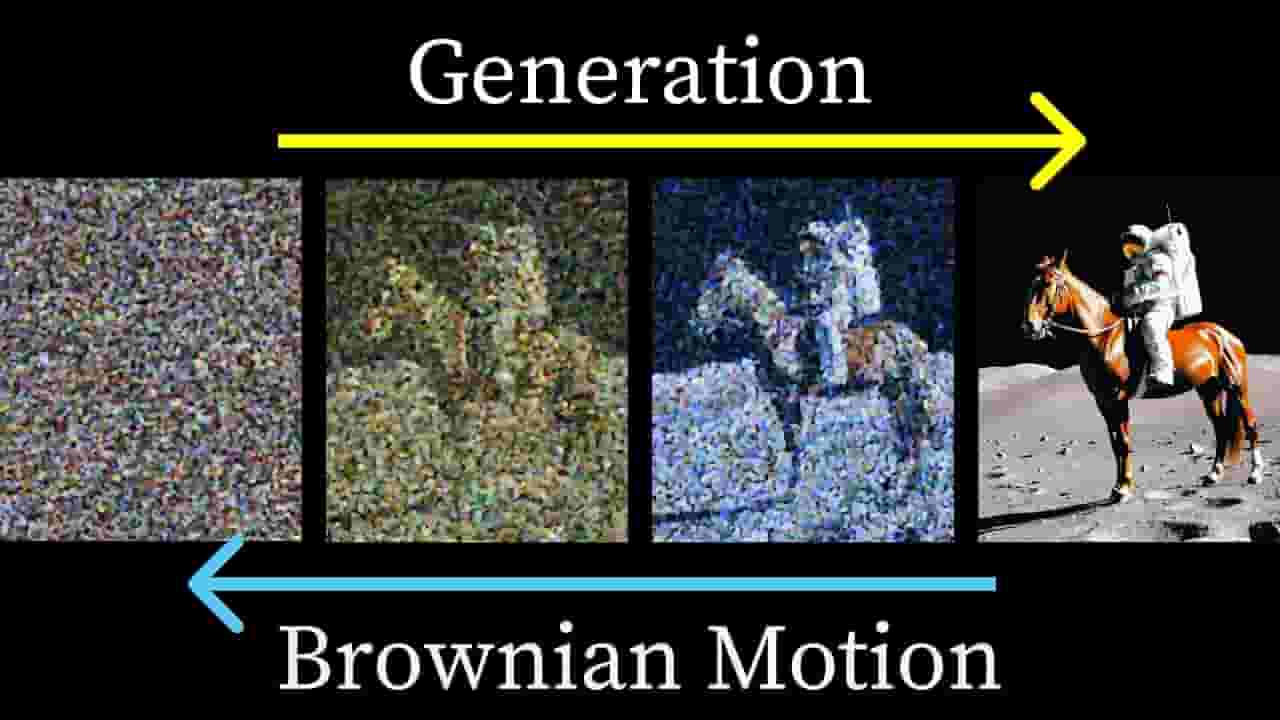
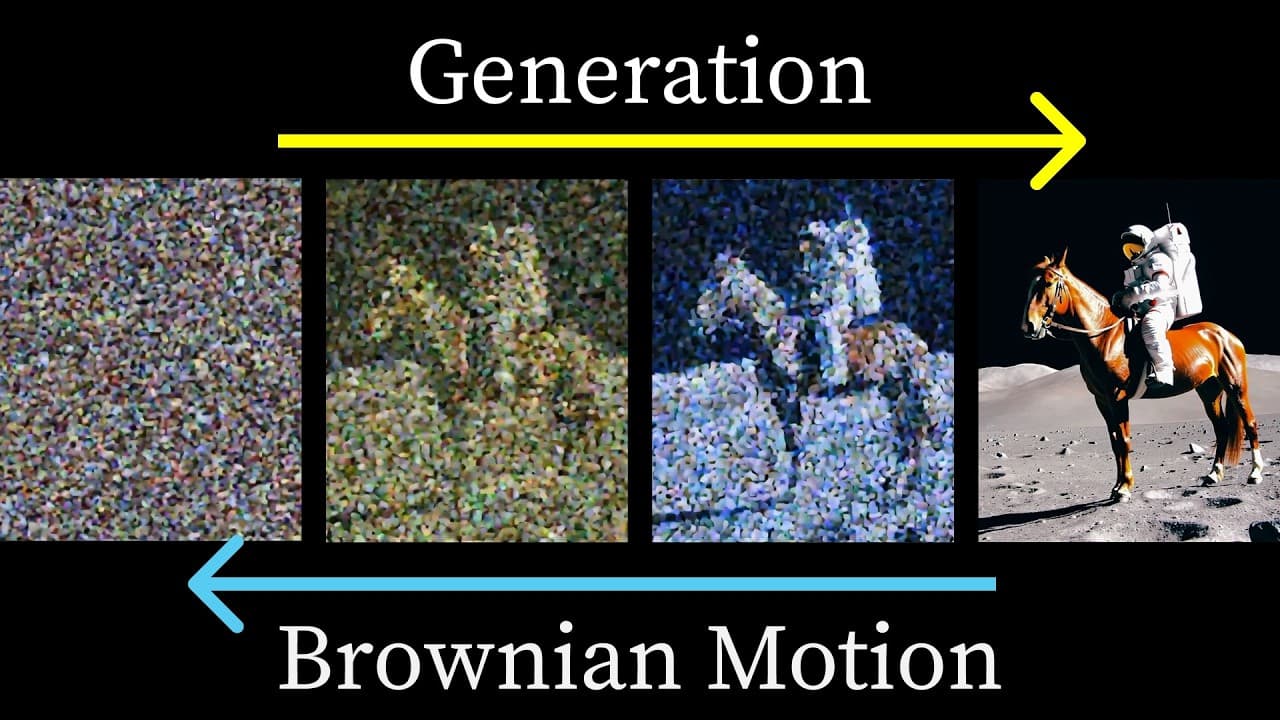
Diffusion models, CLIP, and the math of turning text into images Welch Labs Book: https://www.welchlabs.com/resources/imaginary-numbers-book Sections 0:00 - Intro 3:37 - CLIP 6:25 - Shared Embedding Space 8:16 - Diffusion Models & DDPM 11:44 - Learning Vector Fields 22:00 - DDIM 25:25 - Dall E 2 26:37 - Conditioning 30:02 - Guidance 33:39 - Negative Prompts 34:27 - Outro 35:32 - About guest videos Special Thanks to: Jonathan Ho - Jonathan is the Author of the DDPM paper and the Classifier Free Guidance Paper. https://arxiv.org/pdf/2006.11239 https://arxiv.org/pdf/2207.12598 Preetum Nakkiran - Preetum has an excellent introductory diffusion tutorial: https://arxiv.org/pdf/2406.08929 Chenyang Yuan - Many of the animations in this video were implemented using manim and Chenyang’s smalldiffusion library: https://github.com/yuanchenyang/smalldiffusion Cheyang also has a terrific tutorial and MIT course on diffusion models https://www.chenyang.co/diffusion.html https://www.practical-diffusion.org/ Other References All of Sander Dieleman’s diffusion blog posts are fantastic: https://sander.ai/ CLIP Paper: https://arxiv.org/pdf/2103.00020 DDIM Paper: https://arxiv.org/pdf/2010.02502 Score-Based Generative Modeling: https://arxiv.org/pdf/2011.13456 Wan2.1: https://github.com/Wan-Video/Wan2.1 Stable Diffusion: https://huggingface.co/stabilityai/stable-diffusion-2 Midjourney: https://www.midjourney.com/ Veo: https://deepmind.google/models/veo/ DallE 2 paper: https://cdn.openai.com/papers/dall-e-2.pdf Code for this video: https://github.com/stephencwelch/manim_videos/tree/master/_2025/sora Written by: Stephen Welch, with very helpful feedback from Grant Sanderson Produced by: Stephen Welch, Sam Baskin, and Pranav Gundu Technical Notes The noise videos in the opening have been passed through a VAE (actually, diffusion process happens in a compressed “latent” space), which acts very much like a video compressor - this is why the noise videos don’t look like pure salt and pepper. 6:15 CLIP: Although directly minimizing cosine similarity would push our vectors 180 degrees apart on a single batch, overall in practice, we need CLIP to maximize the uniformity of concepts over the hypersphere it's operating on. For this reason, we animated these vectors as orthogonal-ish. See: https://proceedings.mlr.press/v119/wang20k/wang20k.pdf Per Chenyang Yuan: at 10:15, the blurry image that results when removing random noise in DDPM is probably due to a mismatch in noise levels when calling the denoiser. When the denoiser is called on x_{t-1} during DDPM sampling, it is expected to have a certain noise level (let's call it sigma_{t-1}). If you generate x_{t-1} from x_t without adding noise, then the noise present in x_{t-1} is always smaller than sigma_{t-1}. This causes the denoiser to remove too much noise, thus pointing towards the mean of the dataset. The text conditioning input to stable diffusion is not the 512-dim text embedding vector, but the output of the layer before that, [with dimension 77x512](https://stackoverflow.com/a/79243065) For the vectors at 31:40 - Some implementations use f(x, t, cat) + alpha(f(x, t, cat) - f(x, t)), and some that do f(x, t) + alpha(f(x, t, cat) - f(x, t)), where an alpha value of 1 corresponds to no guidance. I chose the second format here to keep things simpler. At 30:30, the unconditional t=1 vector field looks a bit different from what it did at the 17:15 mark. This is the result of different models trained for different parts of the video, and likely a result of different random initializations. Premium Beat Music ID: EEDYZ3FP44YX8OWT
About YouTube Real-Time View Count
With SocialCounts.org’s view counter, track your YouTube video’s live view count and YouTube likes count in real time with fast, reliable updates.
Watch every YouTube video live view count rise with our real-time YouTube views tracker—built for accuracy and minimal delay.
Follow YouTube real time views as they happen, using our dedicated view counter for YouTube videos.
Get up-to-date live view count on YouTube and see real-time growth with SocialCounts.org’s smart tracking tools.
Embed Widget
Parameters:
fullscreen=true- Fullscreen countergraph=true- Live graph chartcounter=0/1/2- Select counter (0=likes, 1=views, 2=comments)
URL
Click to copy the embed URL to your clipboard