

614
likes
56
comments
daily view 0
monthly view 0
Live Analytics
Comments 0
Sumerians Wrote a Manual for Surviving the Anunnaki Return —Modern Translators Refused to Publish It Analytics Table
Income Estimates for Sumerians Wrote a Manual for Surviving the Anunnaki Return —Modern Translators Refused to Publish It
Based on this YouTube video's total view count of 23.3K views and industry-standard rates, the estimated total earning is $16 - $47 through ad revenue. Historical data is not yet available to calculate daily, weekly, or monthly averages.
About Sumerians Wrote a Manual for Surviving the Anunnaki Return —Modern Translators Refused to Publish It
Explore Sumerians Wrote a Manual for Surviving the Anunnaki Return —Modern Translators Refused to Publish It with 23,324 views, 614 likes, and 56 comments. Experience the impact of this video content that has captured audience attention.
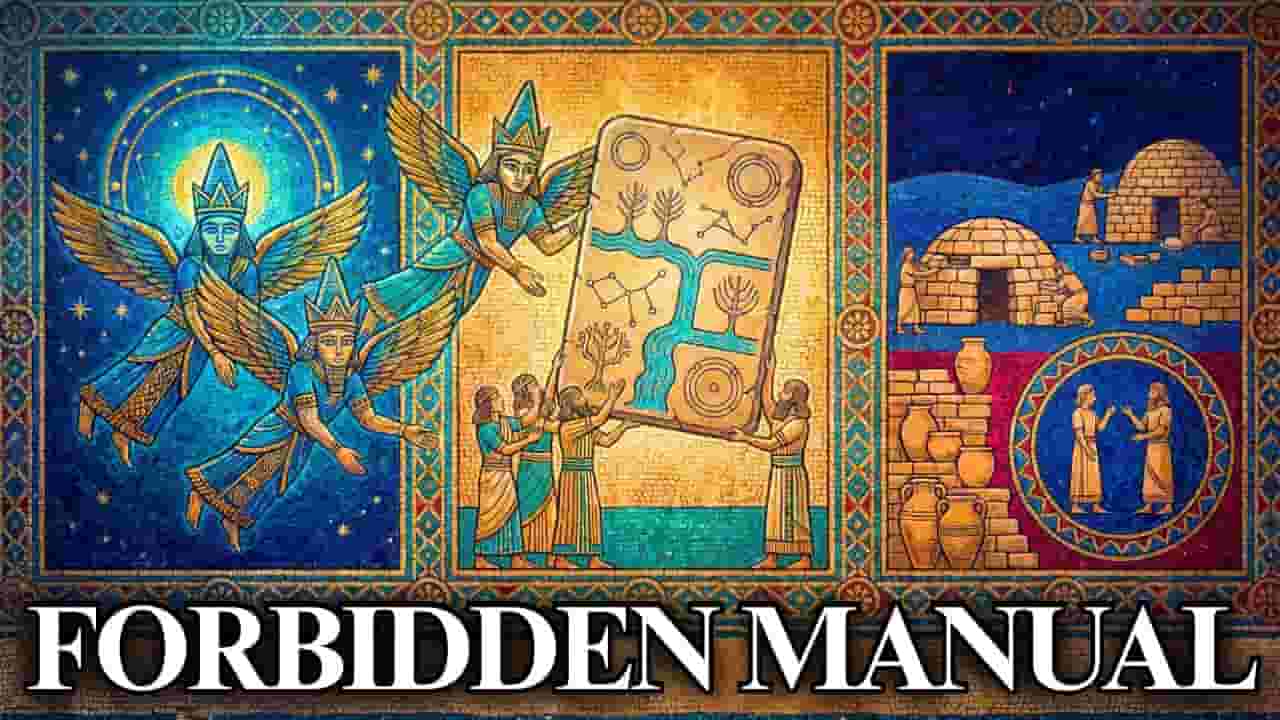
Thank you for joining us on this journey into ancient Sumerian wisdom. Subscribe for more educational content that uncovers the forgotten truths of the past. The Tablet That Tells You How to Survive the Day the Gods Return — And Why No Translator Wants to Publish What It Actually Says There is a five-tablet cuneiform composition sitting in the British Museum that does something no other Mesopotamian text is known to do. It does not record a king. It does not list temple offerings. It does not narrate a creation. In its closing lines, it tells the reader — directly, by name — that whoever copies this tablet and keeps it in his house will be spared when the destruction comes. It was excavated under Henry Layard and Hormuzd Rassam in the mid-nineteenth century. It was widely copied across twelve centuries by Mesopotamia's most careful scribes. Its geography matches the archaeological collapse layer at Ur, Eridu, Nippur, and Larsa. Its colophon is unlike any other in the Akkadian corpus. And what serious researchers found when they decided to read it not as poetry but as what it appears to be is the subject of this investigation. 🔬 THE SCIENCE: The Erra Epic is an Akkadian composition of approximately seven hundred and fifty lines, preserved on tablets recovered from the libraries of Nineveh, Sultantepe, Assur, Babylon, Sippar, and Uruk. The clay itself dates to the late Neo-Assyrian and Neo-Babylonian periods — eighth to seventh centuries BCE — but the events it describes correspond geographically and structurally to the collapse of the Third Dynasty of Ur, an archaeologically attested catastrophe dated to approximately 2004 BCE. The cuneiform tradition treated accuracy of transmission as a religious duty. Colophons were used to record scribal lineage and source exemplars. Cross-referencing the Erra Epic against the Lamentation over the Destruction of Sumer and Ur — composed within fifty years of the events themselves, per Piotr Michalowski's critical edition — reveals a continuity of testimony that resists conventional literary-trope explanations. 📚 SOURCES AND FURTHER READING: Cagni, L. (1969). L'Epopea di Erra. Studi Semitici 34, Rome. — The foundational critical edition of the Akkadian text. Cagni, L. (1977). The Poem of Erra. Sources from the Ancient Near East 1/3, Malibu. — English translation of the above. Dalley, S. (2000). Myths from Mesopotamia: Creation, the Flood, Gilgamesh, and Others (Revised ed.). Oxford University Press. Michalowski, P. (1989). The Lamentation over the Destruction of Sumer and Ur. Mesopotamian Civilizations 1, Eisenbrauns. George, A. R. (2003). The Babylonian Gilgamesh Epic: Introduction, Critical Edition, and Cuneiform Texts. Oxford University Press. Foster, B. R. (2005). Before the Muses: An Anthology of Akkadian Literature (3rd ed.). CDL Press. Lambert, W. G. (1957–58). "Three Unpublished Fragments of the Tukulti-Ninurta Epic." Archiv für Orientforschung 18. Sitchin, Z. (1976). The Twelfth Planet. Stein and Day. — Foundational alternative-tradition reading. Bond, A., & Hempsell, M. (2008). A Sumerian Observation of the Köfels' Impact Event. Alcuin Academics. — Methodology for treating cuneiform astronomical records as observational data. Reiner, E. (1958). Šurpu: A Collection of Sumerian and Akkadian Incantations. Archiv für Orientforschung Beiheft 11. — The essential reference for the Mesopotamian apotropaic corpus and the conventional framing of protective colophons. 📖 ABOUT THIS CHANNEL: This channel produces educational and informative long-form documentaries on contested questions in ancient history, archaeology, and the textual record of early civilizations. Our goal is to widen viewers' knowledge by taking primary sources seriously, naming real artifacts in real museums, citing real researchers with verifiable credentials, and representing both mainstream and alternative readings fairly so that the audience can evaluate the evidence themselves. Every script on this channel is written by hand by a human researcher. The storyboards, visual references, and narrative structure are brainstormed internally with our team. We do not assert contested interpretations as proven fact. We take the questions seriously, anchor them in published material, and leave the conclusion open — because the conclusion, in this field, genuinely is.
About YouTube Real-Time View Count
With SocialCounts.org’s view counter, track your YouTube video’s live view count and YouTube likes count in real time with fast, reliable updates.
Watch every YouTube video live view count rise with our real-time YouTube views tracker—built for accuracy and minimal delay.
Follow YouTube real time views as they happen, using our dedicated view counter for YouTube videos.
Get up-to-date live view count on YouTube and see real-time growth with SocialCounts.org’s smart tracking tools.
Embed Widget
Parameters:
fullscreen=true- Fullscreen countergraph=true- Live graph chartcounter=0/1/2- Select counter (0=likes, 1=views, 2=comments)
URL
Click to copy the embed URL to your clipboard