


Allergy - Mechanism, Symptoms, Risk factors, Diagnosis, Treatment and Prevention, Animation
878,546
Socialcounts.Org
7,158
likes
188
comments
daily view 0
monthly view 0
Live Analytics
Comments 0
Allergy - Mechanism, Symptoms, Risk factors, Diagnosis, Treatment and Prevention, Animation Analytics Table
Income Estimates for Allergy - Mechanism, Symptoms, Risk factors, Diagnosis, Treatment and Prevention, Animation
Based on this YouTube video's total view count of 878K views and industry-standard rates, the estimated total earning is $615 - $1.75K through ad revenue. Historical data is not yet available to calculate daily, weekly, or monthly averages.
About Allergy - Mechanism, Symptoms, Risk factors, Diagnosis, Treatment and Prevention, Animation
Explore Allergy - Mechanism, Symptoms, Risk factors, Diagnosis, Treatment and Prevention, Animation with 878,546 views, 7,158 likes, and 188 comments. Experience the impact of this video content that has captured audience attention.
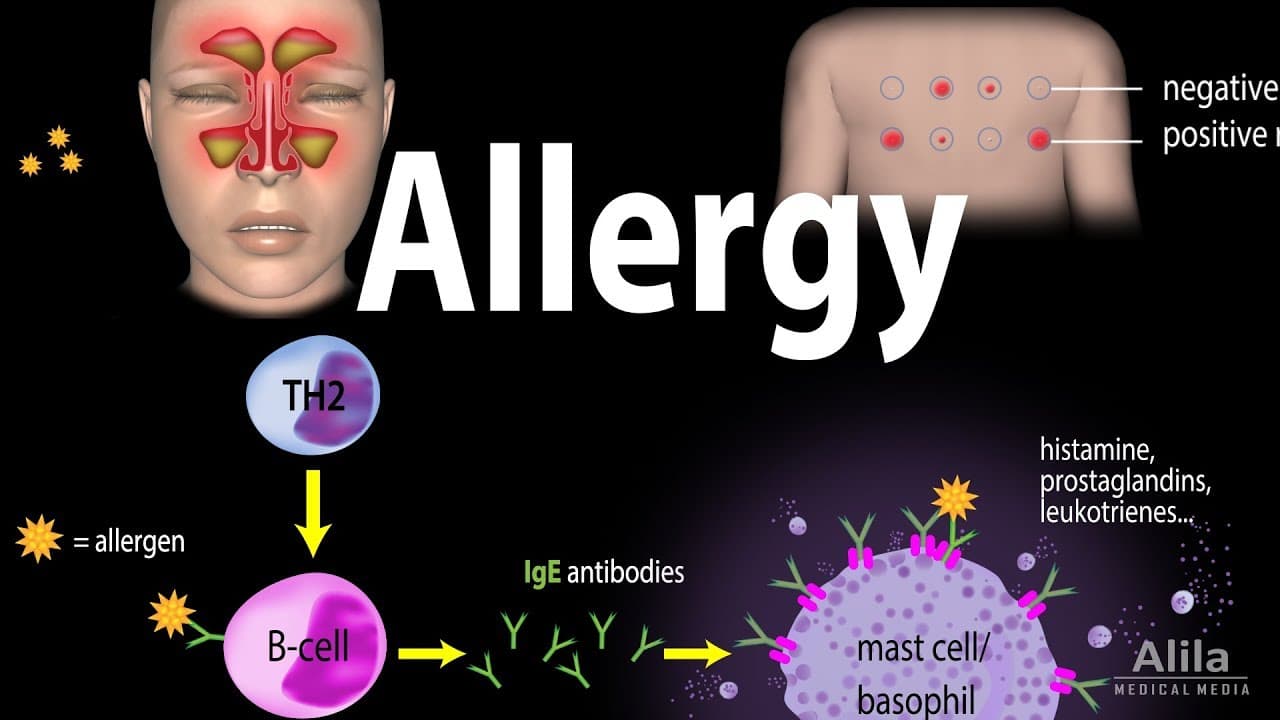
(USMLE topics) Development of allergic diseases, etiology and pathology. Purchase a license to download a non-watermarked version of this video on AlilaMedicalMedia(dot)com Check out our new Alila Academy - AlilaAcademy(dot)com - complete video courses with quizzes, PDFs, and downloadable images. Voice by: Ashley Fleming ©Alila Medical Media. All rights reserved. All images/videos by Alila Medical Media are for information purposes ONLY and are NOT intended to replace professional medical advice, diagnosis or treatment. Always seek the advice of a qualified healthcare provider with any questions you may have regarding a medical condition. Allergy refers to abnormal reactions of the immune system to otherwise harmless substances. Normally, the immune system raises immune response to protect the body from foreign invaders, such as bacteria or viruses, but does not react to non-infectious environmental antigens. In people with allergies, however, the immune system also reacts to these substances, producing allergic reactions. Such substances, called allergens, can come from the patient’s natural environment, foods, medications, latex products, or insect bites. Most allergies are mediated by a class of antibody called immunoglobulin E, IgE. IgE is produced when the body is first exposed to an allergen. Production of IgE is activated by a subtype of T-lymphocytes, known as type 2 helper T-cells, TH2. IgE molecules then bind to their receptors on the surface of mast cells and basophils. The first exposure is usually asymptomatic, but the body is now sensitized. Upon reexposure to the same antigen, the antigen binds to adjacent IgE molecules, bringing their receptors together, triggering a signaling cascade that induces the release of histamine and other inflammatory chemicals. These chemicals cause dilation and increased permeability of blood vessels, mucus secretion, stimulation of sensory nerves, smooth muscle spasms, and are responsible for allergic symptoms, which can range from mild to severe. Mild symptoms usually consist of watery eyes, runny nose, sneezing and a mild rash; while severe reactions may include swelling, hives, difficulty breathing due to bronchospasm, and digestive problems due to increased gastrointestinal motility. When released systemically, these chemicals can cause extensive vasodilation and smooth muscle spasms which may lead to anaphylaxis, a life-threatening condition in which blood pressure drops and airways narrow to a dangerous level. The reactions are immediate, within minutes of contact with the allergen. There is also a late phase response, due to subsequent tissue infiltration with eosinophils and other inflammatory cells. People who are sensitized to a specific allergen may also react to other substances that contain similar antigens. This is called cross-reactivity. For example, people who are allergic to birch pollen may also have reactions to certain fruits and vegetables such as apples or potatoes, consumption of which can cause itching and swelling of the lips and oral cavity. Both genetic and environmental factors contribute to the development of allergic diseases. Allergies tend to run in families. What is inherited is the susceptibility to allergic reactions, due to irregularities in the makeup of the immune system. Early childhood exposures to bacterial and viral infections are thought to suppress TH2 cells and are therefore protective against allergic diseases. This theory, known as hygiene hypothesis, implies that living in too sterile an environment is a risk factor for allergic diseases. While still a hypothesis, it does partly explain the higher prevalence of allergies in developed countries. Other risks factors include exposure to allergens and stress. Diagnosis is usually based on symptoms and patient’s history. Potential allergens may be identified with skin prick test or intradermal test, where small amounts of common allergens are introduced into the skin and local reactions are observed. A blood test, called allergen-specific serum IgE test, can also be performed. In this case, patient’s blood sample containing IgE is tested for binding to common allergens. If binding occurs, the person is allergic to that allergen. Antihistamines are effective for treatment of mild allergies. Other drugs include mast cell stabilizers, corticosteroids and leukotriene modifiers. Severe reactions require immediate injection of epinephrine. The best way to prevent allergies is to avoid the offending allergens. People with serious reactions to unavoidable allergens may benefit from immunotherapy. In immunotherapy, patients are injected weekly with gradually increasing doses of the allergen, starting with a tiny amount. This process desensitizes the immune system, reducing reactions to the allergen, but may take several years to complete.
About YouTube Real-Time View Count
With SocialCounts.org’s view counter, track your YouTube video’s live view count and YouTube likes count in real time with fast, reliable updates.
Watch every YouTube video live view count rise with our real-time YouTube views tracker—built for accuracy and minimal delay.
Follow YouTube real time views as they happen, using our dedicated view counter for YouTube videos.
Get up-to-date live view count on YouTube and see real-time growth with SocialCounts.org’s smart tracking tools.
Embed Widget
Parameters:
fullscreen=true- Fullscreen countergraph=true- Live graph chartcounter=0/1/2- Select counter (0=likes, 1=views, 2=comments)
URL
Click to copy the embed URL to your clipboard