

213
likes
5
comments
daily view 0
monthly view 0
Live Analytics
Comments 0
Dominique Bergmann (Stanford U / HHMI) 1: Key issues in plant development Analytics Table
Income Estimates for Dominique Bergmann (Stanford U / HHMI) 1: Key issues in plant development
Based on this YouTube video's total view count of 24.4K views and industry-standard rates, the estimated total earning is $17 - $49 through ad revenue. Historical data is not yet available to calculate daily, weekly, or monthly averages.
About Dominique Bergmann (Stanford U / HHMI) 1: Key issues in plant development
Explore Dominique Bergmann (Stanford U / HHMI) 1: Key issues in plant development with 24,420 views, 213 likes, and 5 comments. Experience the impact of this video content that has captured audience attention.
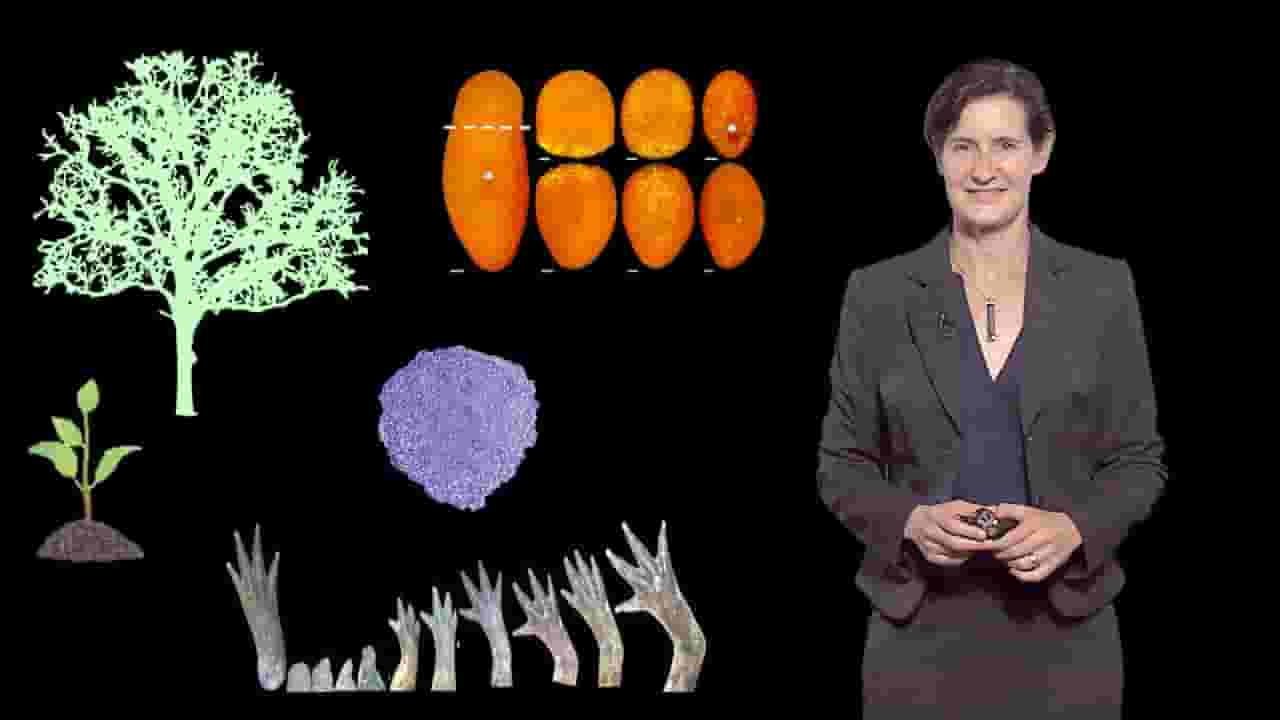
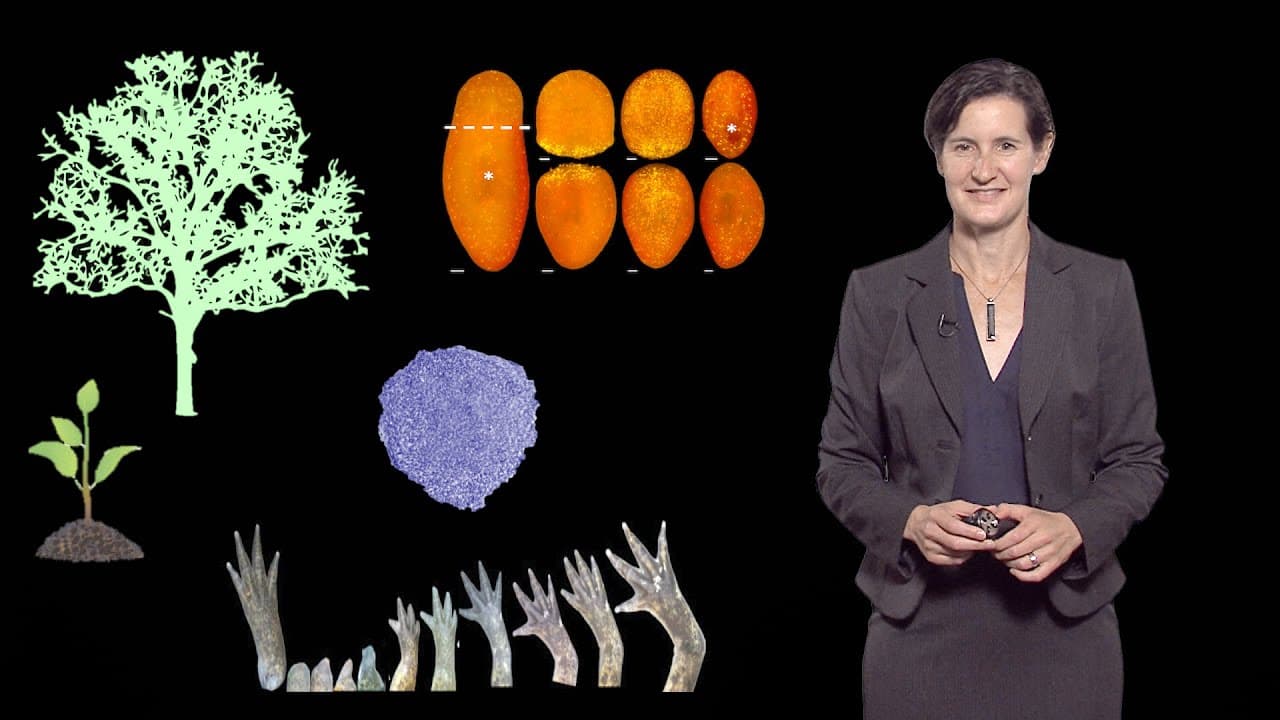
http://www.ibiology.org/ibioseminars/dominique-bergmann-part-1.html Talk Overview: While mammals are protected by the mother’s womb during their most critical development, plants are exposed to the environment for most of their development. To survive, plants have developed strategies such as the ability to grow new tissue and regenerate tissue lost to predators. New leaves, stems and flowers are derived from the shoot apical meristem while roots come from the root apical meristem. Meristems are the source of pluripotent stem cells for all plant growth. Bergmann explains that because plants can live for a very long time and are constantly regenerating they are an excellent system for improving our understanding of stem cells. In Part 2, Bergmann focuses on the stem cells that give rise to the epidermis of the plant. These stem cells give rise to two distinct sets of cells. Pavement cells form an impermeable layer that “waterproofs” the plant. Stomata are small pores on the plant surface formed by two cells that act as a valve to regulate the uptake of CO2 and the release of oxygen and water. Bergmann’s lab used confocal microscopy to follow stem cells from their “birth”, through a series of asymmetric divisions to their eventual differentiation to pavement cells or stomata. At the same time, they measured how active or inactive all genes in the plant were at the different stages. Using chromatin immunoprecipitation, they were able to identify key genes involved in determining and maintaining cell fate decisions. Interestingly, similar genes and mechanisms may influence cell fate decisions in animals. In her last talk, Bergmann discusses the impact of plant physiology on the Earth’s climate and the impact of climate on plant physiology. Since stomata regulate CO2 uptake and oxygen and H2O release, their function impacts global climate change. The number of stomata a plant has increases and decreases in response to many factors including CO2 concentration, light, and temperature and stomata can open and close in response to the same cues. Bergmann and her colleagues studied plants with different numbers of stomata that were grown in controlled climates to get a better understanding of stomatal behavior in response to changes in climate. Knowing these details may contribute to improving the accuracy of global climate models. Related Articles (to open on a separate page from Resources link under the video window): Matos JL, Lau OS, Hachez C, Cruz-Ramírez A, Scheres B, Bergmann DC (2014) Irreversible fate commitment in the Arabidopsis stomatal lineage requires a FAMA and RETINOBLASTOMA-RELATED module. Elife. 2014 Oct 10;3. PMID: 25303364 Lau OS, Davies KA, Chang J, Adrian J, Rowe MH, Ballenger CE, Bergmann DC (2014) Direct roles of SPEECHLESS in the specification of stomatal self-renewing cells. Science 2014 Sept; PMID: 25190717 Dong J, Macalister CA, Bergmann DC (2009) BASL Controls Asymmetric Cell Division in Arabidopsis. Cell. 2009 Jun 26;137(7):1320-30. PMID: 19523675 Key reviews: Dow GJ, Bergmann DC (2014) Patterning and processes: how stomatal development defines physiological potential. Curr Opin Plant Biol. 2014 Jul 21;21C:67-74. PMID: 25058395 Matos JL, Bergmann DC (2014) Convergence of stem cell behaviors and genetic regulation between animals and plants: insights from the Arabidopsis thaliana stomatal lineage. F1000Prime Rep. 2014 Jul 8;6:53. PMID: 25184043 Lau OS, Bergmann DC (2012) Stomatal development: a plant’s perspective on cell polarity, cell fate transitions and intercellular communication. Development 139(20):3683-92. PMID: 22991435 Vatén A, Bergmann DC (2012) Mechanisms of stomatal development: an evolutionary view. Evodevo 3(1):11. PMID: 22691547 Speaker Biography: Dominique Bergmann completed her BA in molecular and cellular biology at the University of California, Berkeley. Bergmann studied development in C. elegans as a PhD student at the University of Colorado at Boulder, but switched her focus to development in Arabidopsis while a post-doc at the Carnegie Institution, Department of Plant Biology. Moving to Carnegie’s neighbor, Stanford University, Bergmann set up her own lab in 2005, and continues to study Arabidopsis. Currently, her work focuses on specialized structures called stomata and the role of asymmetric cell division and cell-cell communication in their formation. Bergmann is currently an associate professor at Stanford University and a Howard Hughes Medical Institute and Gordon and Betty Moore Foundation Investigator. She is also an associate of the Stanford Institute for Stem Cell Biology and Regenerative Medicine and The Carnegie Institute, Department of Plant Biology.
About YouTube Real-Time View Count
With SocialCounts.org’s view counter, track your YouTube video’s live view count and YouTube likes count in real time with fast, reliable updates.
Watch every YouTube video live view count rise with our real-time YouTube views tracker—built for accuracy and minimal delay.
Follow YouTube real time views as they happen, using our dedicated view counter for YouTube videos.
Get up-to-date live view count on YouTube and see real-time growth with SocialCounts.org’s smart tracking tools.
Embed Widget
Parameters:
fullscreen=true- Fullscreen countergraph=true- Live graph chartcounter=0/1/2- Select counter (0=likes, 1=views, 2=comments)
URL
Click to copy the embed URL to your clipboard