

Live Analytics
Comments 0
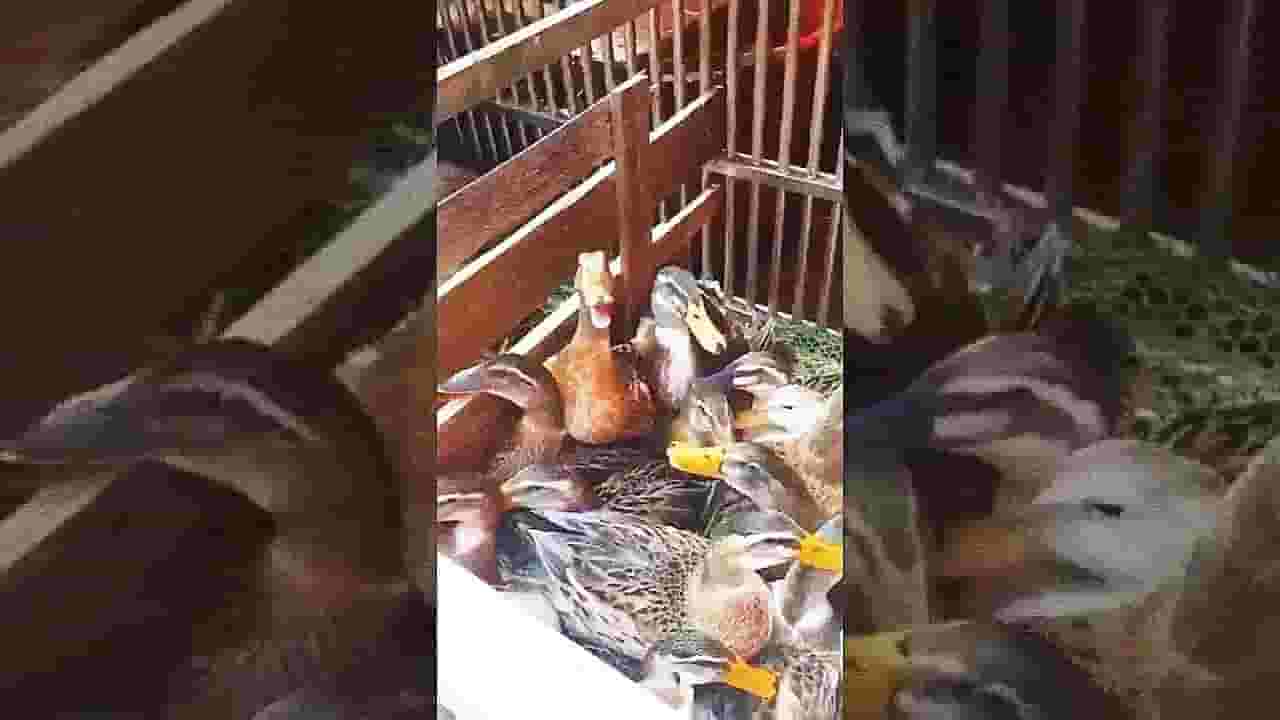
The Laughing Duck😂🤣🦆 Analytics Table
Income Estimates for The Laughing Duck😂🤣🦆
Based on this YouTube video's total view count of 278K views and industry-standard rates, the estimated total earning is $195 - $557 through ad revenue. Historical data is not yet available to calculate daily, weekly, or monthly averages.
About The Laughing Duck😂🤣🦆
Explore The Laughing Duck😂🤣🦆 with 278,585 views, 0 likes, and 0 comments. Experience the impact of this video content that has captured audience attention.
Duck is the common name for numerous species in the waterfowl family Anatidae which also includes swans and geese. Ducks are divided among several subfamilies in the family Anatidae; they do not represent a monophyletic group (the group of all descendants of a single common ancestral species) but a form taxon, since swans and geese are not considered ducks. Ducks are mostly aquatic birds, mostly smaller than the swans and geese, and may be found in both fresh water and sea water. © Copyright Disclaimer Under Section 107 of the Copyright Act 1976, allowance is made for "fair use" for purposes such as criticism, comment, news reporting, teaching, scholarship, and research. Fair use is a use permitted by copyright statute that might otherwise be infringing. Non-profit, educational or personal use tips the balance in favor of fair use. ALL RIGHTS TO THE ("OWNERS TO THE DUCKS") © Copyright Penafian di bawah Seksyen 107 Akta Hak Cipta 1976, elaun dibuat untuk "penggunaan adil" untuk tujuan seperti kritikan, komen, laporan berita, pengajaran, biasiswa, dan penyelidikan. Penggunaan yang adil adalah penggunaan yang dibenarkan oleh undang-undang hak cipta yang mungkin melanggarnya. Tips penggunaan bukan keuntungan, pendidikan atau peribadi keseimbangan yang memihak kepada penggunaan yang adil. DuckBufflehead (Bucephala albeola)Scientific classificationDomain:EukaryotaKingdom:AnimaliaPhylum:ChordataClass:AvesOrder:AnseriformesSuperfamily:AnatoideaFamily:AnatidaeSubfamilies See text Ducks are sometimes confused with several types of unrelated water birds with similar forms, such as loons or divers, grebes, gallinules and coots. Etymology  Mallard landing in approach  Pacific black duck displaying the characteristic upending "duck". The word duck comes from Old English *dūce "diver", a derivative of the verb *dūcan "to duck, bend down low as if to get under something, or dive", because of the way many species in the dabbling duck group feed by upending; compare with Dutch duiken and German tauchen "to dive". This word replaced Old English ened/ænid "duck", possibly to avoid confusion with other Old English words, like ende "end" with similar forms. Other Germanic languages still have similar words for "duck", for example, Dutch eend "duck", German Ente "duck" and Norwegian and "duck". The word ened/ænid was inherited from Proto-Indo-European; compare: Latin anas "duck", Lithuanian ántis "duck", Ancient Greek nēssa/nētta (νῆσσα, νῆττα) "duck", and Sanskrit ātí "water bird", among others. A duckling is a young duck in downy plumage[1] or baby duck,[2] but in the food trade a young domestic duck which has just reached adult size and bulk and its meat is still fully tender, is sometimes labelled as a duckling. s A male duck is called a drake and the female is called a duck, or in ornithology a hen.[3][4] Morphology  Male Mandarin duck The overall body plan of ducks is elongated and broad, and the ducks are also relatively long-necked, albeit not as long-necked as the geese and swans. The body shape of diving ducks varies somewhat from this in being more rounded. The bill is usually broad and contains serrated pectens, which are particularly well defined in the filter-feeding species. In the case of some fishing species the bill is long and strongly serrated. The scaled legs are strong and well developed, and generally set far back on the body, more so in the highly aquatic species. The wings are very strong and are generally short and pointed, and the flight of ducks requires fast continuous strokes, requiring in turn strong wing muscles. Three species of steamer duck are almost flightless, however. Many species of duck are temporarily flightless while moulting; they seek out protected habitat with good food supplies during this period. This moult typically precedes migration. The drakes of northern species often have extravagant plumage, but that is moulted in summer to give a more female-like appearance, the "eclipse" plumage. Southern resident species typically show less sexual dimorphism, although there are exceptions such as the paradise shelduck of New Zealand, which is both strikingly sexually dimorphic and in which the female's plumage is brighter than that of the male. The plumage of juvenile birds generally resembles that of the female. Over the course of evolution, female ducks have evolved to have a corkscrew shaped vagina to prevent rape.
About YouTube Real-Time View Count
With SocialCounts.org’s view counter, track your YouTube video’s live view count and YouTube likes count in real time with fast, reliable updates.
Watch every YouTube video live view count rise with our real-time YouTube views tracker—built for accuracy and minimal delay.
Follow YouTube real time views as they happen, using our dedicated view counter for YouTube videos.
Get up-to-date live view count on YouTube and see real-time growth with SocialCounts.org’s smart tracking tools.
Embed Widget
Parameters:
fullscreen=true- Fullscreen countergraph=true- Live graph chartcounter=0/1/2- Select counter (0=likes, 1=views, 2=comments)
URL
Click to copy the embed URL to your clipboard