

70,085
likes
2,368
comments
daily view 0
monthly view 0
Live Analytics
Comments 0
Basic English – How and when to use DO, DOES, and DID Analytics Table
Income Estimates for Basic English – How and when to use DO, DOES, and DID
Based on this YouTube video's total view count of 3.13M views and industry-standard rates, the estimated total earning is $2.19K - $6.26K through ad revenue. Historical data is not yet available to calculate daily, weekly, or monthly averages.
About Basic English – How and when to use DO, DOES, and DID
Explore Basic English – How and when to use DO, DOES, and DID with 3,131,079 views, 70,085 likes, and 2,368 comments. Experience the impact of this video content that has captured audience attention.
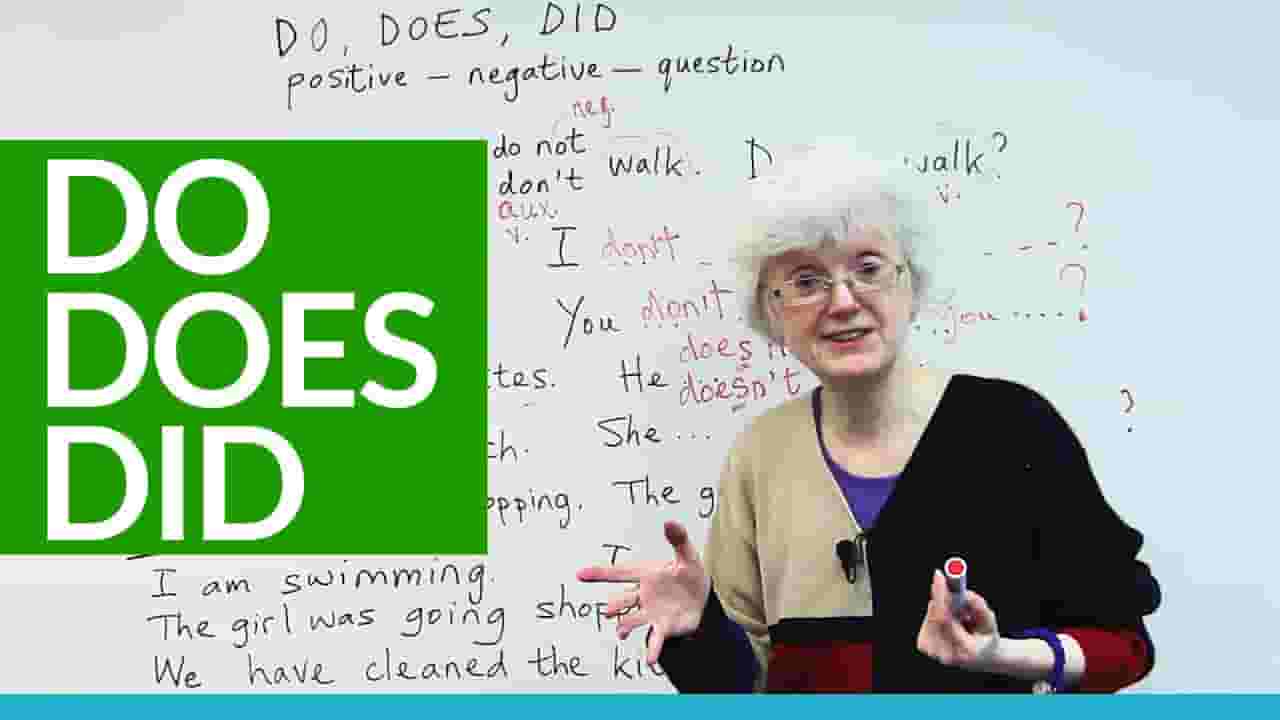
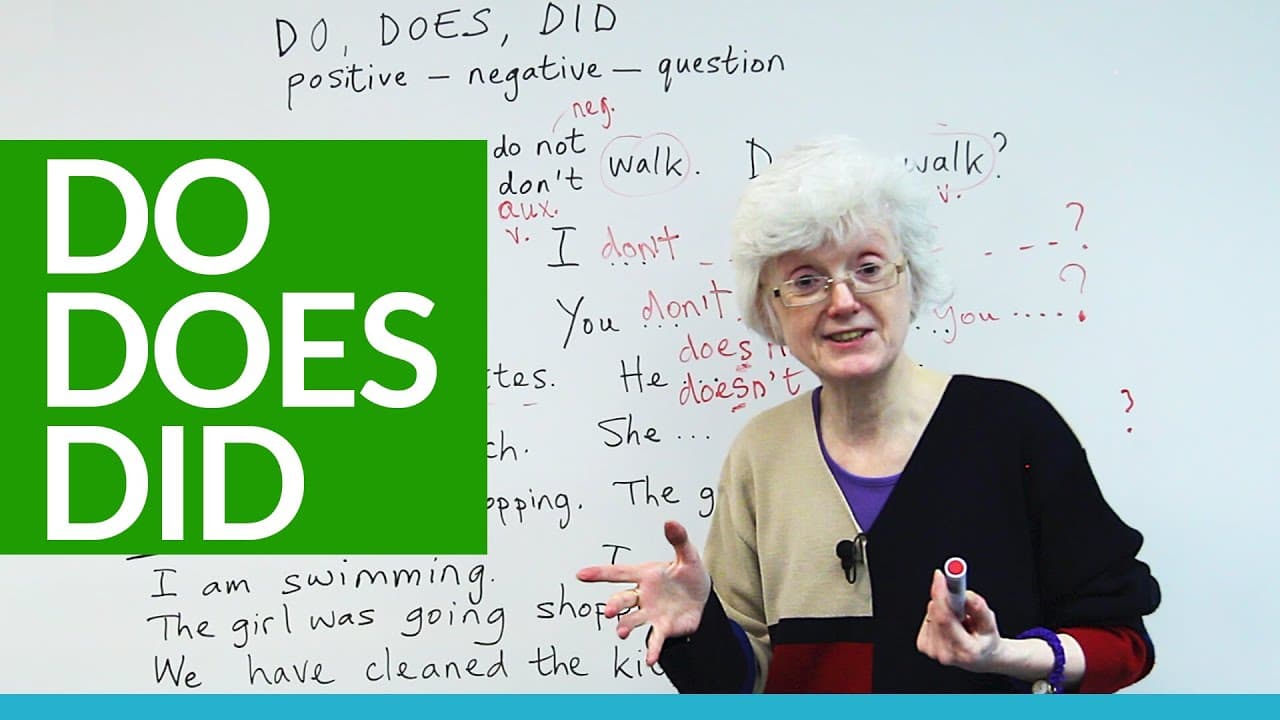
Do you know when and how to use the verb "to do"? In this basic English grammar lesson, I will explain how "do" is used with different verb tenses when you make a negative statement and when you ask a question. Learn how to use this verb in the present, past, and present continuous tenses in all kinds of sentences. DO you want to watch? Yes, of course you DO! DID you click on the lesson yet? http://www.engvid.com/do-does-did/ TRANSCRIPT Hi. I'm Gill from www.engvid.com, and today, we're going to look at the verb "to do", looking at "do", "does", and "did", and the way it's used, not all within a positive sentence or statement, but the way it often needs to be included in a negative statement, and also how it has to be used in a question. Okay? So, I've just got an example here to show you what... What I mean. Okay? So, just a simple sentence: "You walk." Okay? "You walk." So, we've got the pronoun "you", the person. "P" for pronoun, "p" for person. Okay? And the verb: to walk. "You walk." Okay? But, what happens? Now this is in the present tense, and what happens is in some tenses, you have to use "do", but in other tenses you don't need it. So we're going to see the different types of sentence with different tenses to show when to use it and when not to use it, and also how to use it. Okay? So: "You walk." Simple present tense. If you turn that into the negative, it's: "You do not walk." or "You don't walk." You can't just say: "You not walk". You have to use: "You do not walk." And so, because "do" is also a verb, the way it's used here is to sort of help the meaning and that means it's called an auxiliary verb. Okay? So, I'll just put "aux", auxiliary verb. And the "not" is the negative. Okay? So: "You do not walk." or "You don't walk." In speech, when we're speaking, we say: "You don't". Maybe if you're writing a formal essay for an exam, it's best not to use contractions, abbreviations, like "don't". It's better to use "do not". Okay? So: "You do not walk." That's the negative. Okay? And then, again, if we turn it into a question and you're asking the person, it's: "Do" again. "Do...? Do you walk?" So: "You walk", "Do you walk?" Okay? So "do" is the auxiliary; "you" is the person, the pronoun; and "walk" is the verb. Okay? So: "You walk.", "You don't walk.", "Do you walk?" Okay. So, there, in the simple present tense for the negative and for the question, you need to use "do" as an extra and as an auxiliary verb. Okay? Right, so now I've got some little exercises to give you a chance to see if you can do them yourself before I say what they should be. Okay? So, we've got this one here: "I swim every day." Very healthy. I don't, actually, but some people do. Swim, swimming in a swimming pool. "I swim every day." Okay? So, if you are going to turn that into the negative... I just said it probably, without realizing. I hope you've forgotten what I've said now when I gave you the negative. [Laughs]. I'm not going to do that every time, don't worry. "Don't worry." Okay, so: "I swim every day." What would be the negative? "I ____ ____ _____ ___." Just have a think before I tell you what it should be: "I", then we have to use "do not"/"don't", "I don't", and then it's the same. We've got "walk" there and "walk" there, so it's just: "I don't swim every day." Okay? So you just have to put "don't" in there: "I don't swim every day." Okay? And then, again, for the question version of it: "I swim every day." And then somebody asks or I ask... I don't know why I would ask that question. I should know the answer, but: "Do", what should it be? "Do I swim every day?" So, "swim every day", "walk", "walk", "swim every day". "Do I swim every day?" Okay. So, it's always "Do" at the beginning of the question, and then you just use the same words. Okay, so let's try the next one. I hope by now that you understand what I'm explaining about the verb "to do". "You understand." Okay? Now, what if it's still negative? I'm not going to say it this time; I'll leave it for you to think: How would you say the negative of this? "You __ ___ understand." Okay? So, it's: "You", like this one here, "don't"... Sorry about my writing. "You don't" and then "understand" again. Okay? "You understand.", "You don't understand." Right? And then the question version, I've already started it with: "Do", so if I'm asking you yes or no: "Do you understand?" Okay? So: "Do you understand?" And the question mark, of course, at the end. Always remember the question mark. Right. Okay. So I hope that's clear so far.
About YouTube Real-Time View Count
With SocialCounts.org’s view counter, track your YouTube video’s live view count and YouTube likes count in real time with fast, reliable updates.
Watch every YouTube video live view count rise with our real-time YouTube views tracker—built for accuracy and minimal delay.
Follow YouTube real time views as they happen, using our dedicated view counter for YouTube videos.
Get up-to-date live view count on YouTube and see real-time growth with SocialCounts.org’s smart tracking tools.
Embed Widget
Parameters:
fullscreen=true- Fullscreen countergraph=true- Live graph chartcounter=0/1/2- Select counter (0=likes, 1=views, 2=comments)
URL
Click to copy the embed URL to your clipboard