


35,803
likes
908
comments
daily view 0
monthly view 0
Live Analytics
Comments 0
Biggest Puzzle in Computer Science: P vs. NP Analytics Table
Income Estimates for Biggest Puzzle in Computer Science: P vs. NP
Based on this YouTube video's total view count of 1.38M views and industry-standard rates, the estimated total earning is $970 - $2.77K through ad revenue. Historical data is not yet available to calculate daily, weekly, or monthly averages.
About Biggest Puzzle in Computer Science: P vs. NP
Explore Biggest Puzzle in Computer Science: P vs. NP with 1,385,478 views, 35,803 likes, and 908 comments. Experience the impact of this video content that has captured audience attention.
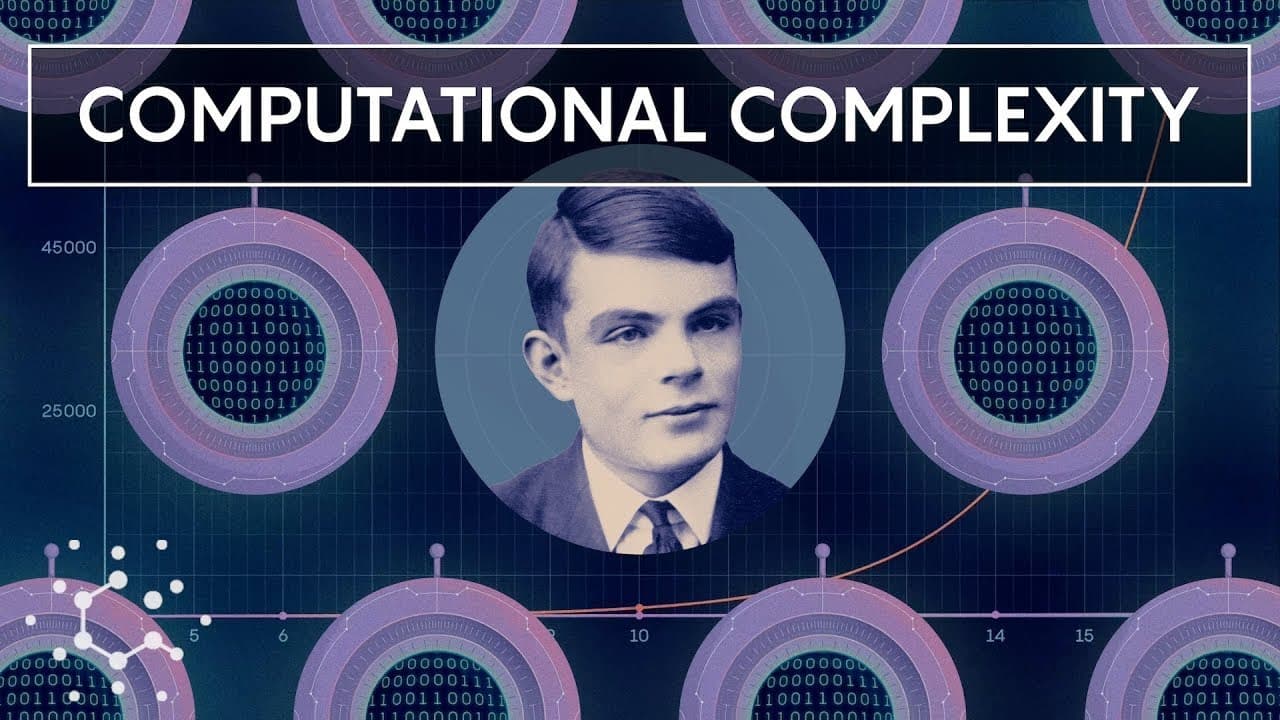
Are there limits to what computers can do? How complex is too complex for computation? The question of how hard a problem is to solve lies at the heart of an important field of computer science called Computational Complexity. Computational complexity theorists want to know which problems are practically solvable using clever algorithms and which problems are truly difficult, maybe even virtually impossible, for computers to crack. This hardness is central to what’s called the P versus NP problem, one of the most difficult and important questions in all of math and science. This video covers a wide range of topics including: the history of computer science, how transistor-based electronic computers solve problems using Boolean logical operations and algorithms, what is a Turing Machine, the different classes of problems, circuit complexity, and the emerging field of meta-complexity, where researchers study the self-referential nature of complexity questions. Featuring computer scientist Scott Aaronson (full disclosure, he is also member of the Quanta Magazine Board). Check out his blog: https://scottaaronson.blog/ Read the companion article about meta-complexity at Quanta Magazine: https://www.quantamagazine.org/complexity-theorys-50-year-journey-to-the-limits-of-knowledge-20230817/ 00:00 Introduction to the P vs NP problem 02:16 Intro to Computational Complexity 02:30 How do computers solve problems? 03:02 Alan Turing and Turing Machines 04:05 George Boole and Boolean Algebra 05:21 Claude Shannon and the invention of transistors 06:22 John Von Neumann and the invention of the Universal Electronic Computer 07:05 Algorithms and their limits 08:22 Discovery of different classes of computational problems 08:56 Polynomial P problems explained 09:56 Exponential NP Problems explained 11:36 Implications if P = NP 12:48 Discovery of NP Complete problems 13:45 Knapsack Problem and Traveling Salesman problem 14:24 Boolean Satisfiability Problem (SAT) defined 15:32 Circuit Complexity Theory 16:55 Natural Proofs Barrier 17:36 Meta-complexity 18:12 Minimum Circuit Size Problem (MCSP) - VISIT our Website: https://www.quantamagazine.org - LIKE us on Facebook: https://www.facebook.com/QuantaNews - FOLLOW us Twitter: https://twitter.com/QuantaMagazine Quanta Magazine is an editorially independent publication supported by the Simons Foundation: https://www.simonsfoundation.org/
About YouTube Real-Time View Count
With SocialCounts.org’s view counter, track your YouTube video’s live view count and YouTube likes count in real time with fast, reliable updates.
Watch every YouTube video live view count rise with our real-time YouTube views tracker—built for accuracy and minimal delay.
Follow YouTube real time views as they happen, using our dedicated view counter for YouTube videos.
Get up-to-date live view count on YouTube and see real-time growth with SocialCounts.org’s smart tracking tools.
Embed Widget
Parameters:
fullscreen=true- Fullscreen countergraph=true- Live graph chartcounter=0/1/2- Select counter (0=likes, 1=views, 2=comments)
URL
Click to copy the embed URL to your clipboard