

51,122
likes
5,893
comments
daily view 0
monthly view 0
Live Analytics
Comments 0
2-Minute Neuroscience: Autism Analytics Table
Income Estimates for 2-Minute Neuroscience: Autism
Based on this YouTube video's total view count of 2.58M views and industry-standard rates, the estimated total earning is $1.81K - $5.17K through ad revenue. Historical data is not yet available to calculate daily, weekly, or monthly averages.
About 2-Minute Neuroscience: Autism
Explore 2-Minute Neuroscience: Autism with 2,585,433 views, 51,122 likes, and 5,893 comments. Experience the impact of this video content that has captured audience attention.
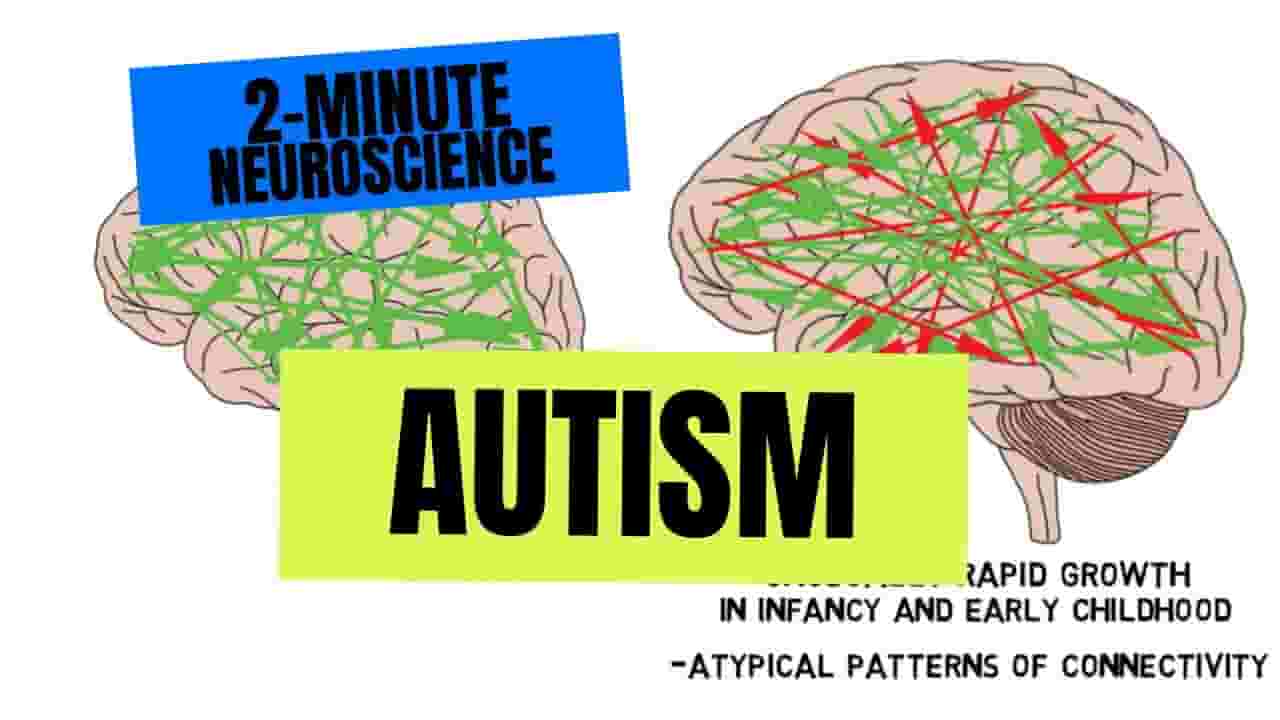
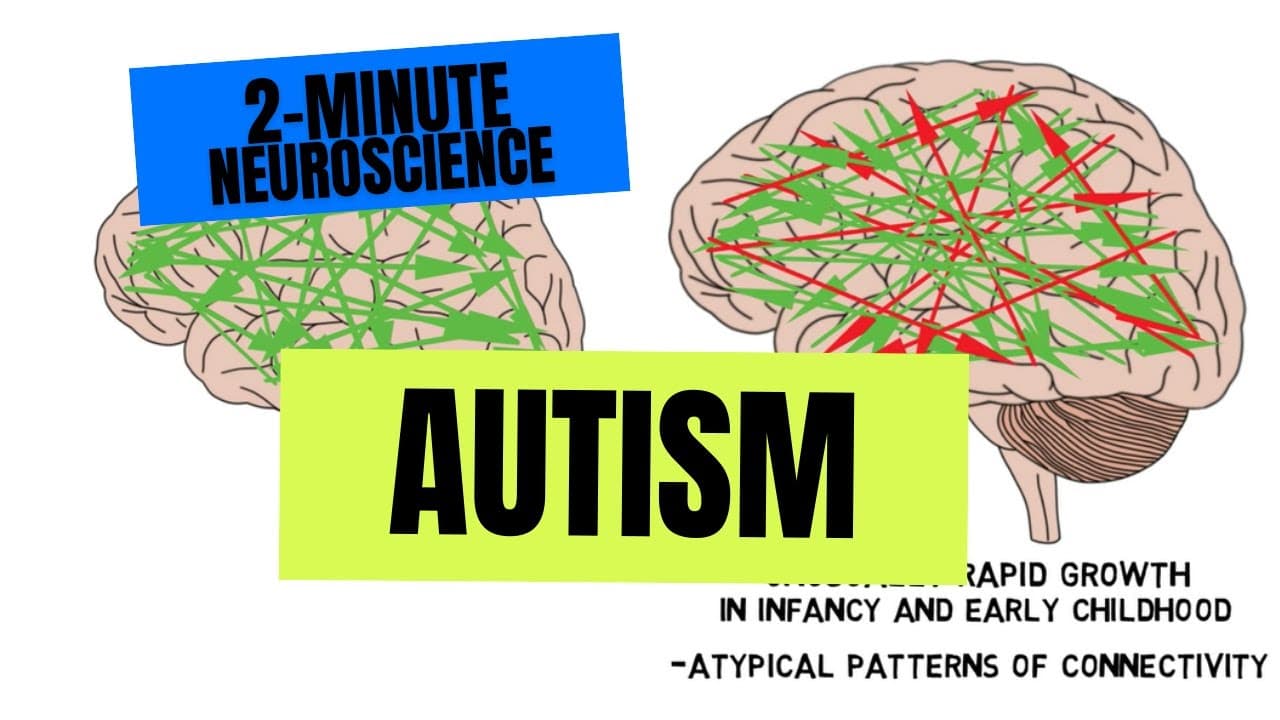
Autism is characterized by impairments in social communication and interaction and restricted and repetitive behaviors. In this video, I discuss the neuroscience of autism along with potential factors and mechanisms involved in the development of autism. 🧠 Take your learning further with my free, self-paced Introduction to Neuroscience course featuring my videos, articles, and hundreds of quiz questions: https://neuroscientificallychallenged.com/course If you're looking for accessible and entertaining ways to learn more about the brain, check out my books: 📚Your Brain, Explained: What Neuroscience Reveals About Your Brain and its Quirks: https://www.amazon.com/Your-Brain-Explained-Neuroscience-Reveals/dp/1473696569/ 📚Bizarre: The Most Peculiar Cases of Human Behavior and What They Tell Us About How the Brain Works: https://www.amazon.com/Bizarre-Peculiar-Cases-Human-Behavior/dp/139980121X/ TRANSCRIPT: Autism, also known as autism spectrum disorder, is characterized by symptoms that include impairments in social communication and interaction and restricted and repetitive behaviors. Although the neuroscience of autism is still poorly understood, autism is considered to be a complex developmental disorder that involves atypical brain organization starting early in development. Individuals with autism often experience a period of unusually rapid brain growth in infancy and early childhood. This accelerated brain growth is linked to an atypical pattern of connectivity between brain regions. A number of studies report that alterations in brain circuitry involved with social interaction and attention can be detected well before the symptoms of autism begin to appear. At this point, however, it’s unclear how brain overgrowth and atypical connectivity might be linked to the occurrence of autism symptoms. Research suggests that the risk of autism is strongly influenced by genetics, yet studies consistently report that environmental factors also play a large role. Although a number of potential environmental factors have been identified, the risk factors for autism are far from definitive, and it remains unclear which factors are responsible for causing an increase in autism risk, and which are associated in a non-causal way. The risk factors that are most strongly linked to autism are associated with the prenatal or perinatal period. Thus, it’s possible they might be responsible for disruptions to typical neural development, leading to symptoms of autism months or years later. How these risk factors might interfere with neural development is still uncertain, but hypotheses have suggested potential mechanisms such as epigenetic effects, inflammation, oxidative stress, or damage caused by oxygen deficiency. More work needs to be done, however, to fully elucidate the genetic and environmental risk factors for autism, as well as the mechanisms for the development of autism symptoms. REFERENCES: Lord C, Brugha TS, Charman T, Cusack J, Dumas G, Frazier T, Jones EJH, Jones RM, Pickles A, State MW, Taylor JL, Veenstra-VanderWeele J. Autism spectrum disorder. Nat Rev Dis Primers. 2020 Jan 16;6(1):5. doi: 10.1038/s41572-019-0138-4. PMID: 31949163. Lord C, Elsabbagh M, Baird G, Veenstra-Vanderweele J. Autism spectrum disorder. Lancet. 2018 Aug 11;392(10146):508-520. doi: 10.1016/S0140-6736(18)31129-2. Epub 2018 Aug 2. PMID: 30078460; PMCID: PMC7398158. Modabbernia A, Velthorst E, Reichenberg A. Environmental risk factors for autism: an evidence-based review of systematic reviews and meta-analyses. Mol Autism. 2017 Mar 17;8:13. doi: 10.1186/s13229-017-0121-4. PMID: 28331572; PMCID: PMC5356236. Muhle RA, Reed HE, Stratigos KA, Veenstra-VanderWeele J. The Emerging Clinical Neuroscience of Autism Spectrum Disorder: A Review. JAMA Psychiatry. 2018 May 1;75(5):514-523. doi: 10.1001/jamapsychiatry.2017.4685. PMID: 29590280.
About YouTube Real-Time View Count
With SocialCounts.org’s view counter, track your YouTube video’s live view count and YouTube likes count in real time with fast, reliable updates.
Watch every YouTube video live view count rise with our real-time YouTube views tracker—built for accuracy and minimal delay.
Follow YouTube real time views as they happen, using our dedicated view counter for YouTube videos.
Get up-to-date live view count on YouTube and see real-time growth with SocialCounts.org’s smart tracking tools.
Embed Widget
Parameters:
fullscreen=true- Fullscreen countergraph=true- Live graph chartcounter=0/1/2- Select counter (0=likes, 1=views, 2=comments)
URL
Click to copy the embed URL to your clipboard