

384,690
likes
18,195
comments
daily view 0
monthly view 0
Live Analytics
Comments 0
How to Understand What Black Holes Look Like Analytics Table
Income Estimates for How to Understand What Black Holes Look Like
Based on this YouTube video's total view count of 10.9M views and industry-standard rates, the estimated total earning is $7.66K - $21.9K through ad revenue. Historical data is not yet available to calculate daily, weekly, or monthly averages.
About How to Understand What Black Holes Look Like
Explore How to Understand What Black Holes Look Like with 10,953,398 views, 384,690 likes, and 18,195 comments. Experience the impact of this video content that has captured audience attention.
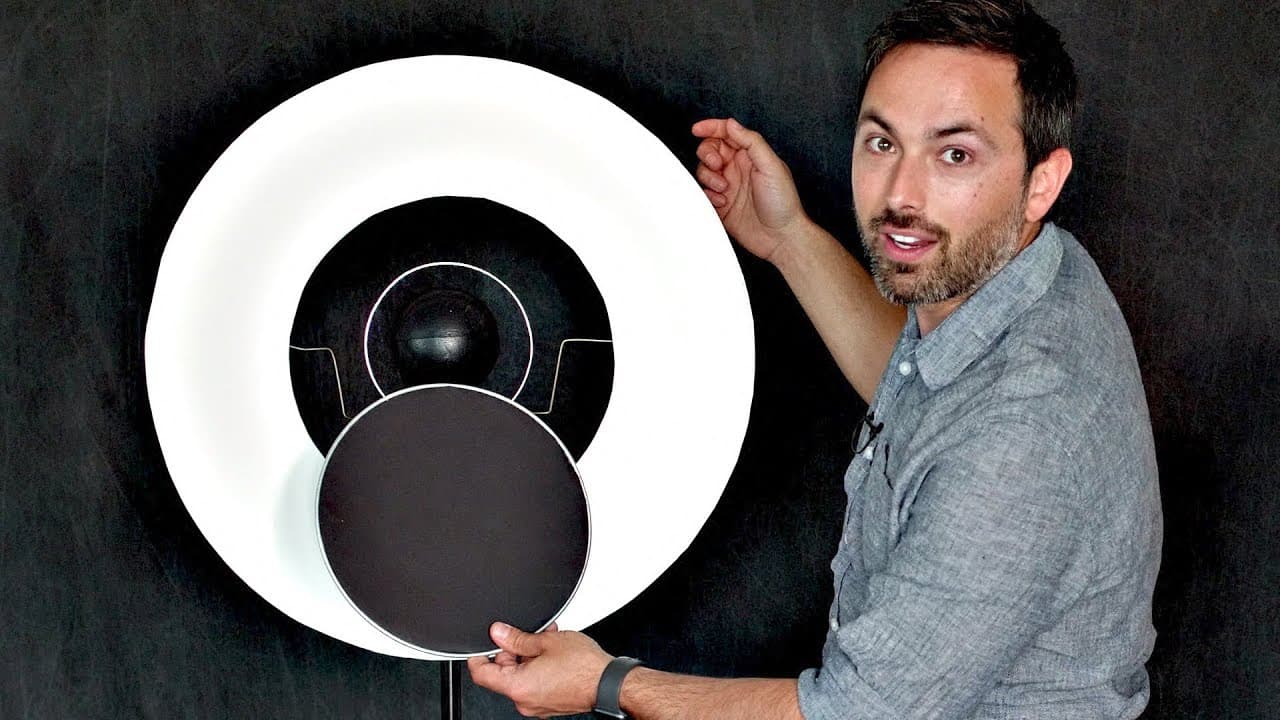
We have just seen the first image of a black hole, the supermassive black hole in the galaxy M87 with a mass 6.5 billion times that of our sun. But what is that image really showing us? This is an awesome paper on the topic by J.P. Luminet: Image of a spherical black hole with thin accretion disk Astronomy and Astrophysics, vol. 75, no. 1-2, May 1979, p. 228-235 https://ve42.co/luminet Using my every day intuition I wondered: will we see the "shadow" of the black hole even if we're looking edge on at the accretion disk? The answer is yes because the black hole warps space-time, so even if we wouldn't normally be able to see the back of the accretion disk, we can in this case because its light is bent up and over the black hole. Similarly we can see light from the bottom of the back of the accretion disk because it's bent under the bottom of the black hole. Plus there are additional images from light that does a half turn around the black hole leading to the inner rings. What about the black hole "shadow" itself? Well initially I thought it can't be an image of the event horizon because it's so much bigger (2.6 times bigger). But if you trace back the rays, you find that for every point in the shadow, there is a corresponding ray that traces back to the event horizon. So in fact from our one observing location, we see all sides of the event horizon simultaneously! In fact infinitely many of these images, accounting for the virtually infinite number of times a photon can orbit the black hole before falling in. The edge of the shadow is due to the photon sphere - the radius at which light goes around in closed orbits. If a light ray coming in at an oblique angle just skims the photon sphere and then travels on to our telescopes, that is the closest 'impact parameter' possible, and it occurs at sqrt(27)/2*r_s Huge thanks to: Prof. Geraint Lewis University of Sydney https://ve42.co/gfl Like him, I'm hoping (predicting?) we'll see some moving images of black holes tomorrow Prof. Rana Adhikari Caltech https://ve42.co/Rana Riccardo Antonelli - for excellent images of black holes, simulations and ray-tracing code, check out: https://ve42.co/rantonels The Event Horizon Telescope Collaboration Check out their resources and get your local link for the livestream here: https://ve42.co/EHT Special thanks to Patreon supporters: Donal Botkin, Michael Krugman, Ron Neal, Stan Presolski, Terrance Shepherd, Penward Rhyme Filming by Raquel Nuno Animation by Maria Raykova
About YouTube Real-Time View Count
With SocialCounts.org’s view counter, track your YouTube video’s live view count and YouTube likes count in real time with fast, reliable updates.
Watch every YouTube video live view count rise with our real-time YouTube views tracker—built for accuracy and minimal delay.
Follow YouTube real time views as they happen, using our dedicated view counter for YouTube videos.
Get up-to-date live view count on YouTube and see real-time growth with SocialCounts.org’s smart tracking tools.
Embed Widget
Parameters:
fullscreen=true- Fullscreen countergraph=true- Live graph chartcounter=0/1/2- Select counter (0=likes, 1=views, 2=comments)
URL
Click to copy the embed URL to your clipboard