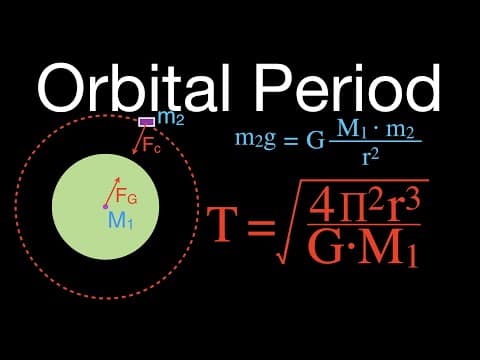
Gravitation (6 of 17) Calculating the Orbital Period of a Satelite
Published May 23, 2017

This video has 138K views and 1.55K likes, ranking #7,039,419 globally among tracked YouTube videos by view count.
At a glance
Views
138,072
Likes
1,550
Comments
127
Performance vs. channel
Outlier score
Engagement rate
More features coming
We're working on new analytics and tools. Stay tuned.
About
Shows how to calculate the orbital period of a Satellite. The equation for orbital period is derived from Newton's second law and Newton's Law of universal gravitation. The orbital period of the satellite is only dependent upon the radius of its orbit and the mass of the central object. The mass of the satellite has n…
- Published
- May 23, 2017
- Made for kids
- No
More features coming
We're working on new analytics and tools. Stay tuned.
Frequently asked questions
How accurate are these YouTube video analytics?
View, like, and comment counts come from YouTube's public API and refresh regularly. Growth and revenue figures are estimates built from tracked historical data, so they can differ slightly from what the creator sees privately in YouTube Studio.
What is the outlier score?
How this video's views compare to the channel's usual Shorts or long-form video. A 2x score means double the usual views for that channel, 0.5x means half.
What is engagement rate and how is it calculated?
Likes and comments per view, compared to this channel's typical engagement rate — shown as above or below what's usual for the channel.
How is the revenue estimate calculated?
It's a rough public estimate based on a $0.7–$2.0 CPM (revenue per 1,000 views) applied to view count — not actual creator earnings, which depend on ad rates, audience geography, and monetization settings YouTube doesn't expose publicly.
Is this YouTube video analytics checker free?
Yes. You get 10 free channel and video analytics lookups per rolling hour without an account — logging in, which is also free, removes that limit entirely.